A Walk Around the Mount Carmel District, Poughkeepsie
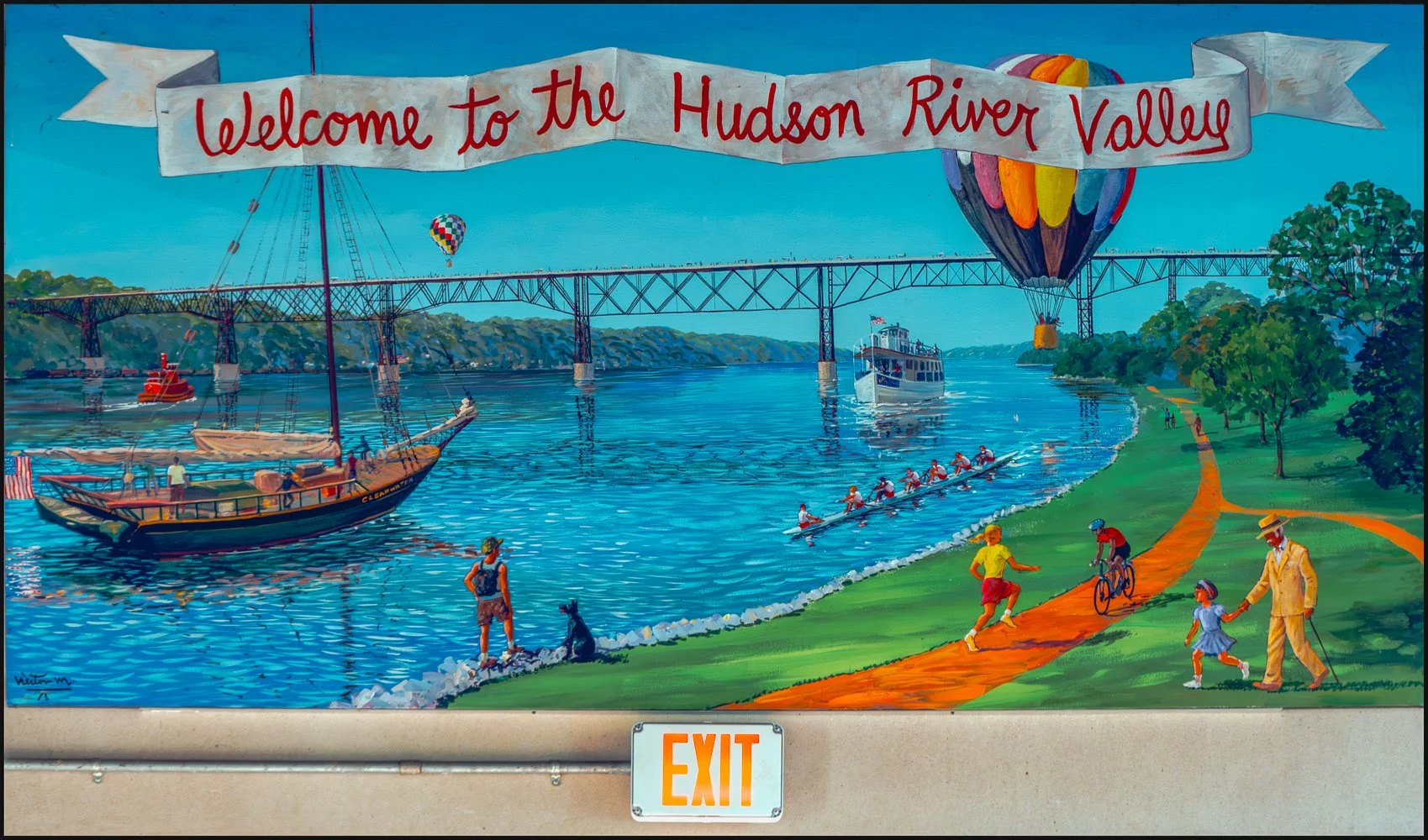
Introduction
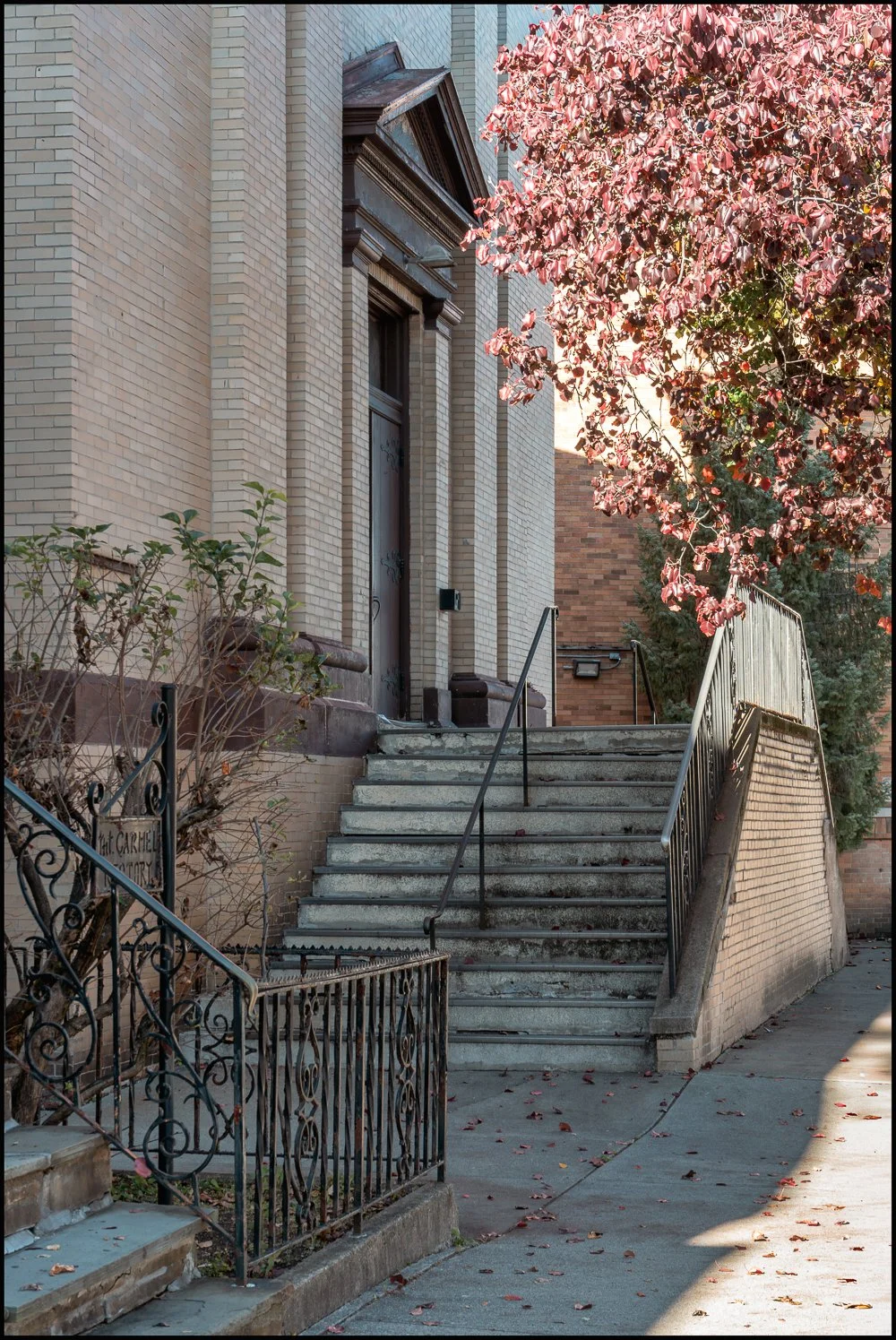
The Mount Carmel District (or Area) is a historic neighborhood in Poughkeepsie, New York named for Our Lady of Mount Carmel Church and its associated (now defunct) school.
The neighborhood is located on Poughkeepsie's north side. It roughly encompasses an area south of Marist College and just north of the Poughkeepsie Train Station. The neighborhood's western border is provided by U.S. Route 9.
In 1910, Our Lady of Mount Carmel church opened on what is now Mount Carmel Place. Nearly 60 years later, the congregation moved into the former St. Peter's Church at 97 Mill Street. A parish school was established in 1935, closing in 2007 due to low enrollment. Two years later, the school building was reopened under the direction of Astor Services and now functions as a school for special-needs students. Astor Services also occupies the original Church building on Mount Carmel Place.
The area has been home to many of Poughkeepsie's new immigrant populations, starting with the Irish, later the Italians, and is currently experiencing an influx of Latino immigrants. Still home to several Italian restaurants and bakeries, the area is widely referred to as Poughkeepsie's Little Italy. Each June Our Lady of Mount Carmel Parish hosts the St. Anthony's Street Festival. This event draws a large number people to the District.
The historic Poughkeepsie Railroad Bridge runs directly over the District and the area has seen increased traffic since the bridge reopened as the Walkway Over the Hudson State Historic Park in October 2009.
Poughkeepsie Station
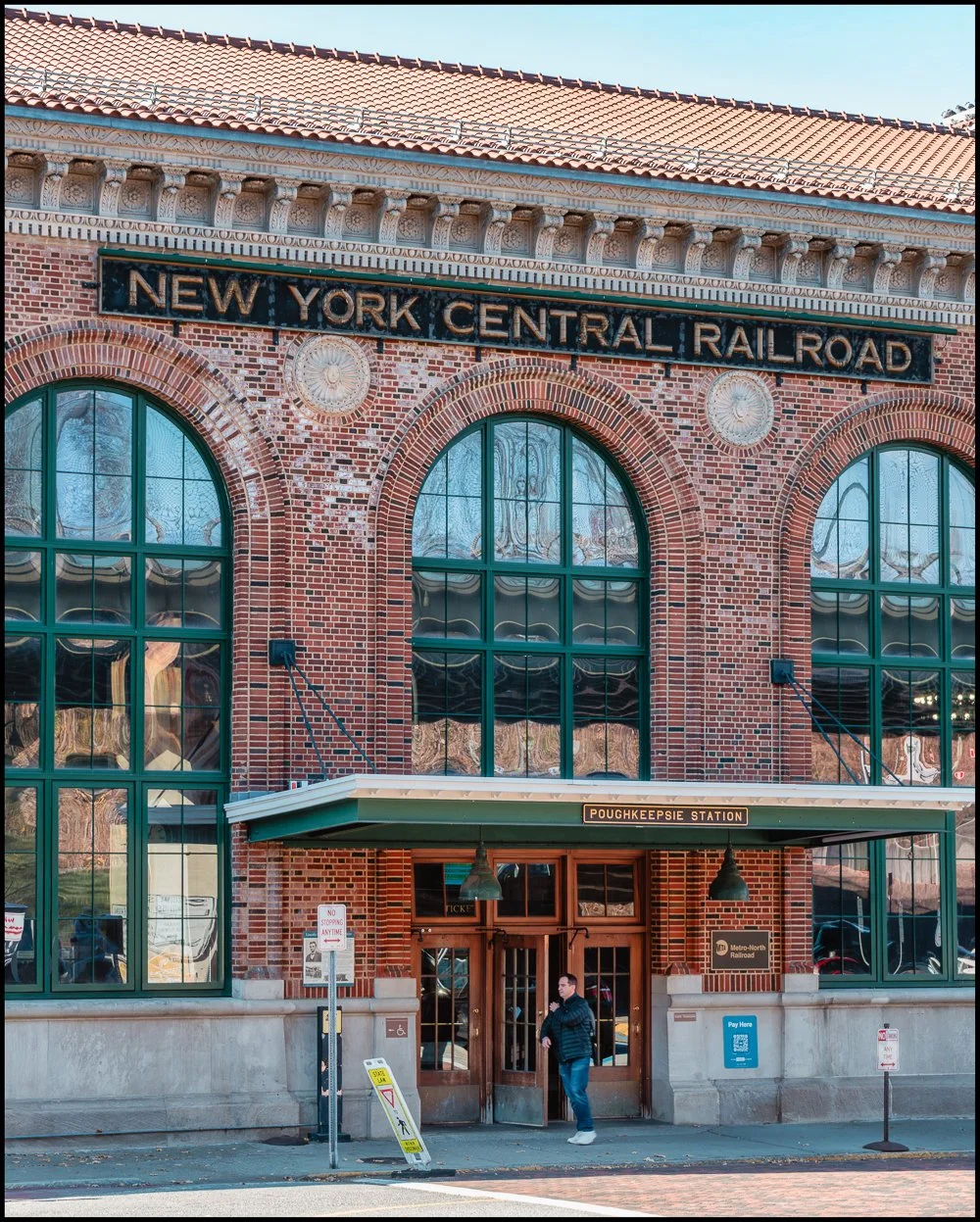
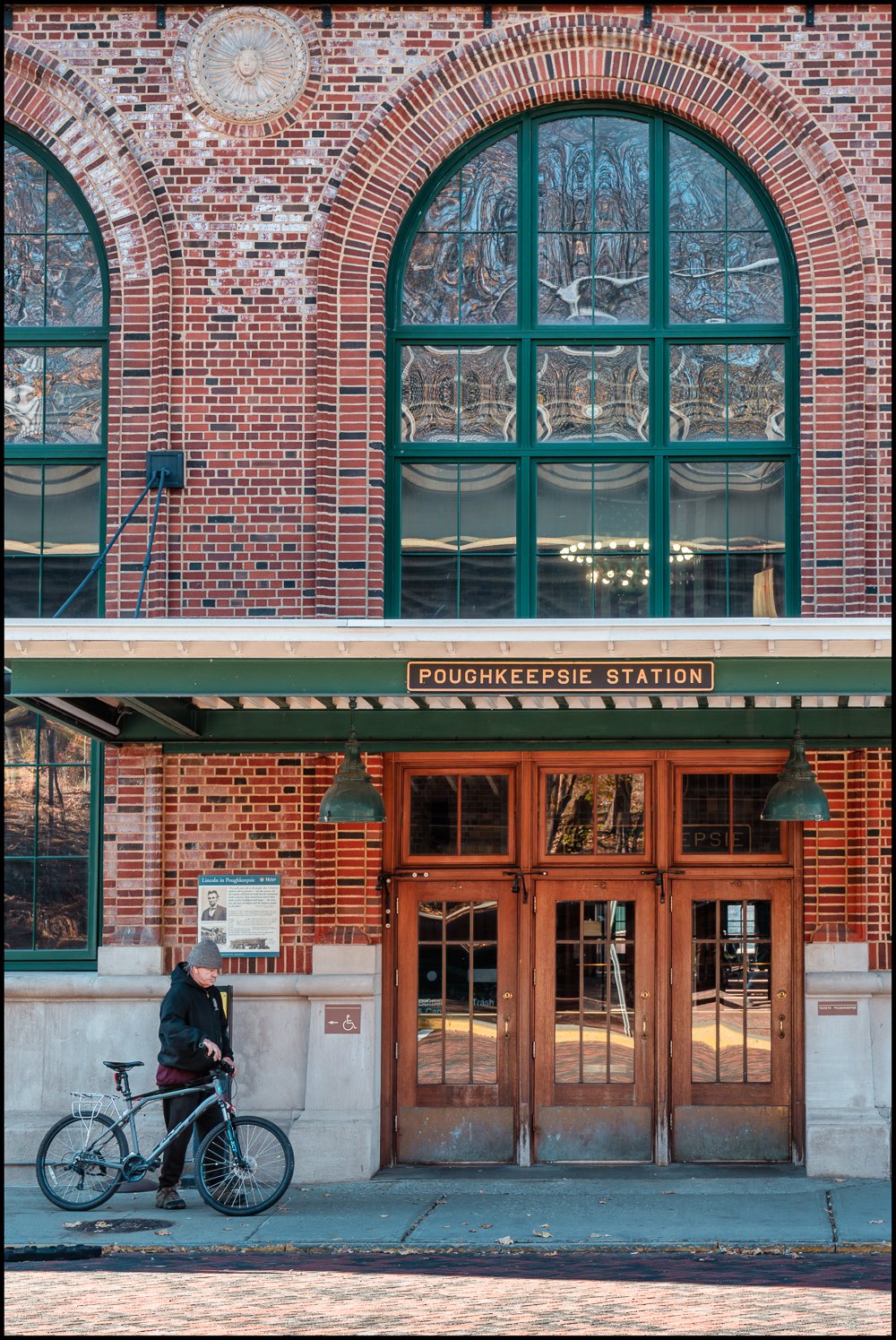
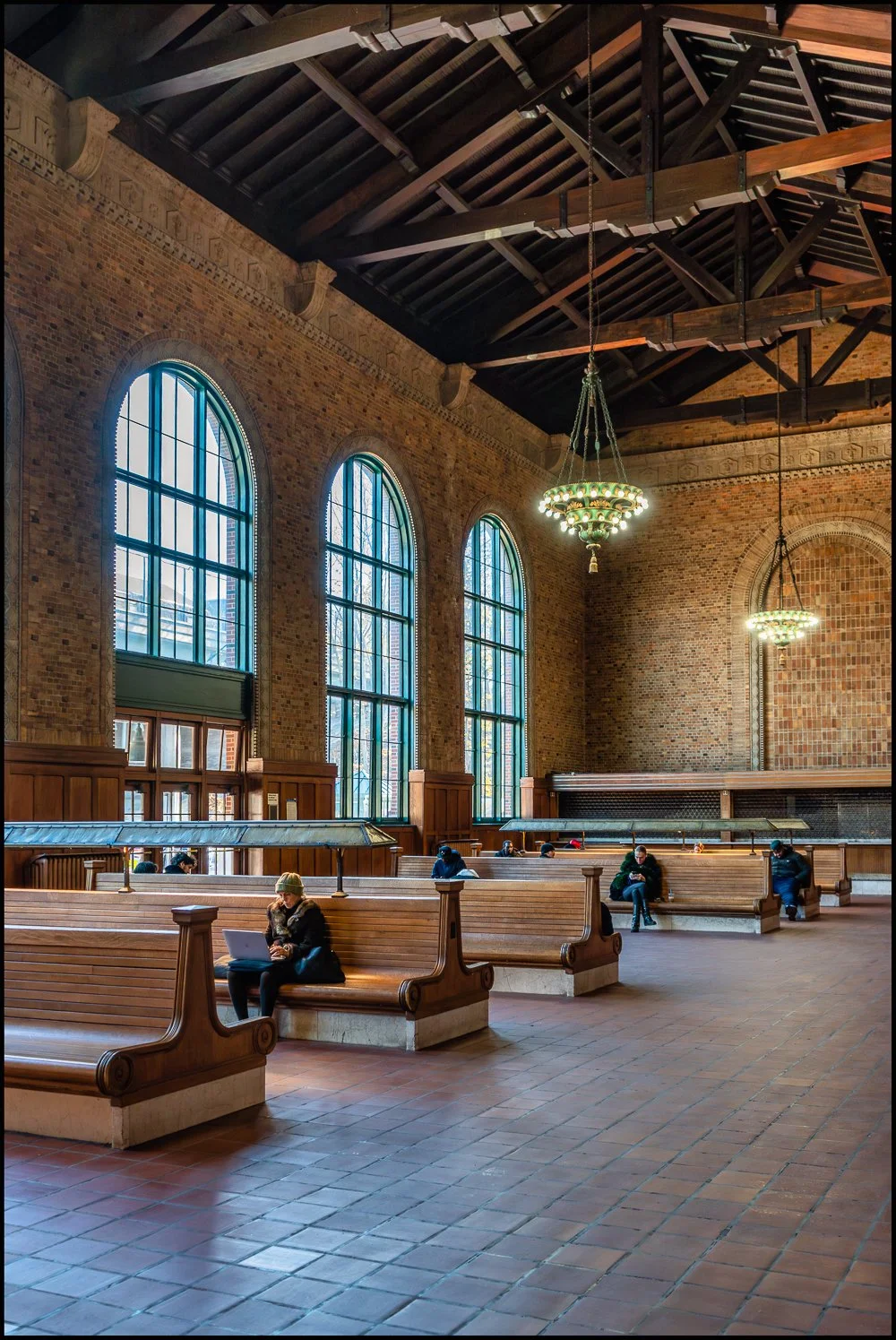
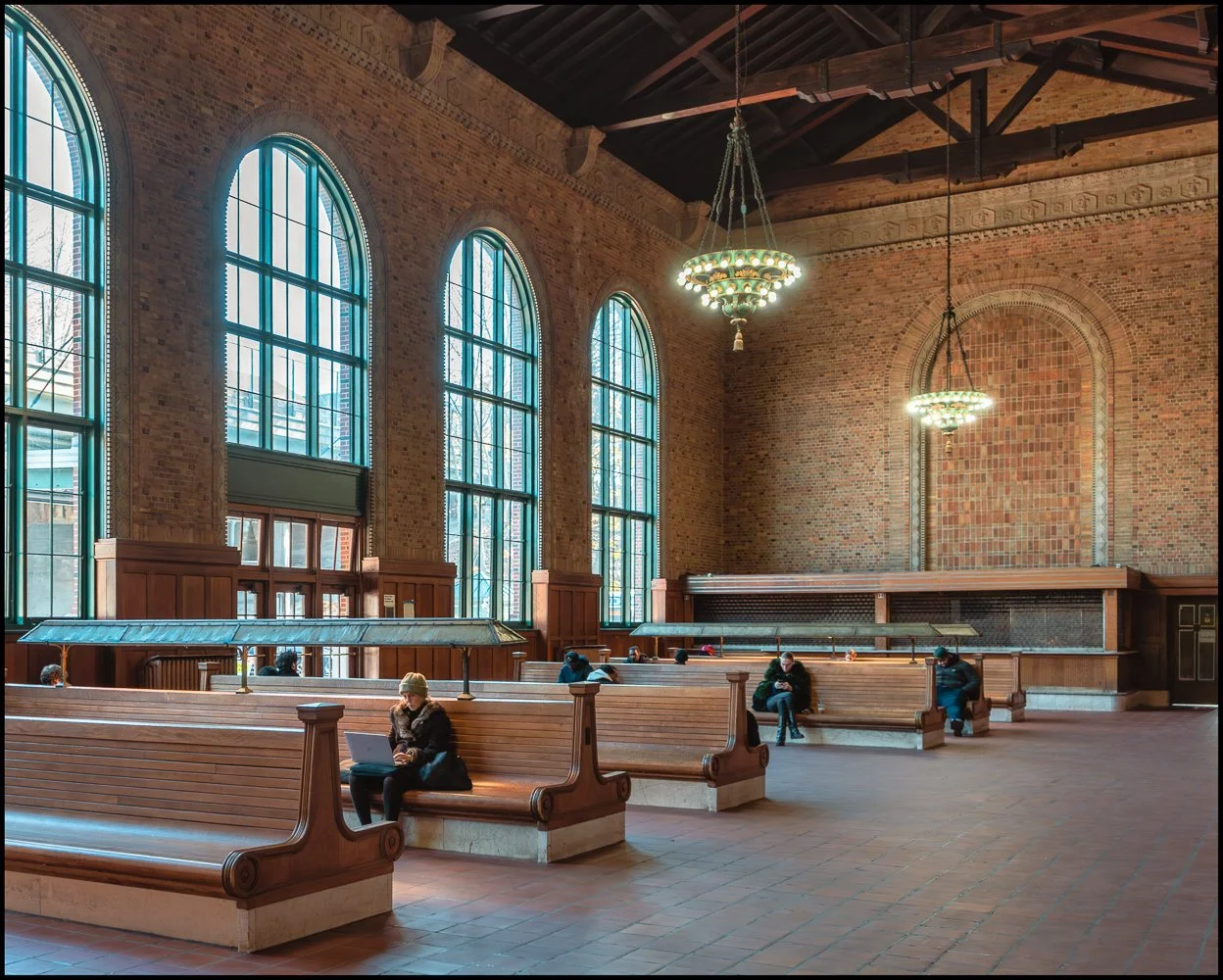
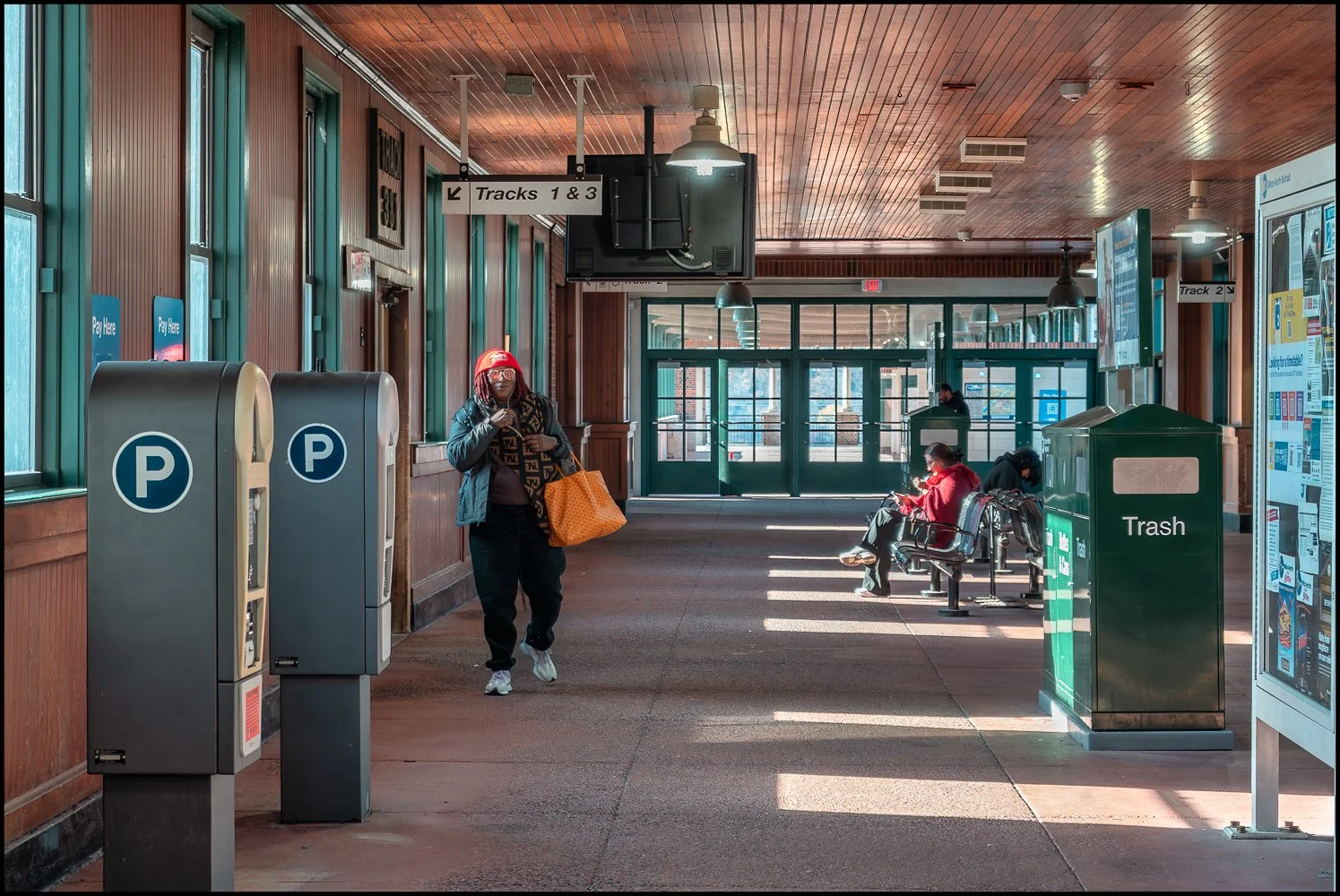
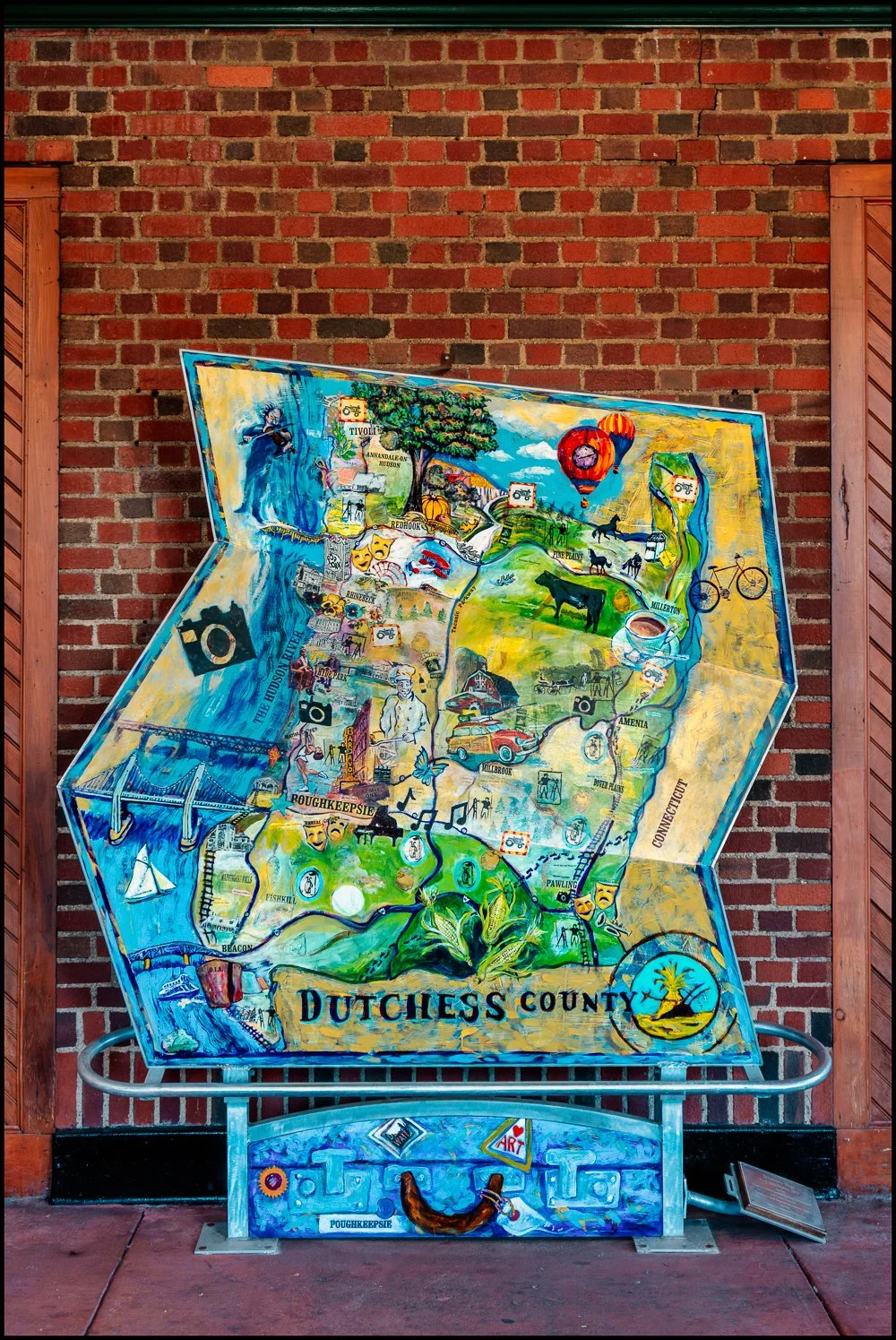
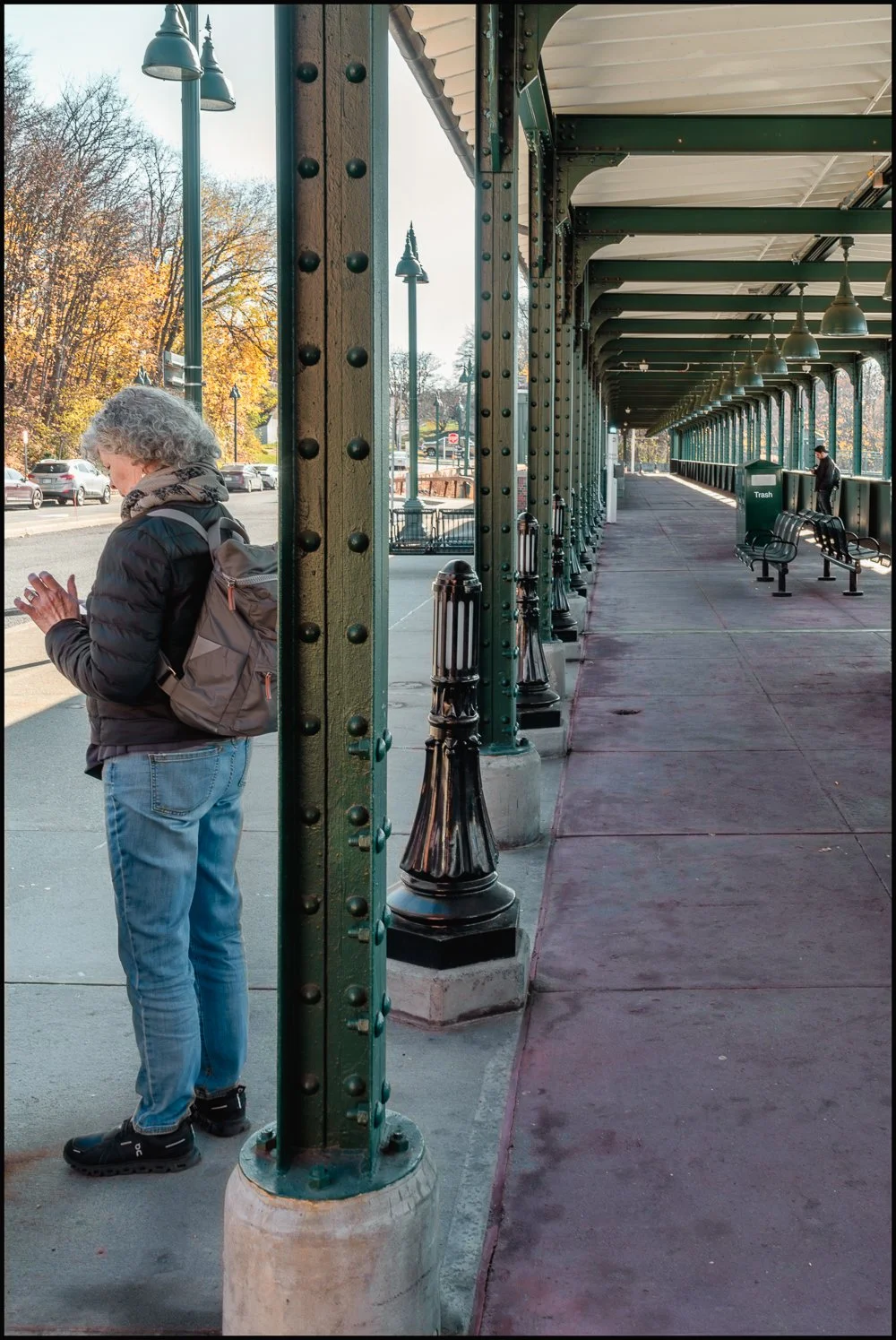
The first Poughkeepsie station was built in 1850 as what became the New York Central Railroad's Water Level Route worked its way up the Hudson River. For its first two years it was the end of the line, but even after it was completed all the way to Albany, it remained the most important intermediate stop. Many local industries, particularly the carpet mills and shoe factories in the city, used the rail facilities to get their products to market. The concentration of industry around a major rail stop also led to the rise of banking and finance within the city as well.
In 1889, with the completion of the nearby Poughkeepsie Railroad Bridge providing east–west rail service across the Hudson, Poughkeepsie became even more important to regional rail transportation. When it came time for a third station to be built on the site, the firm of Warren & Wetmore was hired to design a station that would impress travelers and communicate the city's confidence and cosmopolitan aspirations. They chose to model it on Grand Central, another successful design of theirs.
After five years of design and construction, the station was opened on February 18, the main station building is meant to be a much smaller version of Grand Central Terminal. It was a source of civic pride when it opened. In 1976 it was added to the National Register of Historic Places as Poughkeepsie Railroad Station; it and Philipse Manor are the only Hudson Line stations outside Manhattan to be so recognized.
The station is a four-story building built into a rockface, with the bottom two levels given over to the tracks and the top two accounted for by the main waiting room, a two-story brick-faced building. Its five-bay facade features sculptured masonry designs over the five high arched windows. To the west, a 420x15-foot (128x5 m) steel-frame overhead walkway provides access to the tracks via stairs and elevators. Today it continues westward to provide access to the adjacent parking garage. At the time of the station's construction, it served the businesses along Main Street
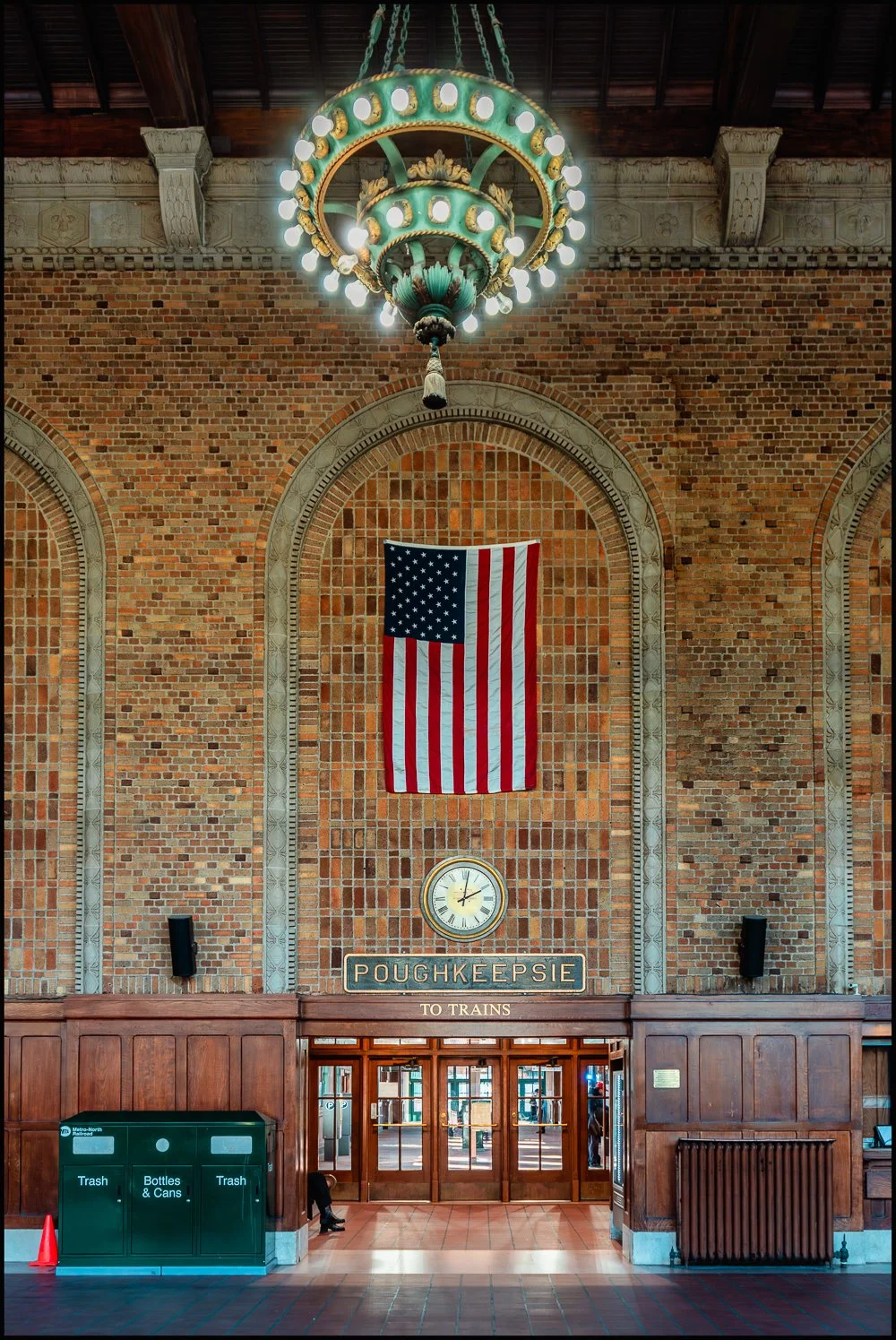
The waiting room, modeled on Grand Central Terminal, is a high gallery lit during daylight by the windows and the three original chandeliers. The 14 benches within are also original finished chestnut pieces. The walls are paneled in wood to eight feet (240 cm), after which the carved stone shows all the way to the cornice. More original woodwork, the stained walnut rafters, is present in the ceiling, possibly modeled after a similar design in San Miniato al Monte, an 11th-century church in Florence, Italy.
Amenities include bathrooms (also modernized), a concession stand, as well as a ticket counter selling Metro-North tickets alongside two vending machines which sold MetroCards prior to May 2025. There is no checked baggage service for Amtrak trains; Amtrak tickets are available only via a Quik-Trak kiosk. The northernmost MTA Police substation is adjacent to the station as well. In the late 1960s the North-South Arterial (US 9) was built and elevated immediately to the station's east, somewhat isolating it from the rest of the city.
There are four tracks at the platform level, enough to accommodate Amtrak and Metro-North stops simultaneously, and from west to east numbered 2, 1, 3, and 5. Only tracks 2, 1, and 3 are regularly used. Track 5, the easternmost, has a lower speed limit and is used mainly for non-revenue maintenance trains or those experiencing difficulties. The station has a high-level island platform, high level side platform, and a low level side platform, each six cars long and slightly offset from each other. Only the high level platforms are used in passenger service.
Parking Garage
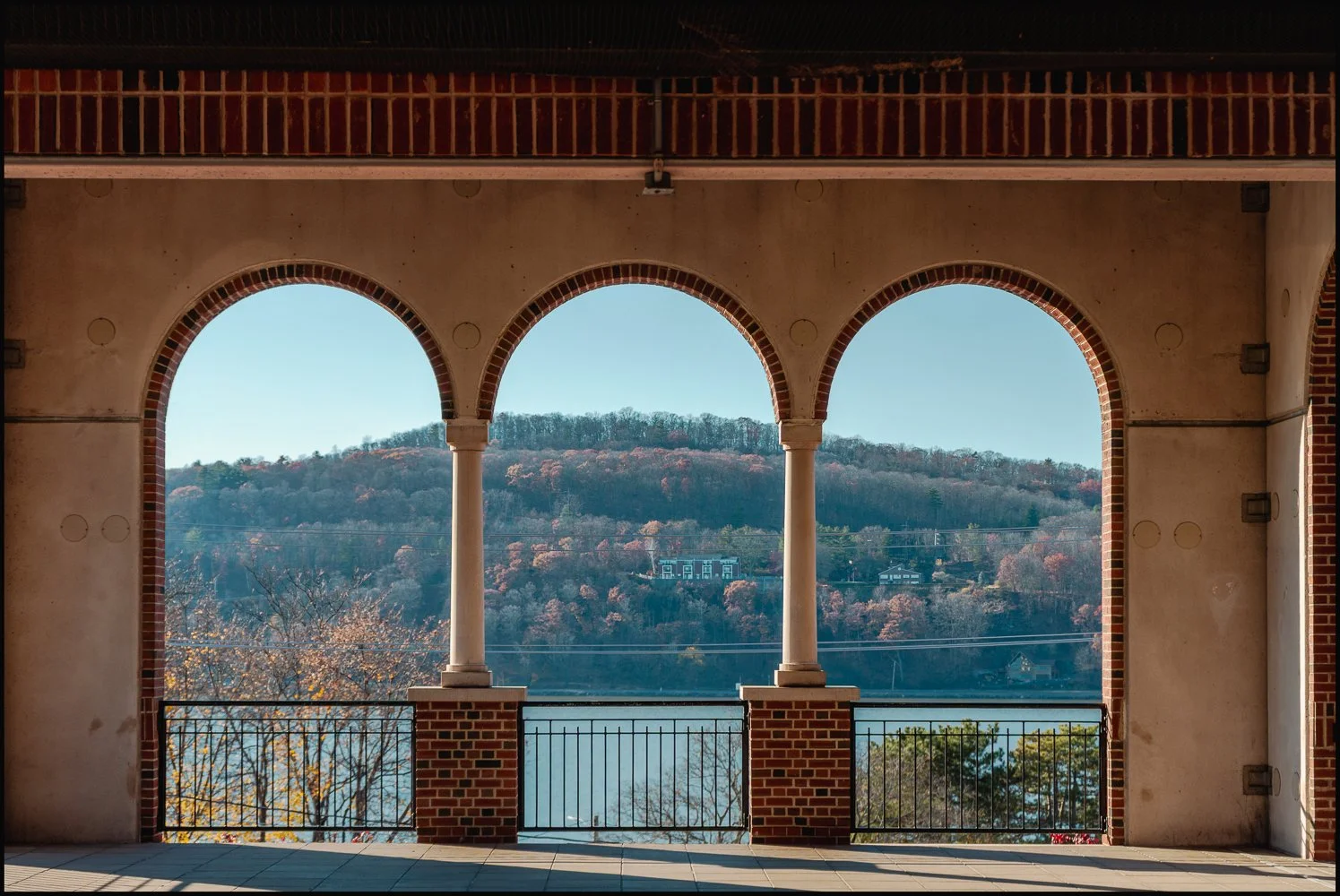
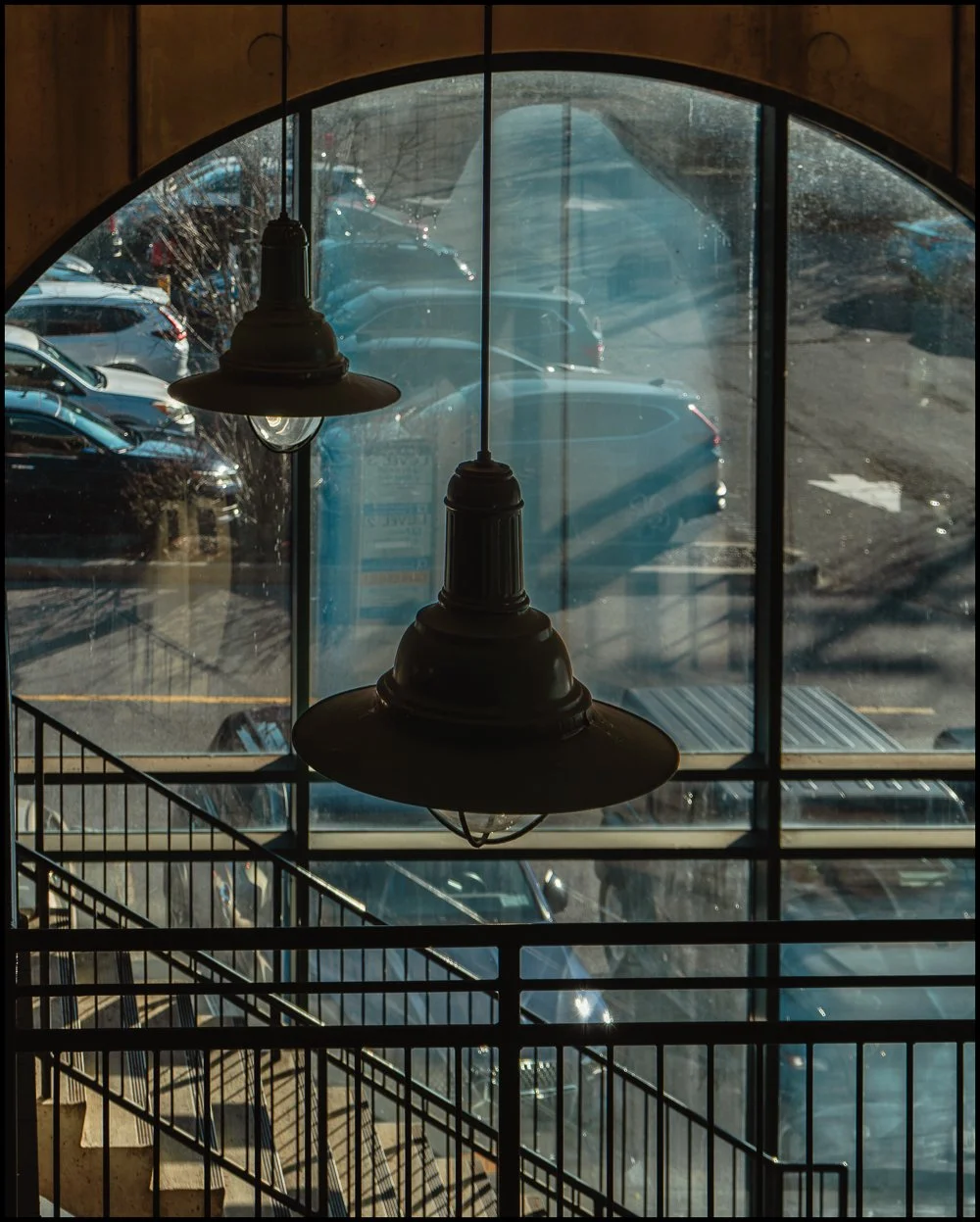
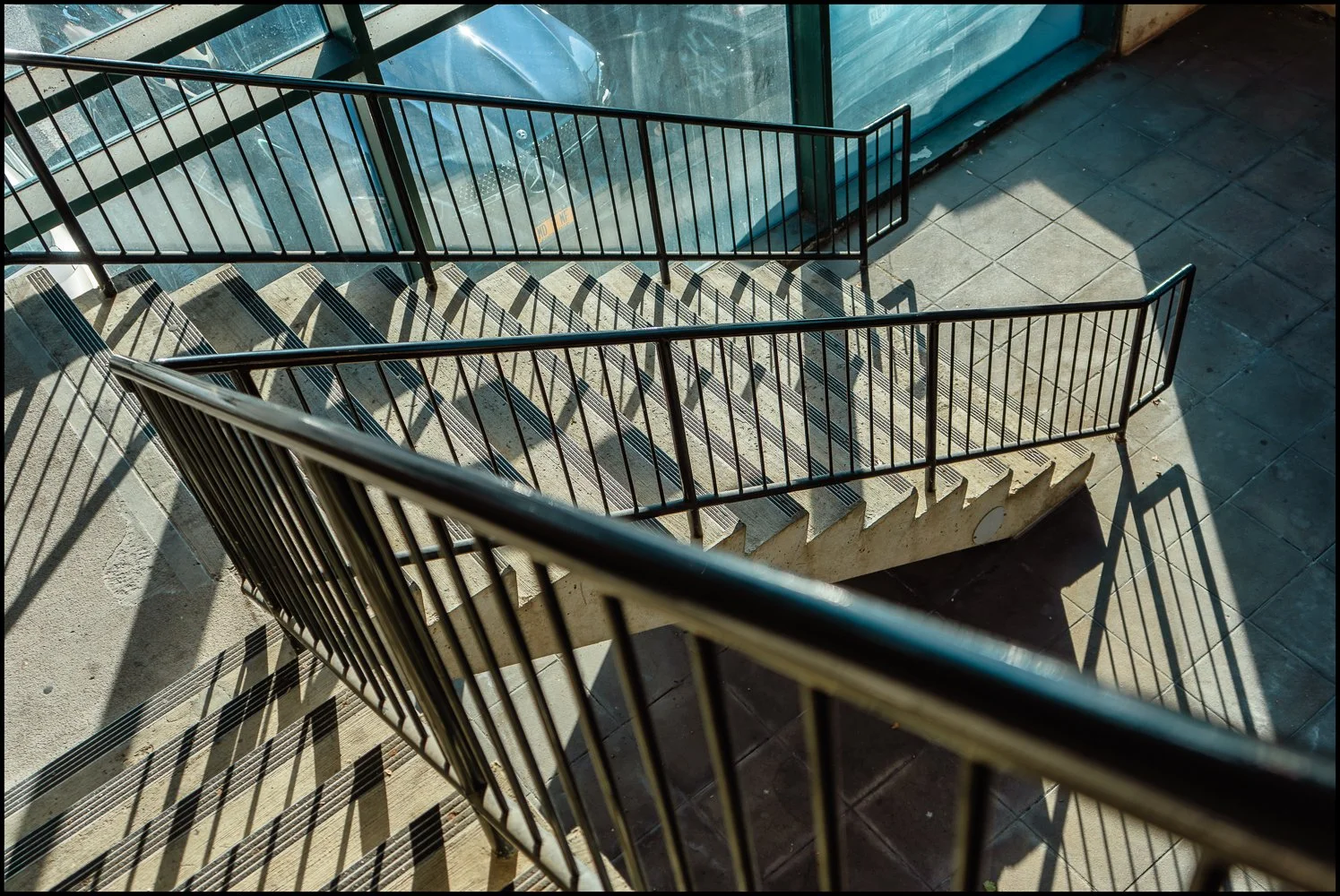
In a parking garage adjacent to the Poughkeepsie Station
Old St. Peter Church (now Our Lady of Mt. Carmel)
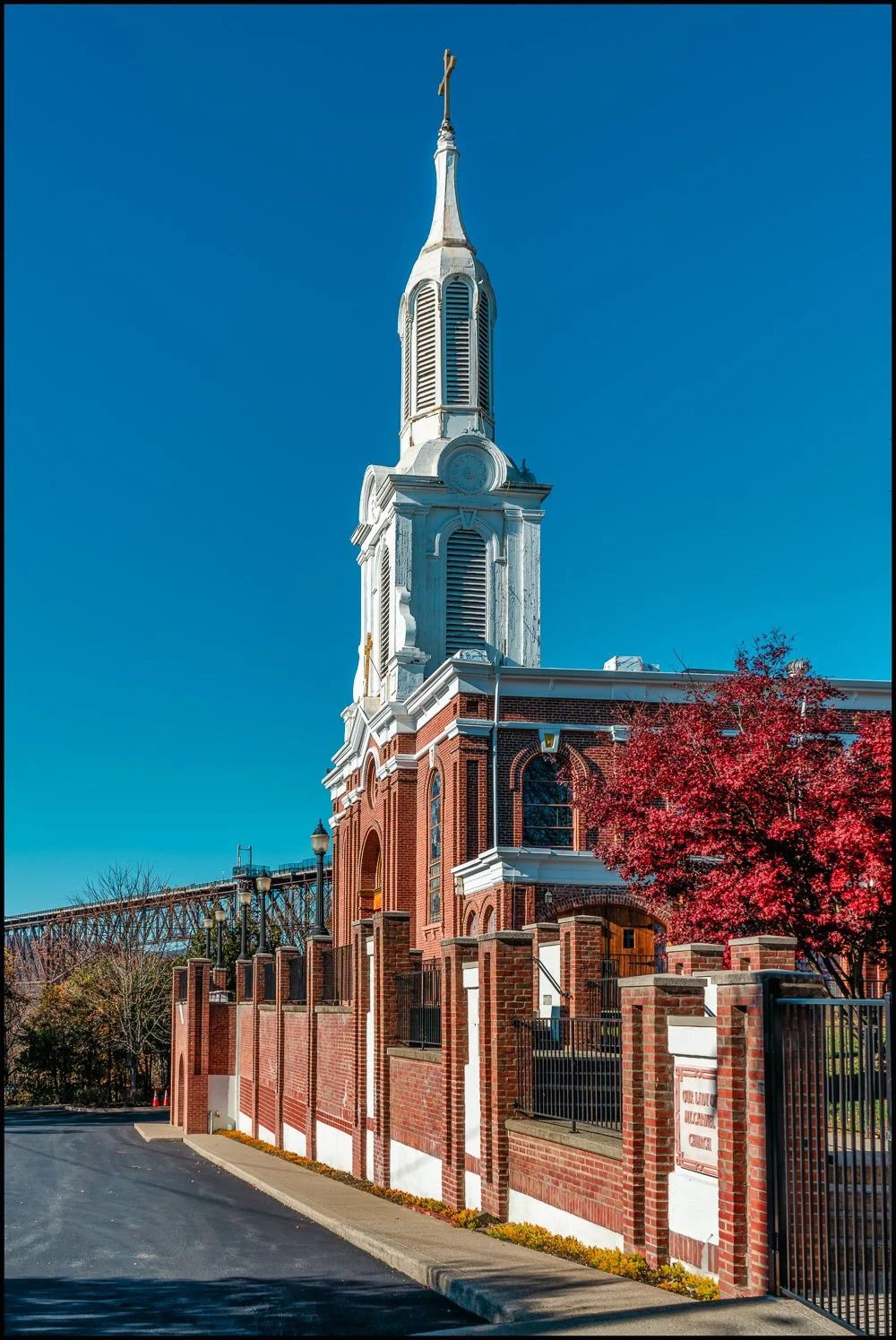
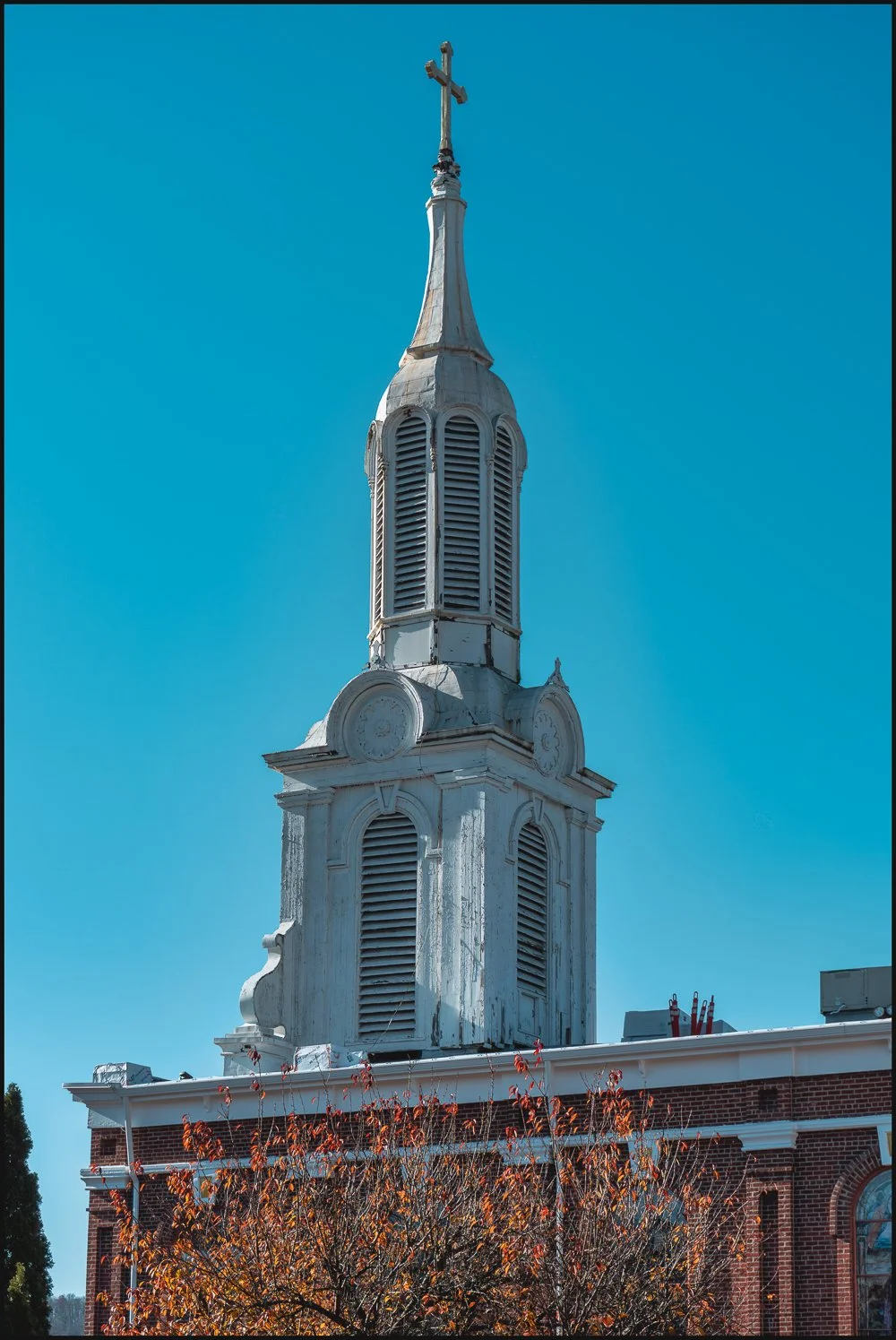
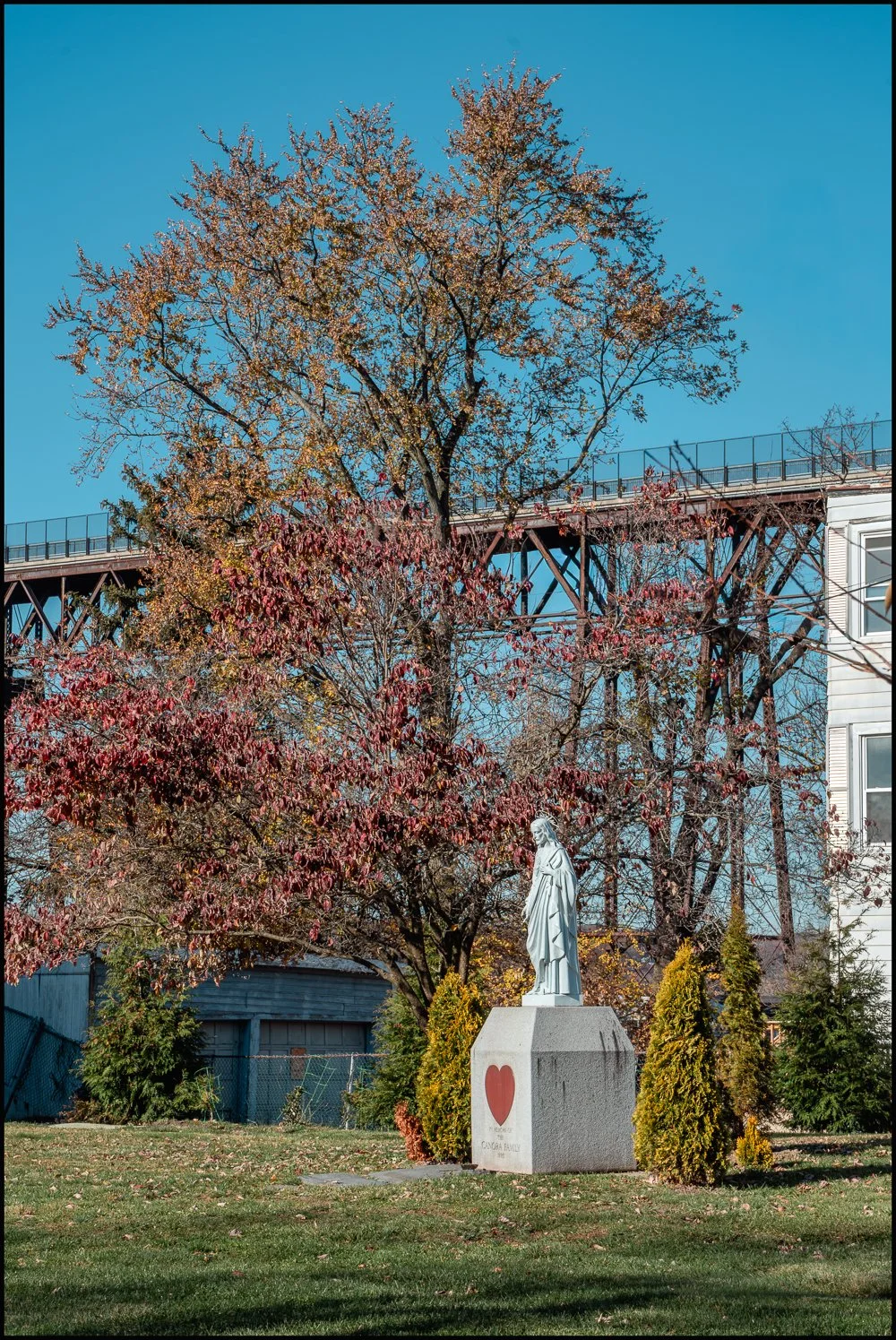
The Old Church of St. Peter is a Roman Catholic church established under the authority of the Roman Catholic Archdiocese of New York in Poughkeepsie, Dutchess County, New York in 1837. It is the second oldest Catholic Church on the Hudson (after St. Mary's in Albany) and is considered the Mother Church of the Hudson Valley because from it all the parishes in Ulster and Dutchess counties were founded. The church is also referred to as Our Lady of Mount Carmel since 1965 when St. Peter's parish relocated to Hyde Park, New York and the parish of Our Lady of Mount Carmel church (located a block away) relocated to site.
Twenty-two years after the Diocese of New York was founded in 1808, Bishop John DuBois, in 1830, authorized a Dominican, Father Phillip O’Reilly to establish parishes on the Hudson River north of Manhattan Island. The first congregation he ministered to was the small group of 28 Irish-born Catholic families, who on October 14, 1831, were organized as the Congregation on the Hudson.
Philip O'Reilly O.P. was stationed at Newburgh, New York from 1830 to 1832 and would visit Poughkeepsie once a month in summer. Fr. Patrick Duffy was pastor of Paterson, New Jersey from 1823 to 1836, when he was sent first to Our Lady of Loretto in Cold Spring. From there he served congregations in West Point, Cold Spring, Newburgh, Saugerties, Rondout, and Poughkeepsie. When the house of Robert Belton became too small for the number attending, Mass was celebrated in the old brewery, near the Lower Landing at Pine Street. And later at the Hibbasus' hall on Market Street near Jay Street.
By 1825 emigrants from Ireland were numerous enough in Poughkeepsie to form a well defined segment of the population. In 1837 a church building was erected on land donated by Peter Everett. When some bigoted individuals threatened to burn it down, a vigilance committee, made up of Catholics and Protestants, was formed to defend it. Dr. Pyne, a non-Catholic offered the defenders the loan of a small cannon. There was no further trouble. The church was dedicated by Bishop DuBois on November 26, 1837. Rev. Patrick Duffy, pastor of Our Lady of Loreto Parish in Cold Springs who had been charged with the spiritual care of Poughkeepsie was then transferred to Newburgh. Rev. John McGinnis was named first pastor of St. Peter's Parish in Poughkeepsie. The missions at Saugerties and Rondout were made dependencies of St. Peter's with expectation that each would be attended at least once a month.
In 1839 McGinnis was transferred to St. James in New York and succeeded by Rev. John N. Smith. It was Smith who erected a small frame church at Rondout. He also made pastoral trips to Rosendale. In 1842 Rev. Myles Maxwell became pastor at St. Peter's when Smith was himself assigned to St. James in New York. (Smith would die there in February 1848, having contracted ship's fever while attending the deathbed of Rev. Mark Murphy who had been ministering to immigrants at the quarantine station on Staten Island.)
Father Michael Riordan became pastor in September 1844 and "steered it safely" through the "Know-Nothing" agitation at that time. He had substantial influence among the Irish building the railroad and more than once quelled disturbances that threatened to turn into riots.
In 1894 Father James Nilan commissioned the paintings of the Stations of the Cross and had them shipped from Rome. The Apostolic Nuncio from Washington and Archbishop Michael Corrigan of New York attended the dedication. Removed during subsequent renovation, they were discovered when Our Lady of Mount Carmel assumed occupancy of Old St. Peter's and restored. Our Lady of Mount Carmel parish held a celebration in 1994, on the centennial anniversary of their dedication
The abandoned rectory burned around 1977.
In 1965 St. Peter's parish re-located to Hyde Park, NY, although it kept a Poughkeepsie address. A school and convent were built and parish Masses were offered in the school chapel and auditorium. A rectory was not built until 1975 and until then priests continued to commute from the rectory in the city of Poughkeepsie. Currently, the parish offices are at St. Peter's Cemetery on Salt Point Turnpike. In 1999, St. Peter's Parish worked out a deal with New York State to use the Chapel of Our Lady of the Rosary which had been part of Hudson River State Hospital. St. Peter's parishioners restored the chapel by June 29, 1999. The state sold the chapel to the Archdiocese of New York and granted easements of access on West Cottage and Recreation Drive.
Old Church of Our Lady of Mount Carmel
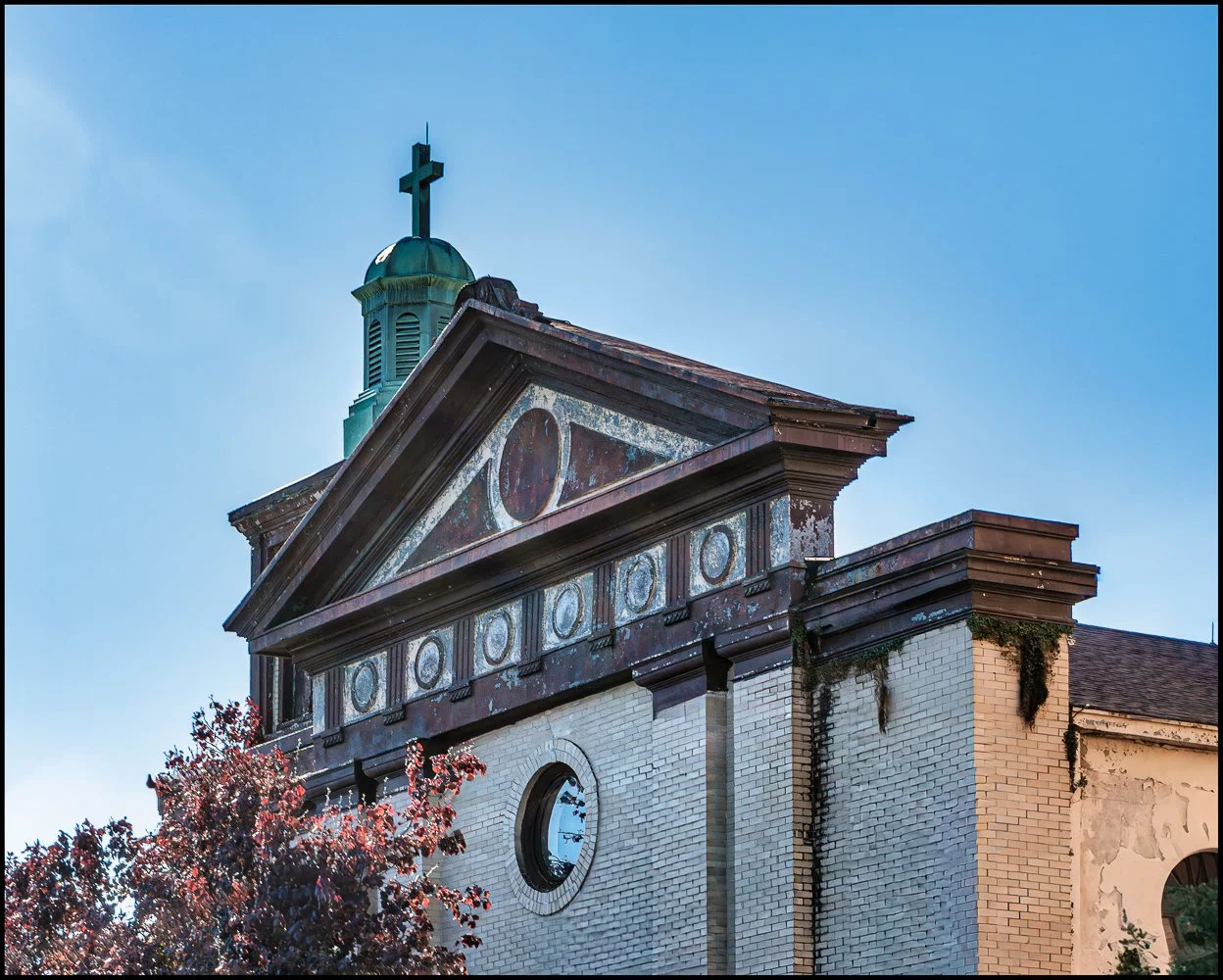
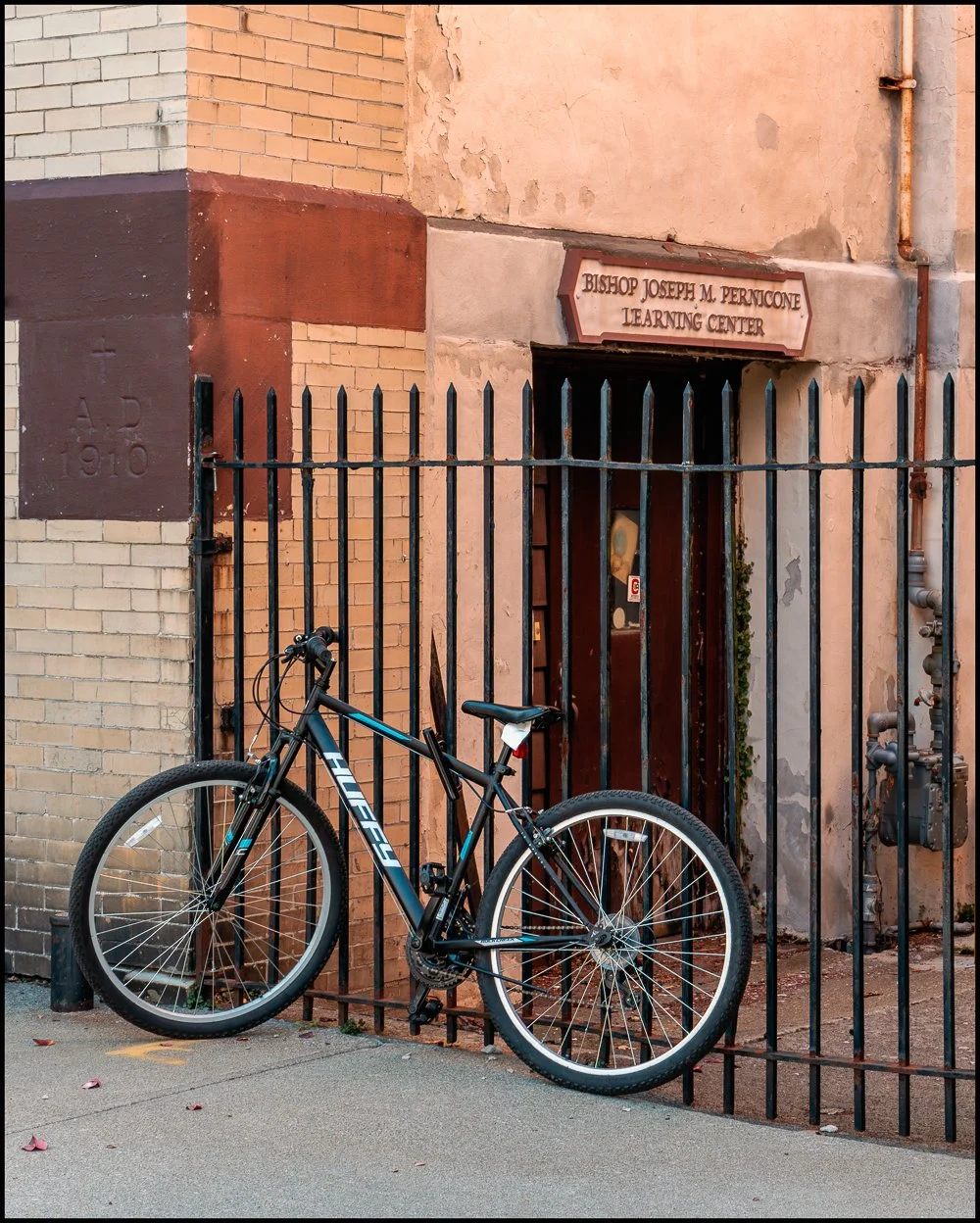
The Church of Our Lady of Mount Carmel is a historic Roman Catholic parish church building located in Poughkeepsie, Dutchess County, New York.
In the early 1900s the Italian population of the city of Poughkeepsie had increased substantially. Fr. William Livingston, pastor of St. Peter's, invited the growing Italian community to use the lower church for Masses offered by Rev. Angelus M. Iacobucci (d. March 30, 1955). Livingston and his successor, Rev. Joseph F. Sheahan, recognized that these Italian parishioners would be better served by a priest who spoke their own language and was familiar with the community's customs. At the time, the Mass was in Latin, but the preaching was done in the vernacular.) Unfortunately, because the Mass for the Italians was in the lower church, this was interpreted by many in the Italian community as the Irish having relegated them to the cellar. This was a contributing factor in the Italian community organizing to build their own church
Our Lady of Mount Carmel parish was incorporated on February 20, 1908 as a national parish for Italians even though within the parish boundaries of St. Peter's, Poughkeepsie. Property was purchased June 1909 for a new church from John I. Platt on the west side of Cataract Place, on what is now Mount Carmel Place and ground was broken the following March. The cornerstone was laid May 1, 1910 by Bishop Cusack and the church was consecrated on October 12, 1910, by the Rt. Rev. Mgr. Michael Lavelle, V.G. A rectory was built November 1913. In 1913, the parish contained 245 families of about 1,700 souls.
The first pastor was the Rev. Nicola Pavone, who was born at Trivento, Italy, on August 18, 1878, ordained at a seminary there December 23, 1901, and studied at La Minerva University in Rome. From 1903 to 1904, he had a bishop's secretary in Trivento, then he taught at the seminary at Larino before arriving in New York on December 20, 1905, where he was assigned to St. Peter's in Poughkeepsie In a gesture of friendship and gratitude to St. Peter's Church for having hosted the Italian community prior to the building of Our Lady of Mt. Carmel, Fr. Pavone asked the pastor of St. Peter's at the time Monsignor Joseph Sheahan to offer the first Mass in the newly built Mt. Carmel church after its consecration.
In 1965, when Msgr. Joseph Raimondo was pastor, the congregation moved into the former St. Peter's church edifice at 97 Mill Street, when St. Peter's parish re-located to the southeast corner of Dorsey Avenue and Violet Avenue in Hyde Park, NY. (Currently, Astor Services currently occupies the original Church building on Mount Carmel Place.
Italian American pastors, such as Rev. August DiBlasi, Rev. Anthony Mestice, Rev. Mario Ziccarelli, Rev. Mario Bastone, and Rev. Richard LaMorte continued to serve the community, even as many second and third generation Italians who grew up in the Mount Carmel neighborhood, moved out of the City of Poughkeepsie into the surrounding Town of Poughkeepsie but continued to return to Mount Carmel as their neighborhood church. The area has been home to many of Poughkeepsie's new immigrant populations, starting with the Irish, later the Italians. Still home to several Italian restaurants and bakeries, the area is widely referred to as Poughkeepsie's Little Italy. Our Lady of Mt. Carmel is now merged with St. Mary and St. Joseph parishes under the pastorship of Rev. Ronald Perez.
It is a brick and marble structure, in the Roman style, and seats 400. Parish tradition holds that much of the brick for the church was actually acquired by the Italian laborers working on the railroad, although it unclear whether this is true and if so, if the bricks were left over, thrown away bricks, or bricks that were supposed to be used for a job
Church of the Holy Comforter
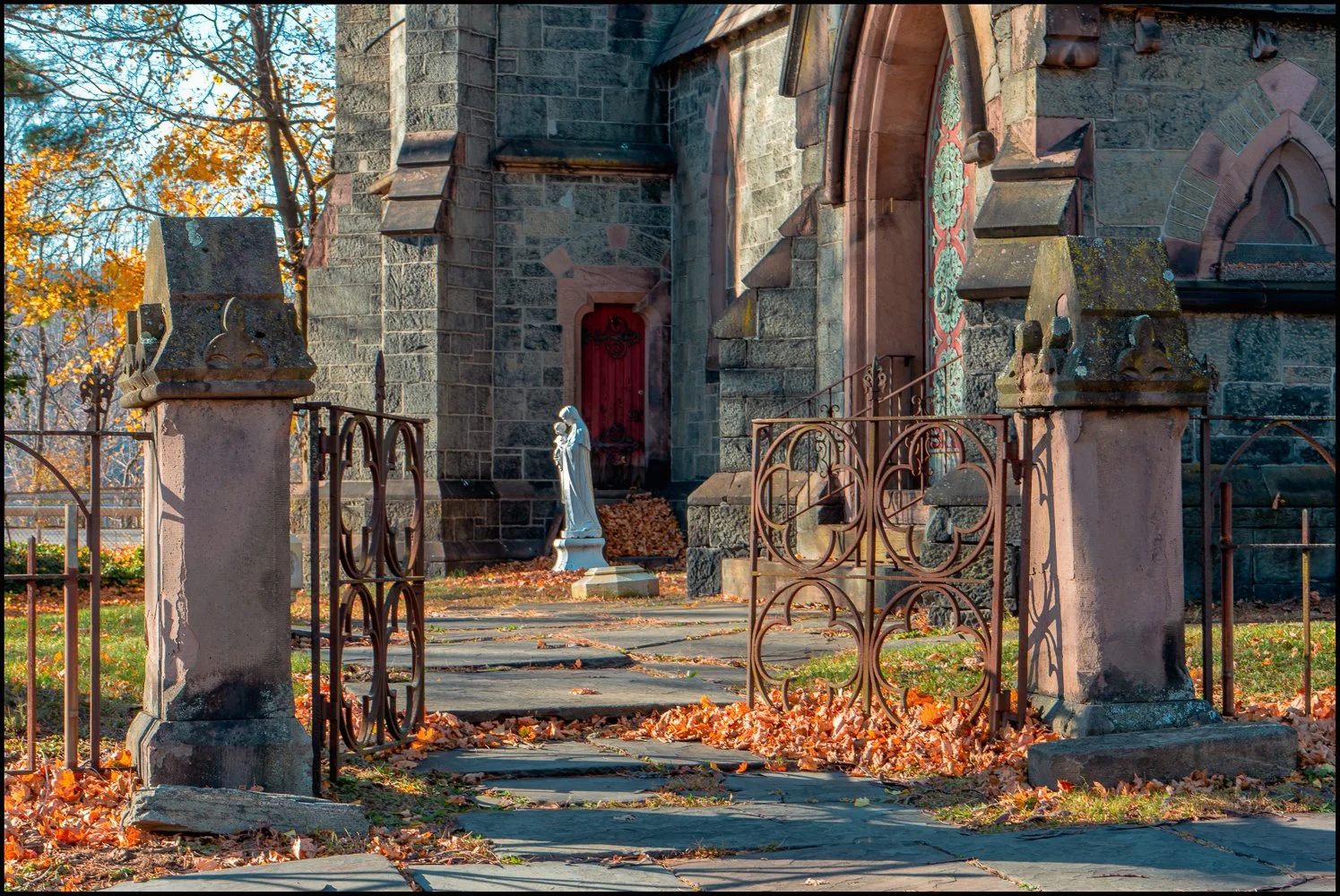
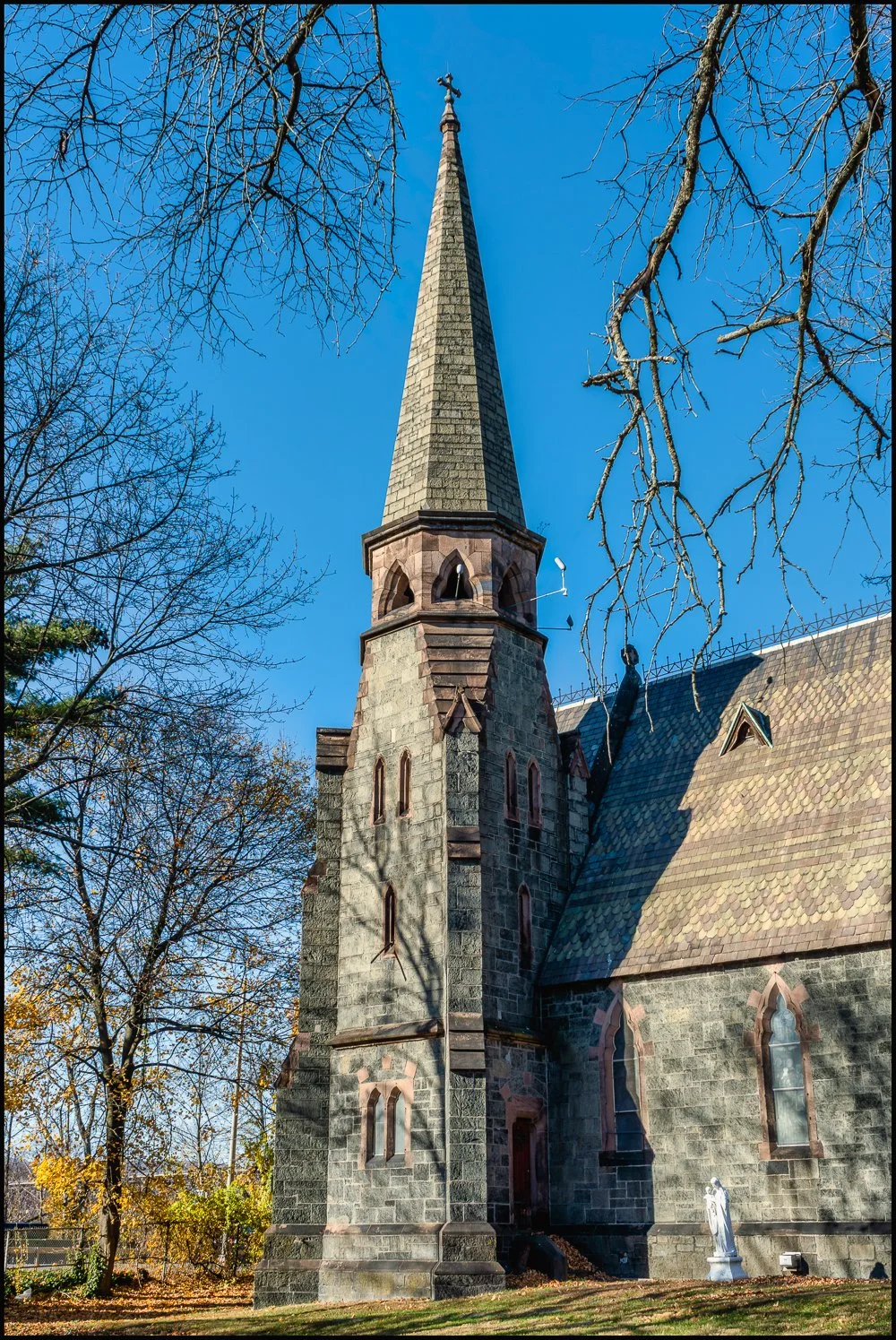
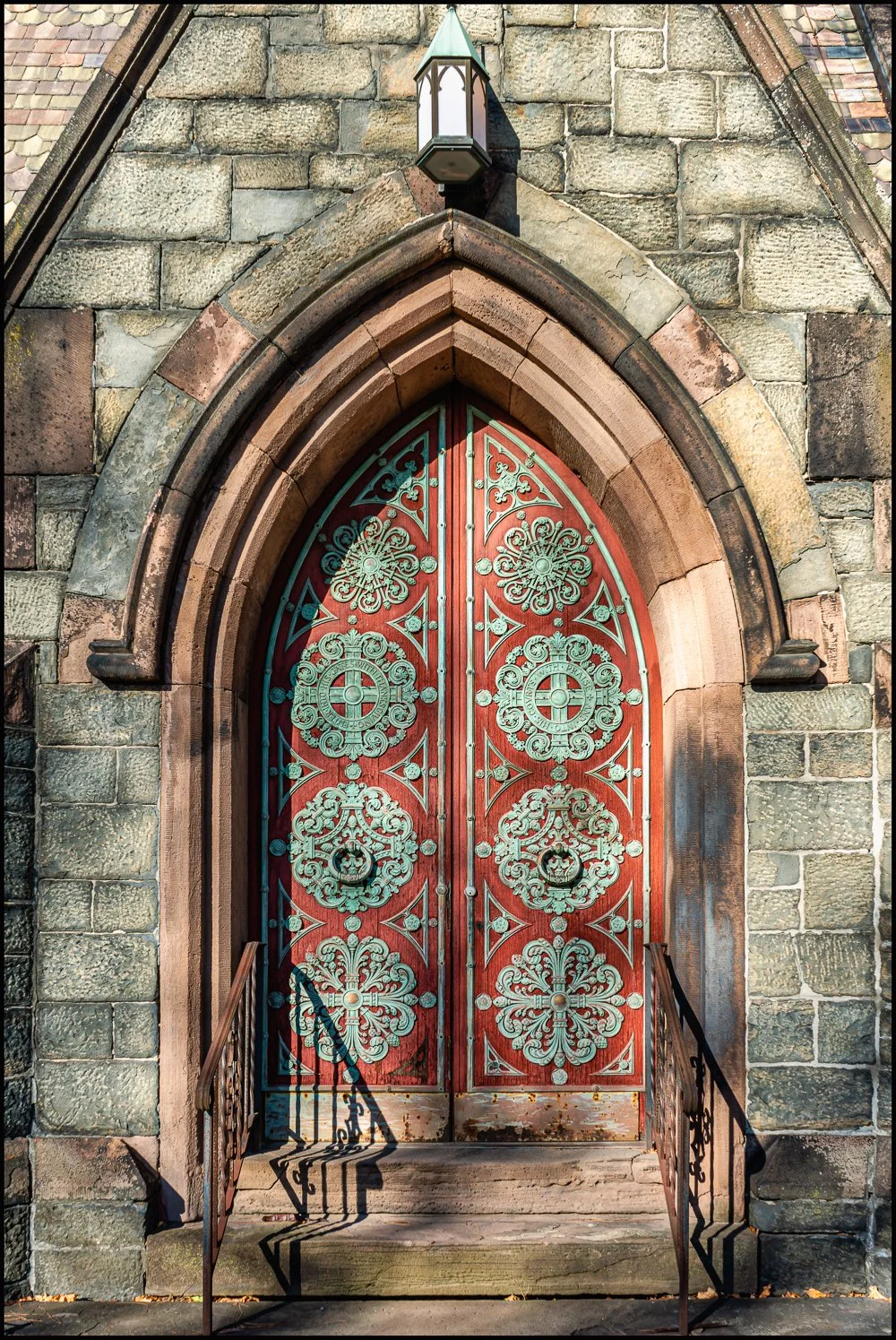
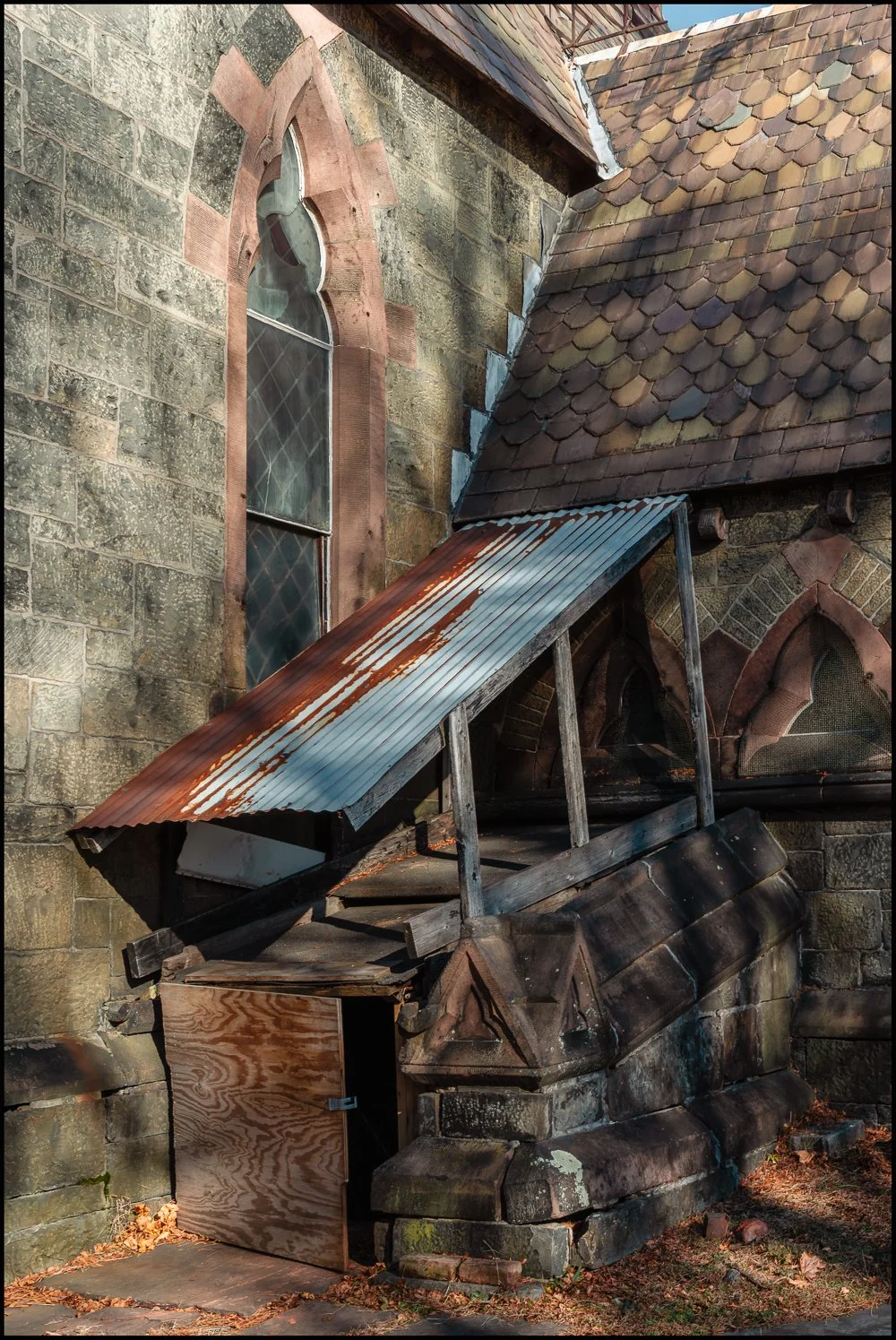
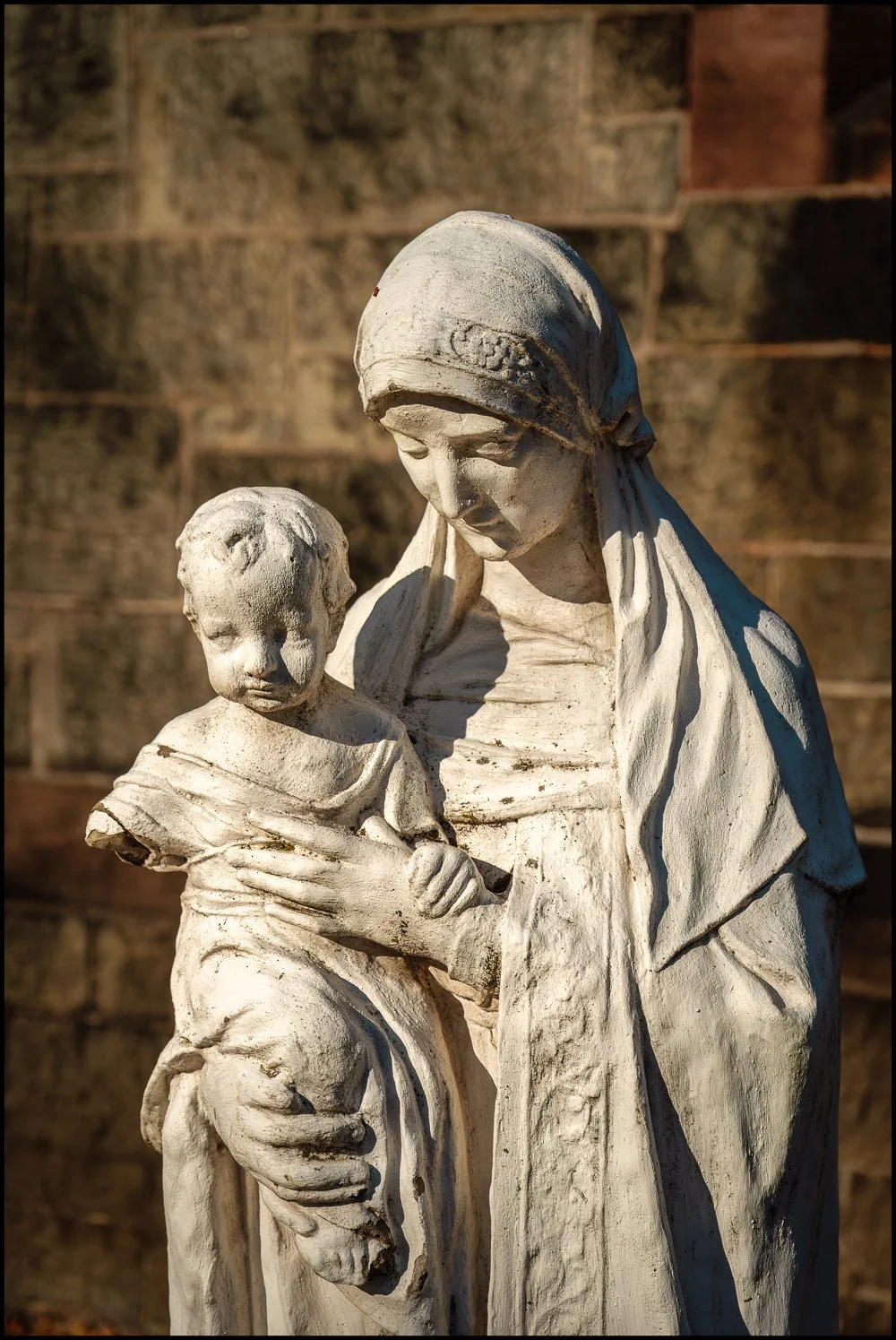
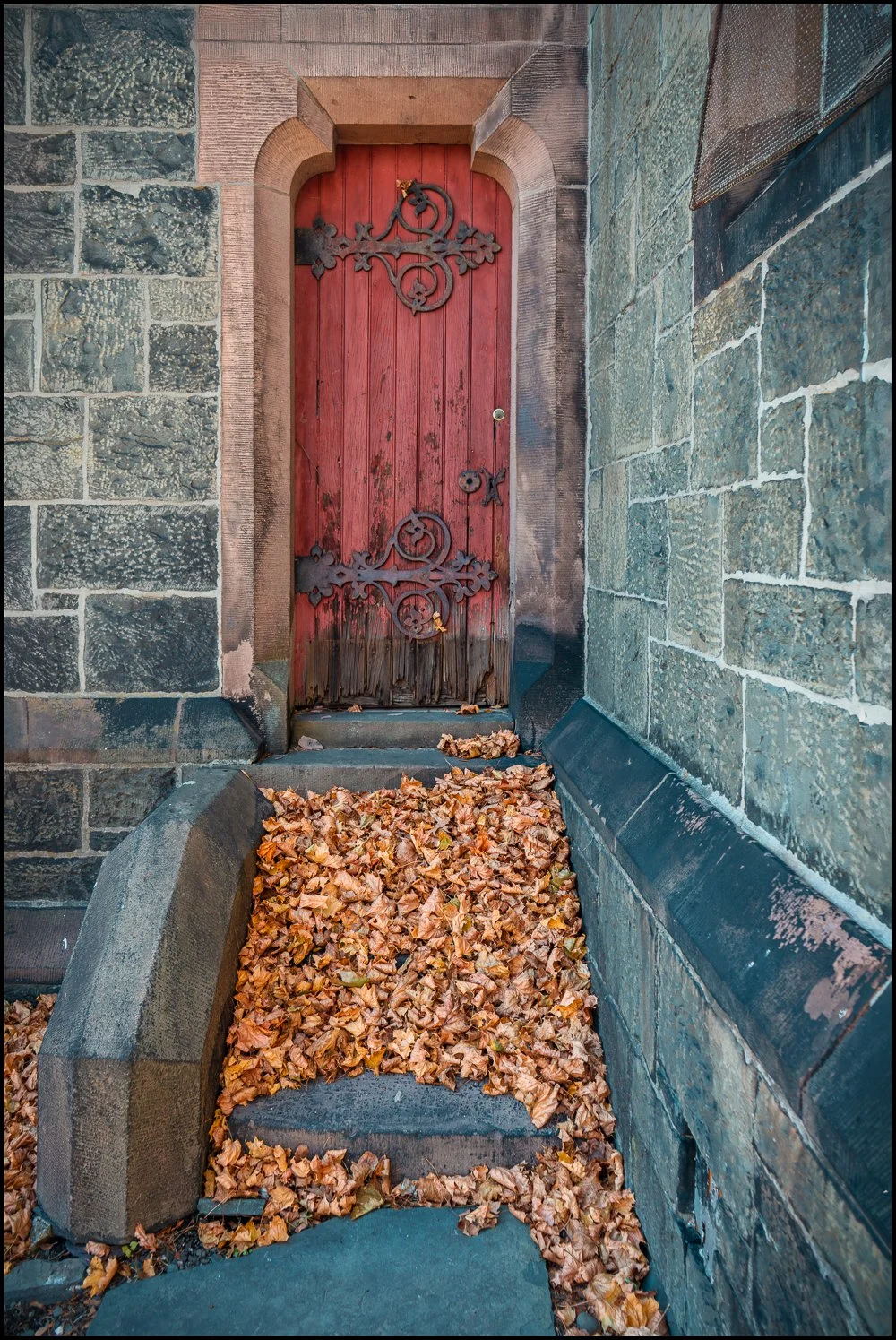
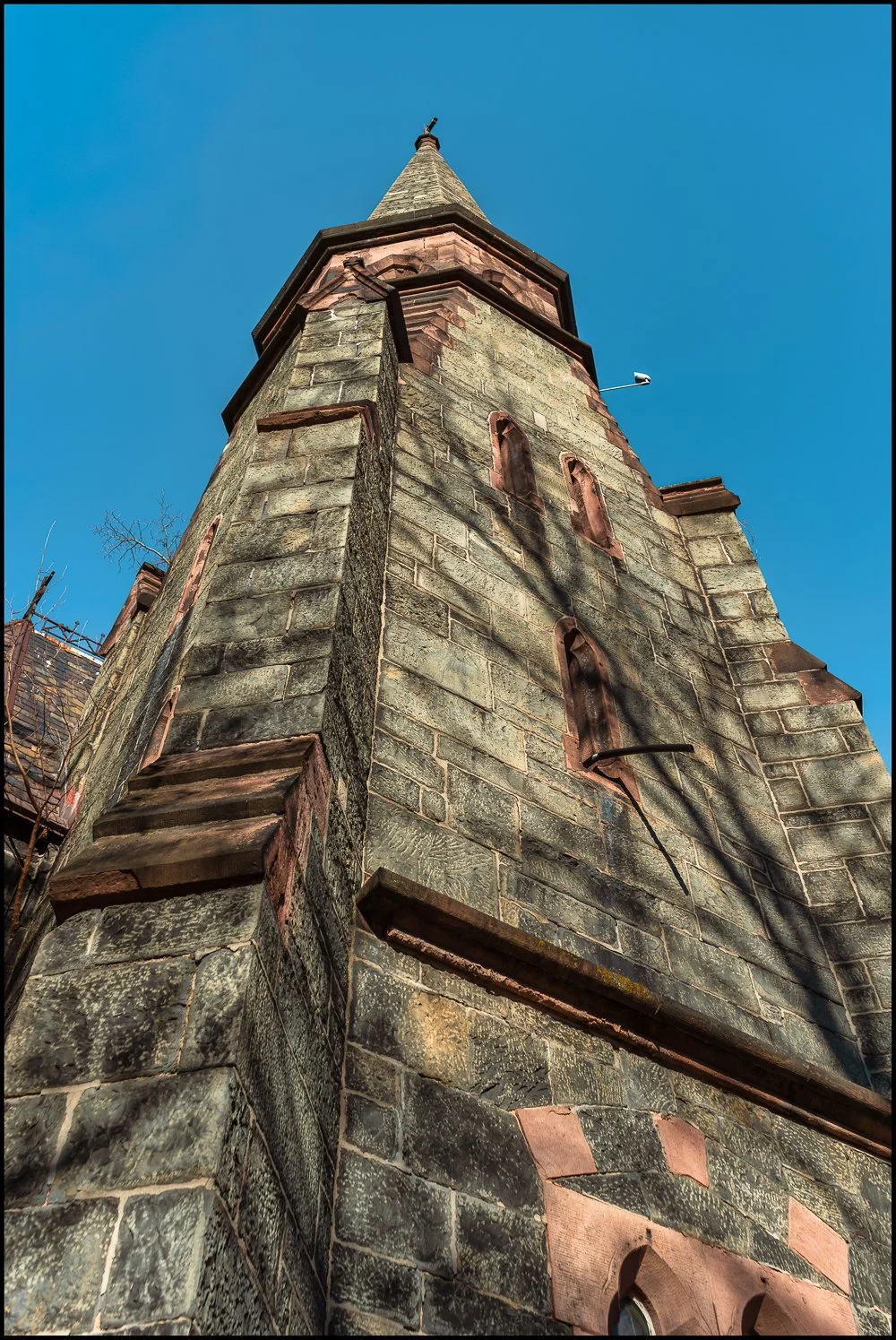
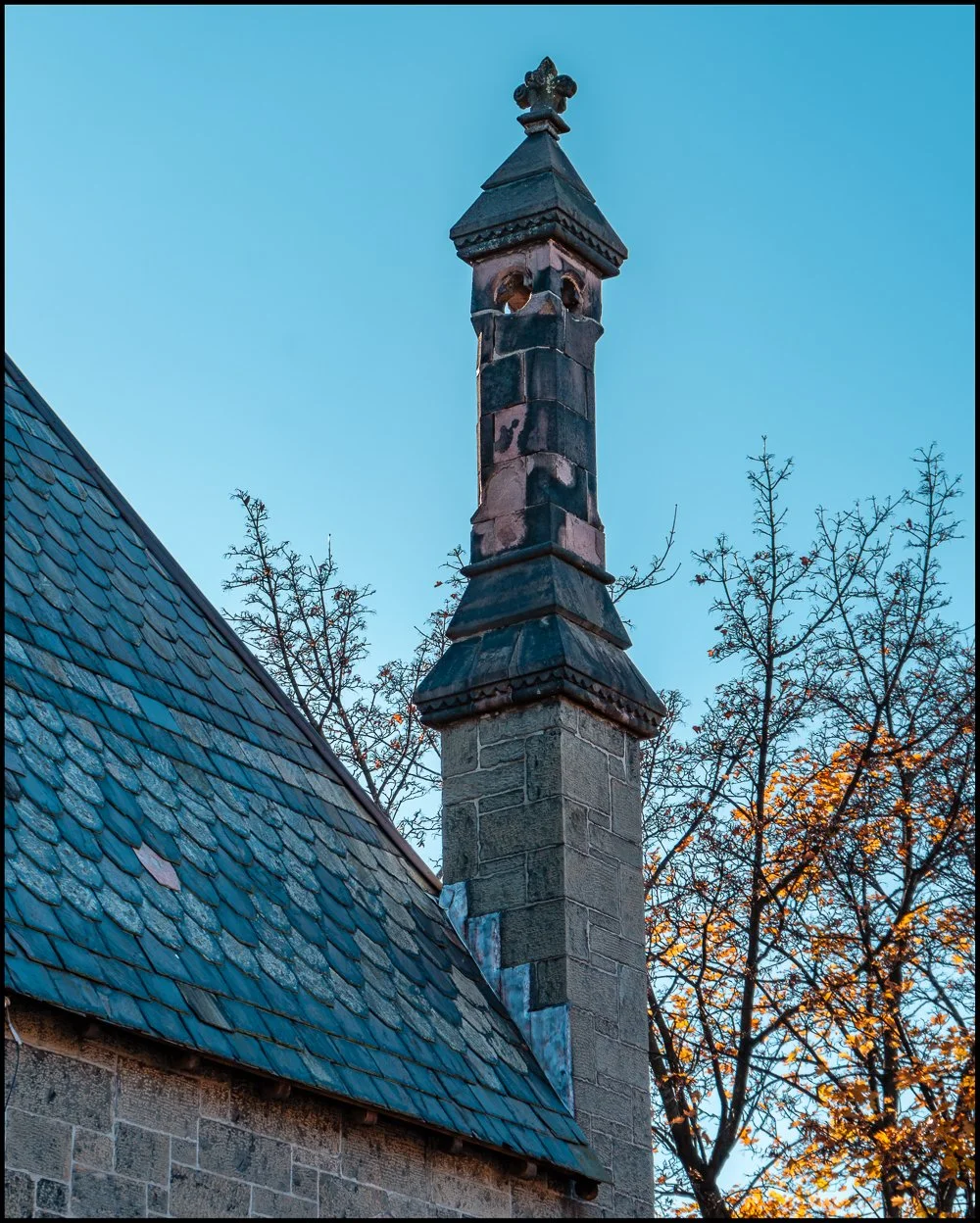
The Church of the Holy Comforter, built in 1860, is a Gothic Revival church located at 18 Davies Place, near the train station in Poughkeepsie, New York, United States, a few blocks from the Hudson River. Its steeple is prominently visible to traffic passing through the city since the construction of the elevated US 9 expressway in 1965.
The congregation first formed in 1854 as Christ Church. Six years later, it had incorporated and hired Richard Upjohn, a prominent architect noted for his churches, to design a building. His original plans are on file at Columbia University's Avery Library. The cornerstone—located at the southwest buttress of the tower—was laid on June 14, 1859 and the church was consecrated by Bishop Horatio Potter on October 25, 1860. Holy Comforter is a Gothic-Revival structure with walls of local Ulster County bluestone from across the river and trim of New Jersey brownstone. Inside, the original pews are still in place and the vaulted ceiling is supported with wooden ribs. An addition to the north was built in 1867 with funds provided by William Augustus Davies in memory of his late wife, Sarah Van Wagenen.
It is now known as the Church of the Holy Comforter in the Archdiocese of New York of the Holy Orthodox Catholic and Apostolic Church of America and is no longer affiliated with the Episcopal Church. Its break with the Episcopal Church grew out of disagreements and events in the 1970s. It was later affiliated with the Anglican Church and recently became affiliated with the Holy Orthodox Catholic and Apostolic Church of America.
On April 13, 1972, it was added to the National Register of Historic Places. It is also a contributing property to the Mill Street-North Clover Street Historic District listed on the Register later that year.
Casablanca
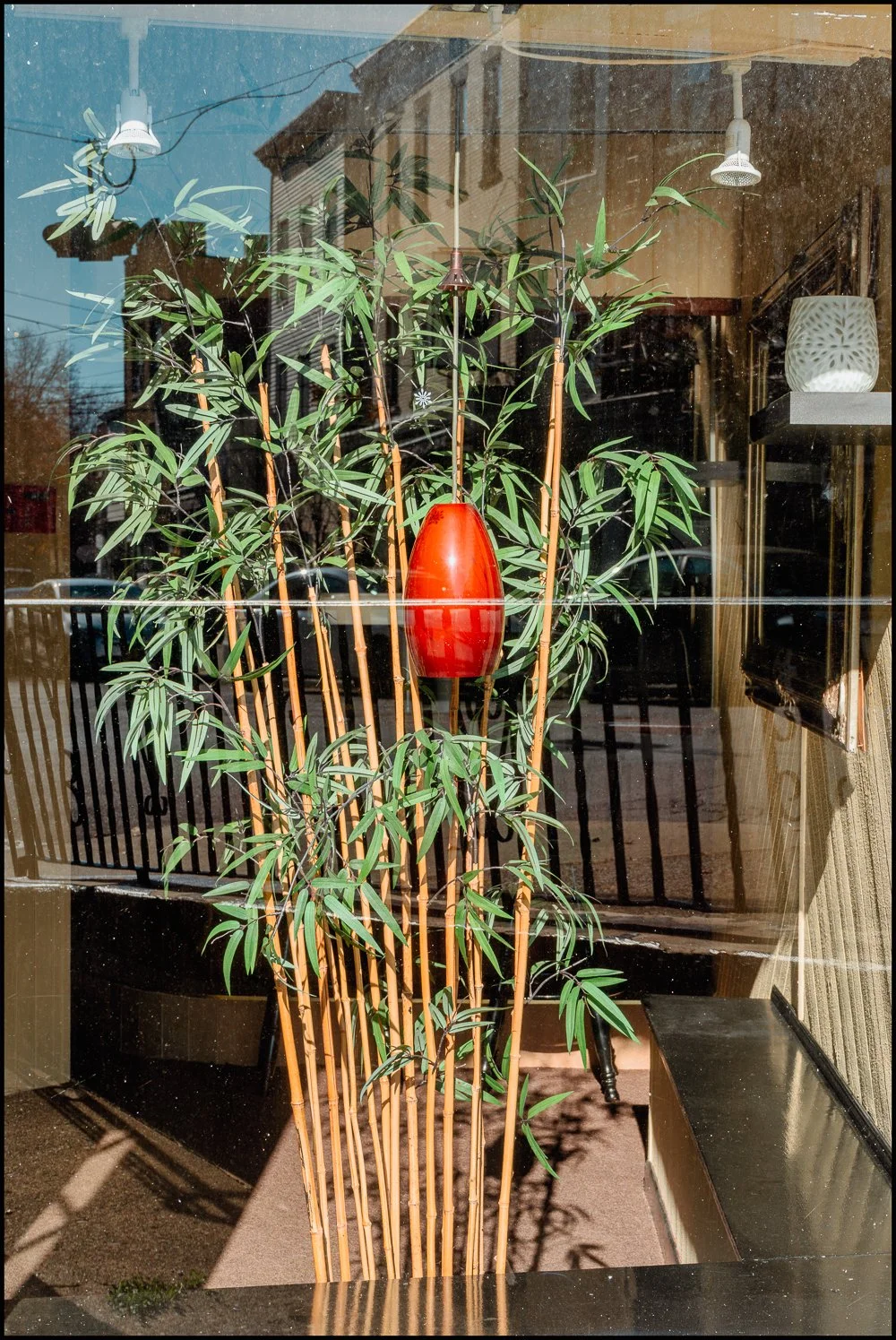
Looking through the window of Casablanca, a Moroccan Restaurant. I like Moroccan food, but the restaurant seemed to be closed. If it had been open I would probably have eaten there.
Walkway over the Hudson
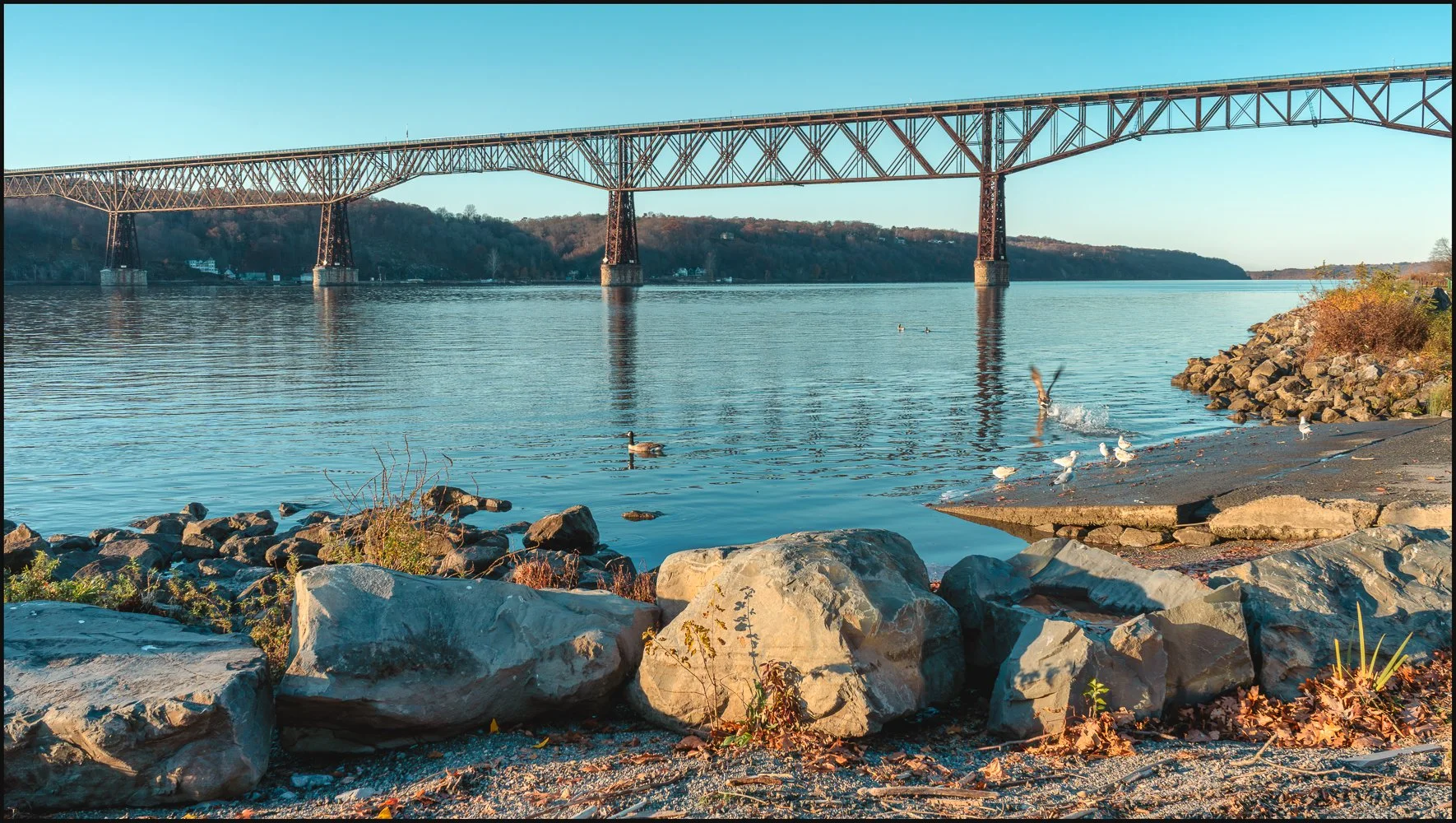
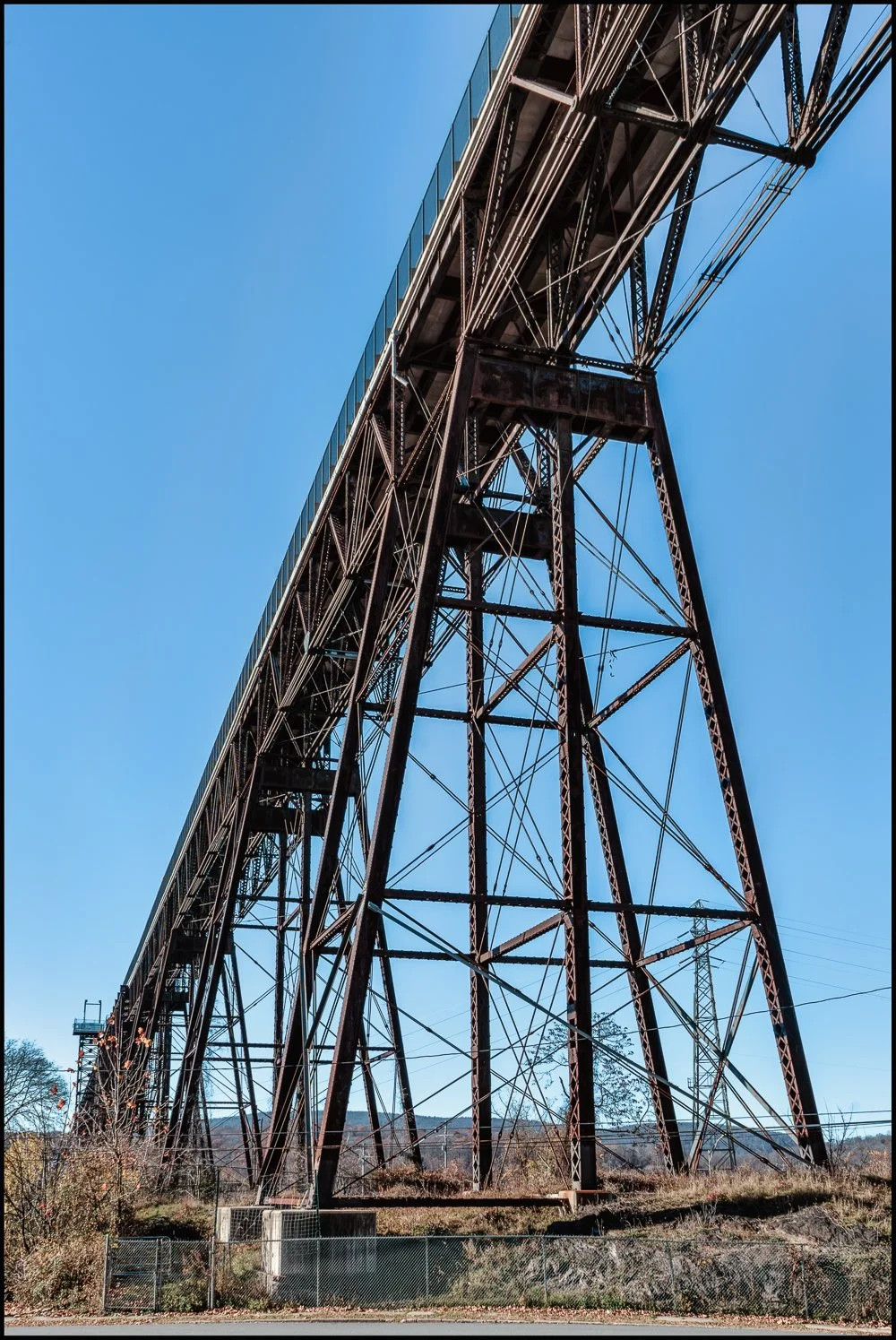
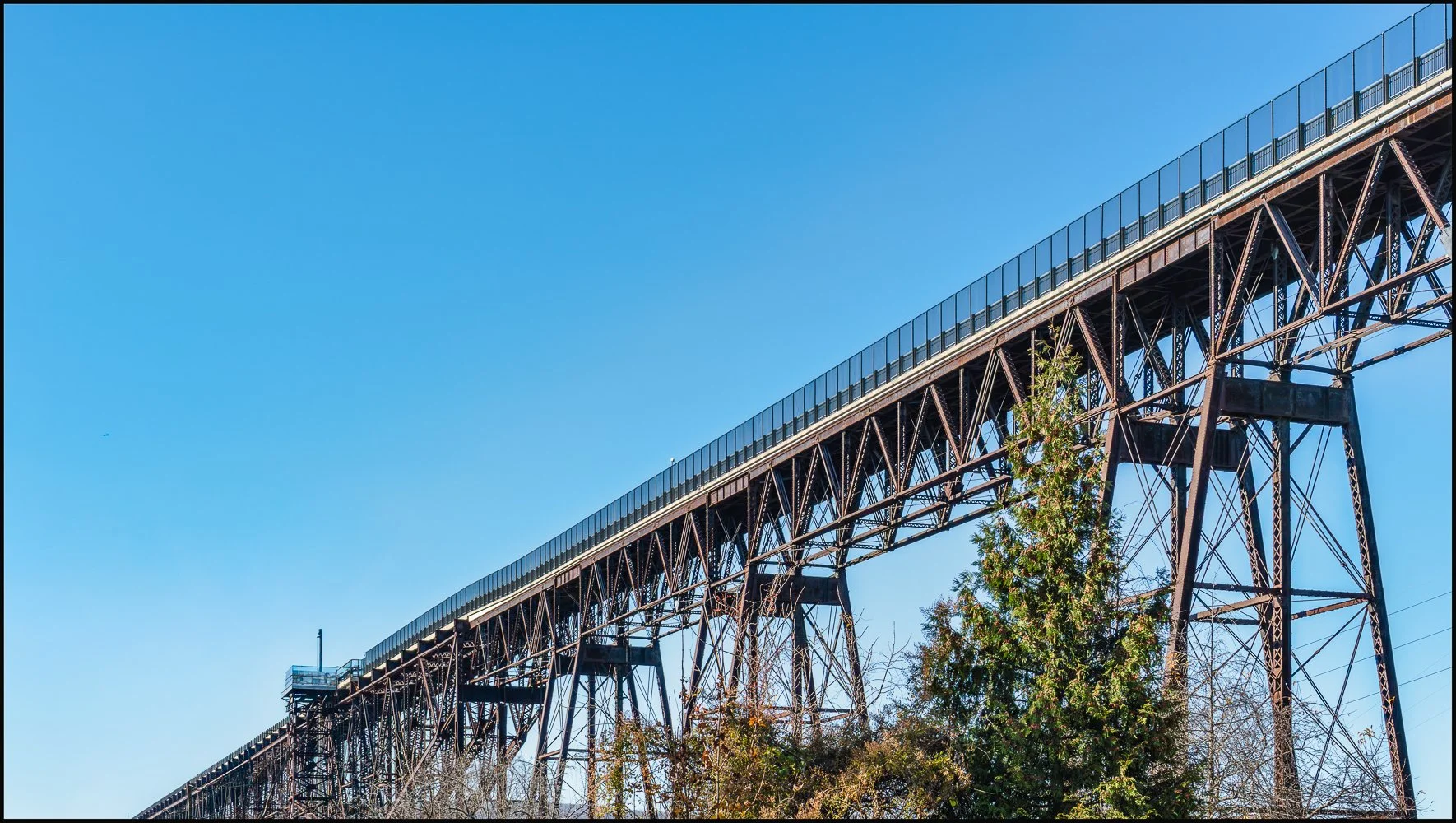
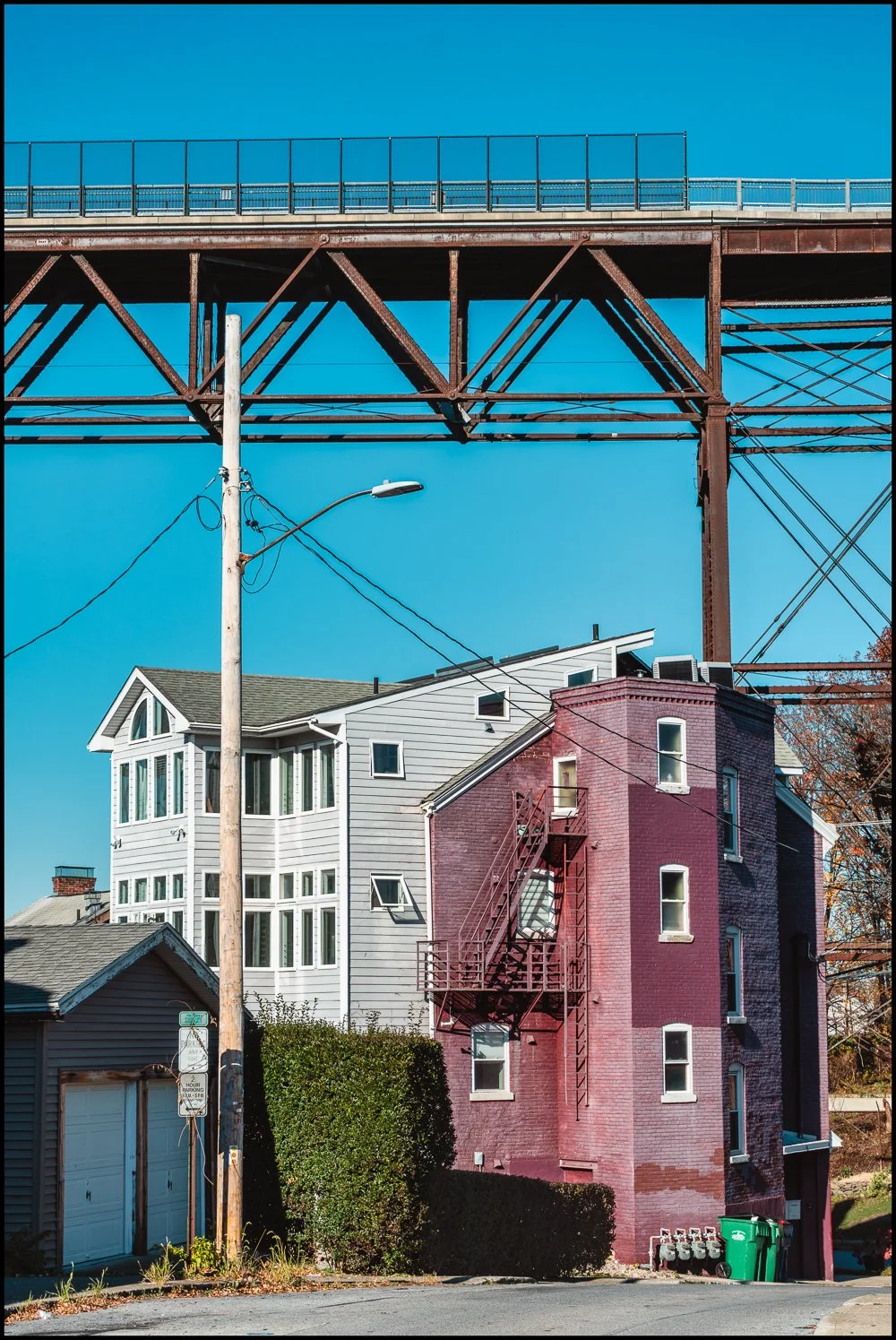
The Walkway over the Hudson (also known as the Poughkeepsie Bridge, Poughkeepsie Railroad Bridge, Poughkeepsie–Highland Railroad Bridge, and High Bridge) is a steel cantilever bridge spanning the Hudson River between Poughkeepsie, New York, on the east bank and Highland, New York, on the west bank. Built as a double track railroad bridge, it was completed on January 1, 1889, and formed part of the Maybrook Line of the New York, New Haven and Hartford Railroad.
The bridge was removed from service on May 8, 1974 after damage from a tie fire. It was listed on the National Register of Historic Places in 1979, and its entry updated in 2008. The bridge was designated as a National Historic Civil Engineering Landmark by the American Society of Civil Engineers in 2009.
It reopened on October 3, 2009, as a pedestrian walkway, and part of the new Walkway Over the Hudson State Historic Park. The New York State Bridge Authority owns and is charged with maintaining the bridge structure (as directed by the Governor and Legislature in July 2010). The park is operated by the New York State Office of Parks, Recreation and Historic Preservation.[6] In 2017, the walkway hosted 593,868 visitors. Connecting the Hudson Valley Rail Trail in Highland to the Dutchess Rail Trail, the span forms part of the Empire State Trail.[8]
At a length of 6,768 feet (2,063 m), it was the world's longest pedestrian footbridge from its opening until October 2016, when it became the second-longest after being surpassed by the 7,974-foot (2,430 m) Mile Into the Wild Walkway in Keenesburg, Colorado, United States. The Walkway over the Hudson now refers to itself as the world's longest elevated pedestrian bridge as it has a much higher elevation above its base than the Mile Into The Wild. The Walkway over the Hudson allows bicycles and the Mile Into The Wild does not. Also, the Walkway over the Hudson does not have an admission fee.
For more photographs of the Walkway over the Hudson see here.
BMW on Davis Street
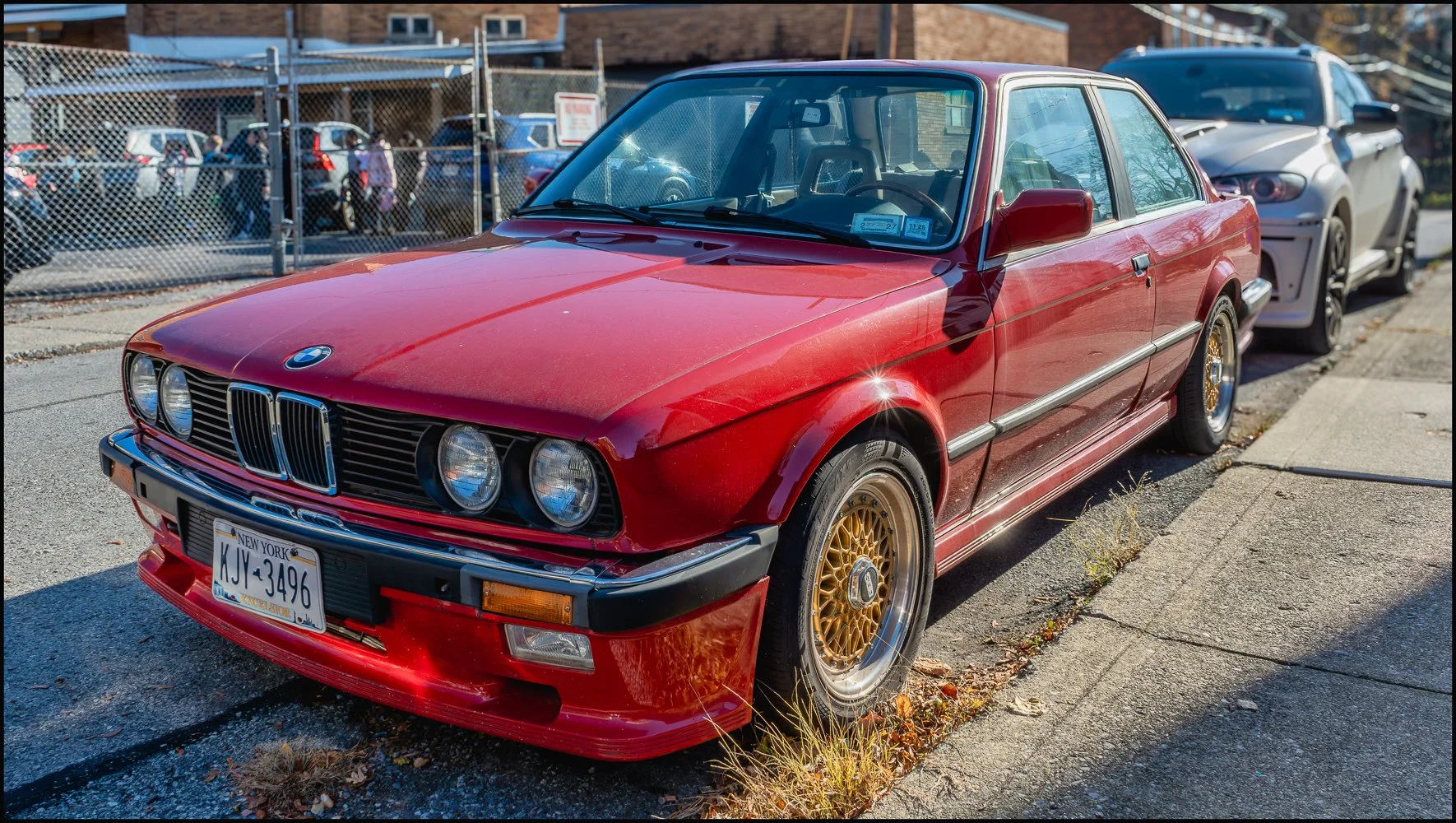

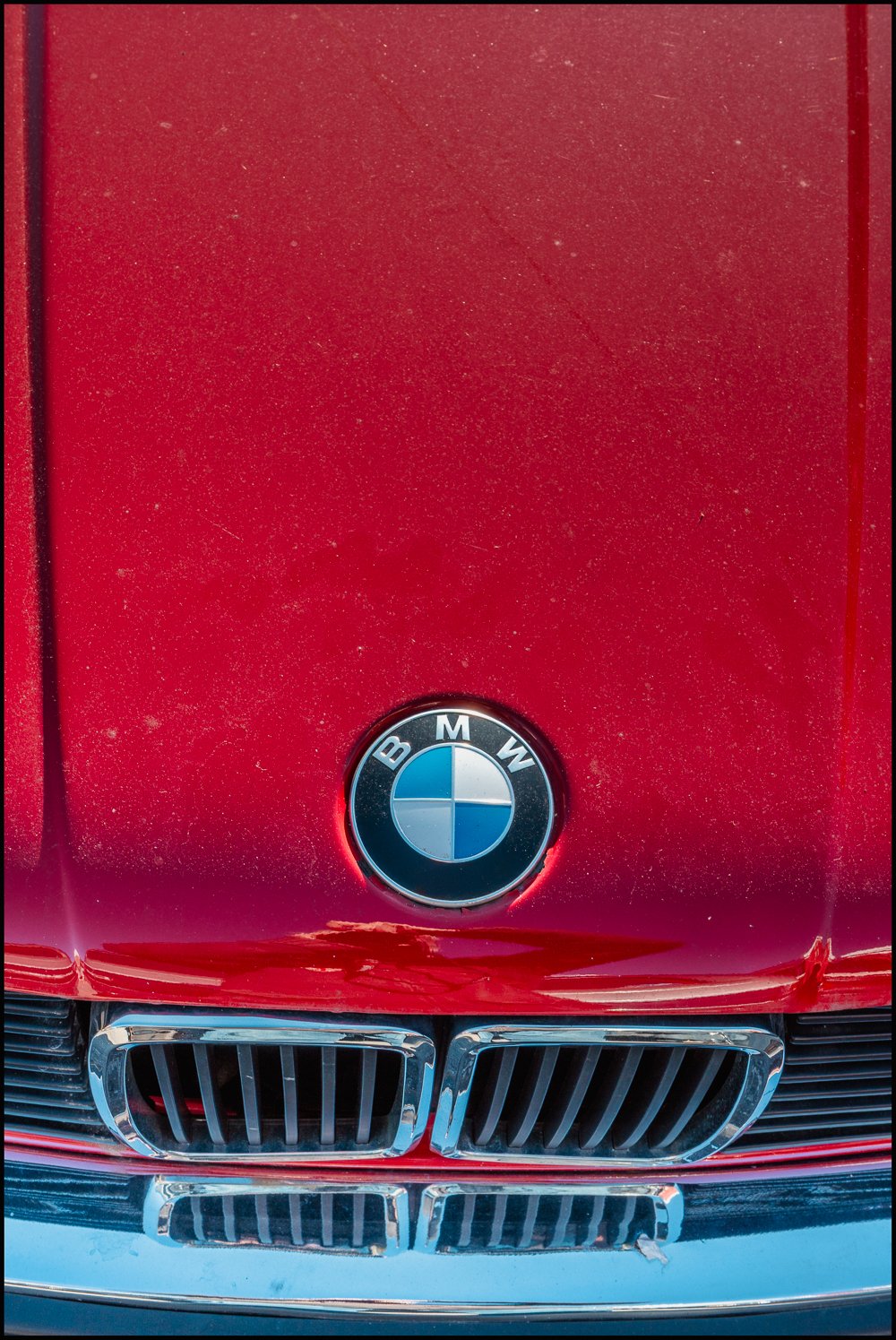
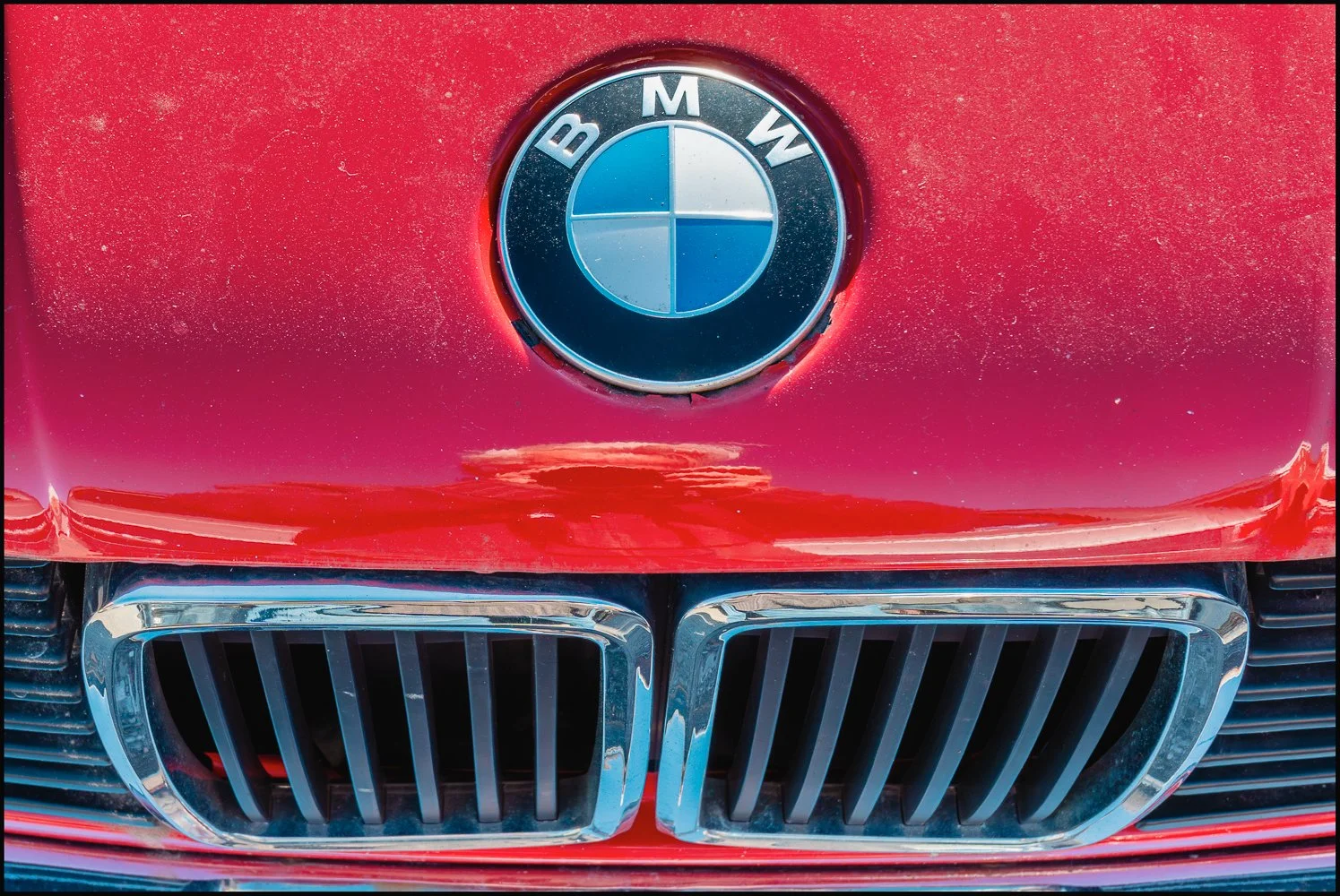
I don’t know much generally about cars including this one. However, after doing some research I believe it to be a BMW 3 Series (E30).
The BMW E30 is the second generation of BMW 3 Series, which was produced from 1982 to 1994 and replaced the E21 3 Series. The model range included 2-door saloon (sometimes referred to as a coupé) and convertible body styles, as well as being the first 3 Series to be produced in 4-door saloon and wagon/estate body styles. It was powered by four-cylinder petrol, six-cylinder petrol and six-cylinder diesel engines, the latter a first for the 3 Series. The E30 325iX model was the first BMW to have all-wheel drive.
The first BMW M3 model was built on the E30 platform and was powered by the high-revving BMW S14 four-cylinder petrol engine. The BMW Z1 roadster was also based on the E30 platform. Following the launch of the E36 3 Series in 1990, the E30 began to be phased out.
It’s certainly a very attractive car.
Houses on Davies Place/Davies Court
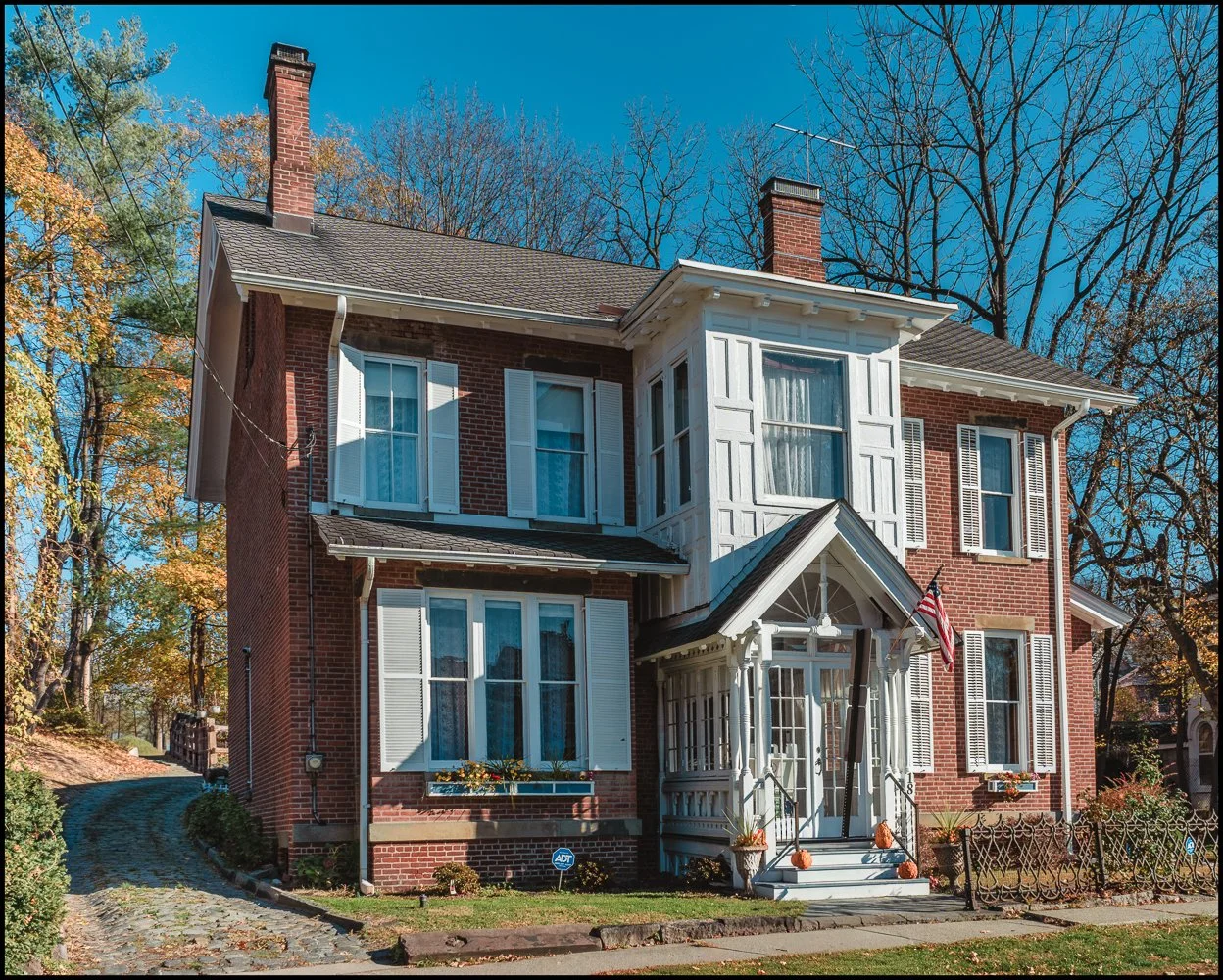
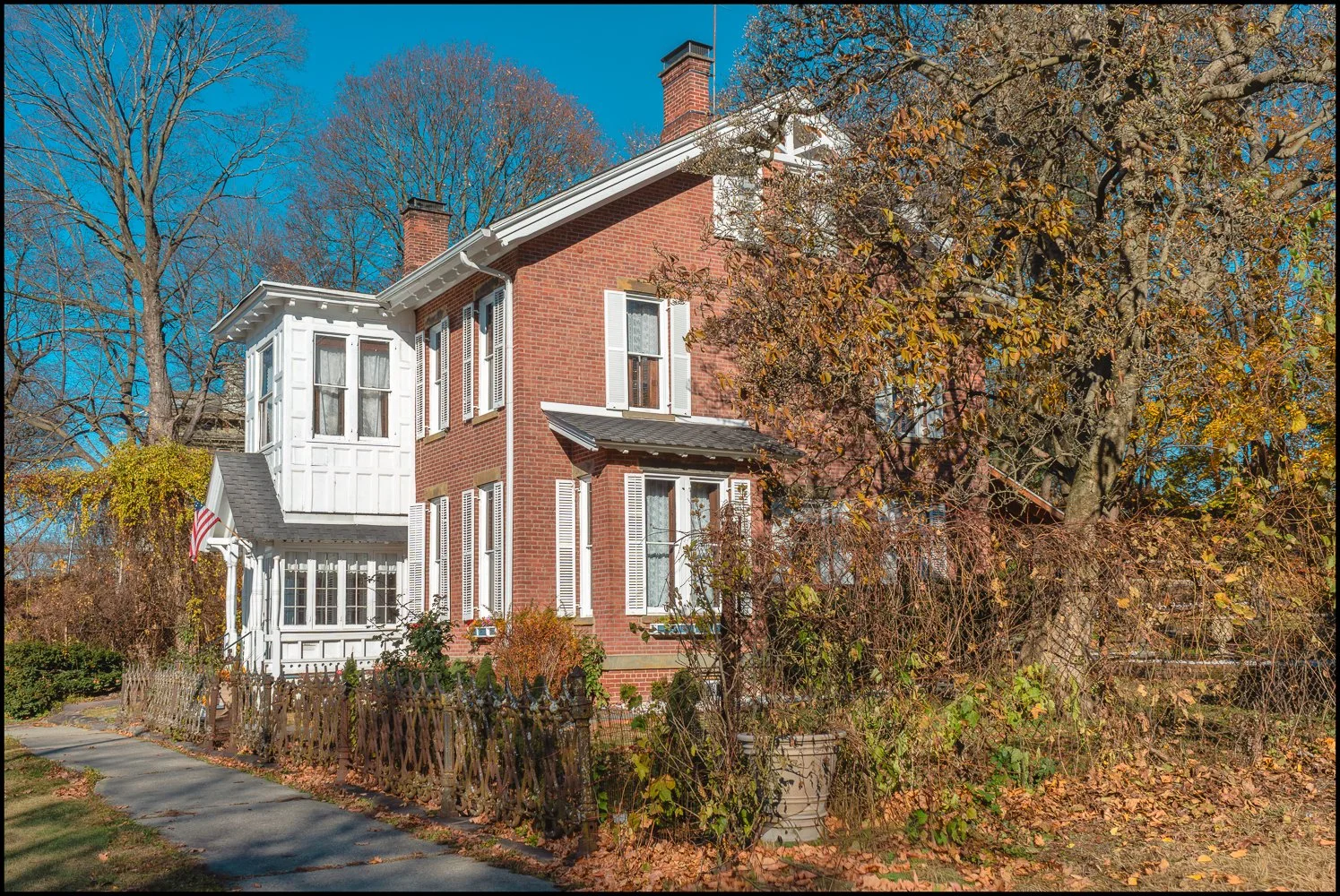
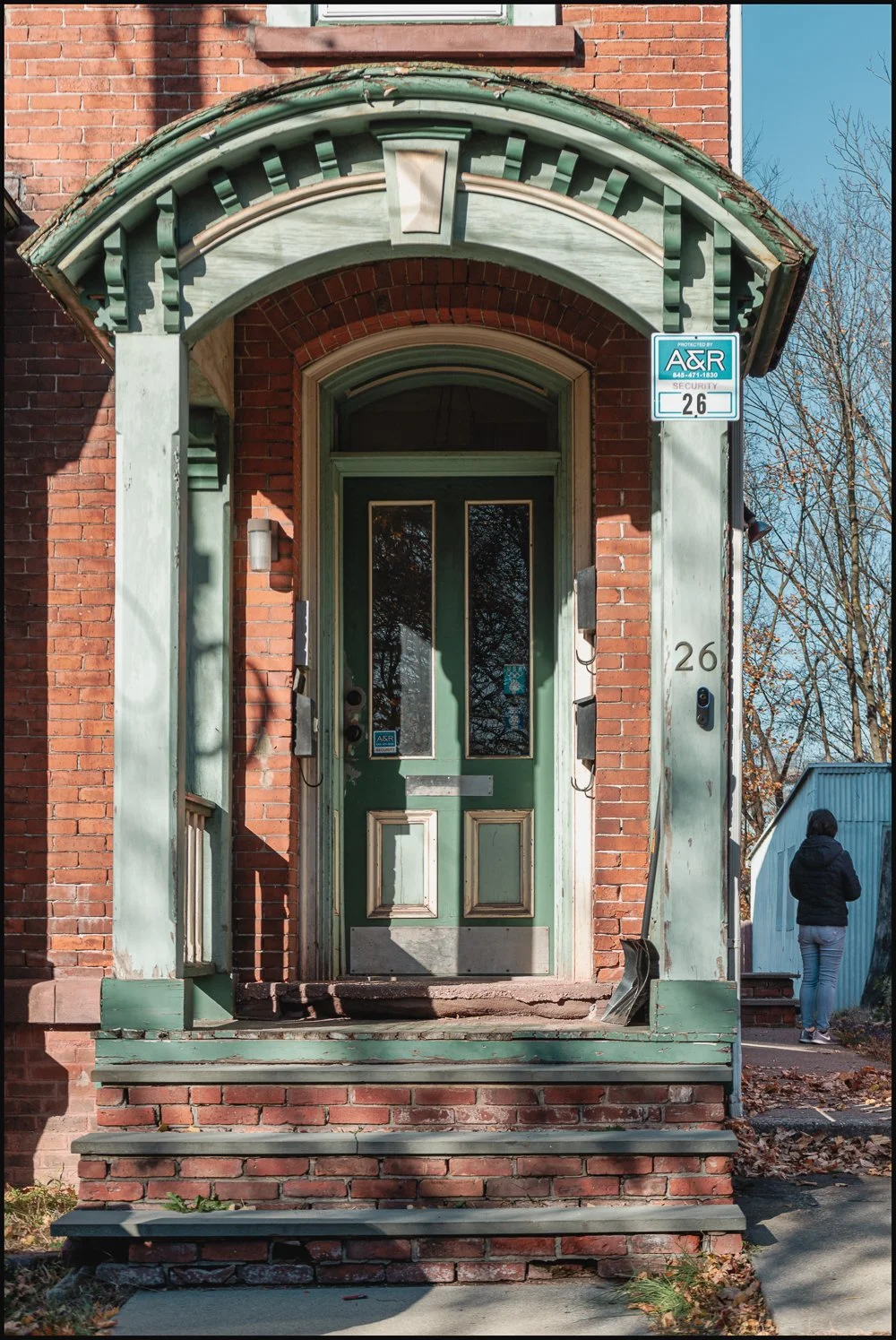
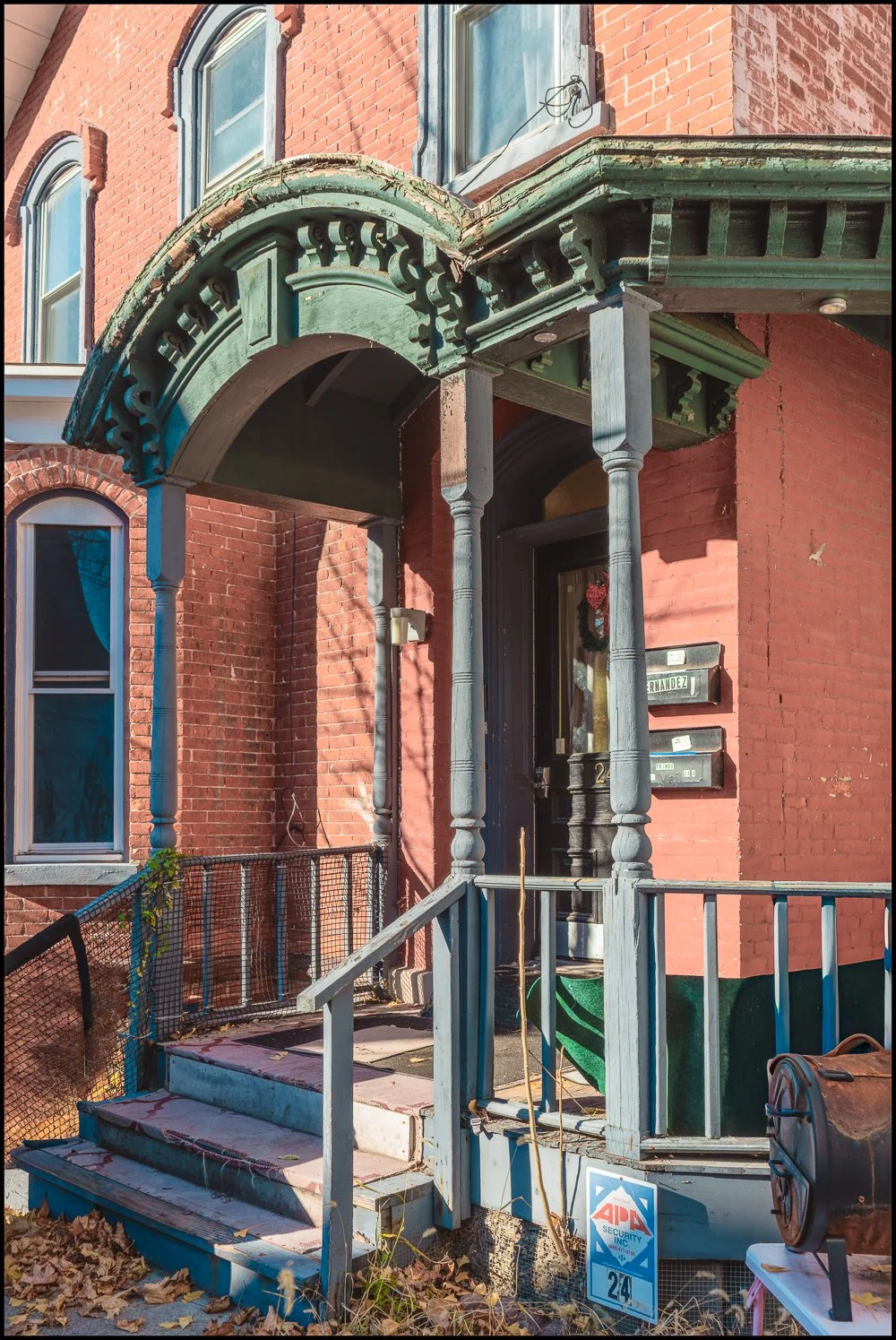
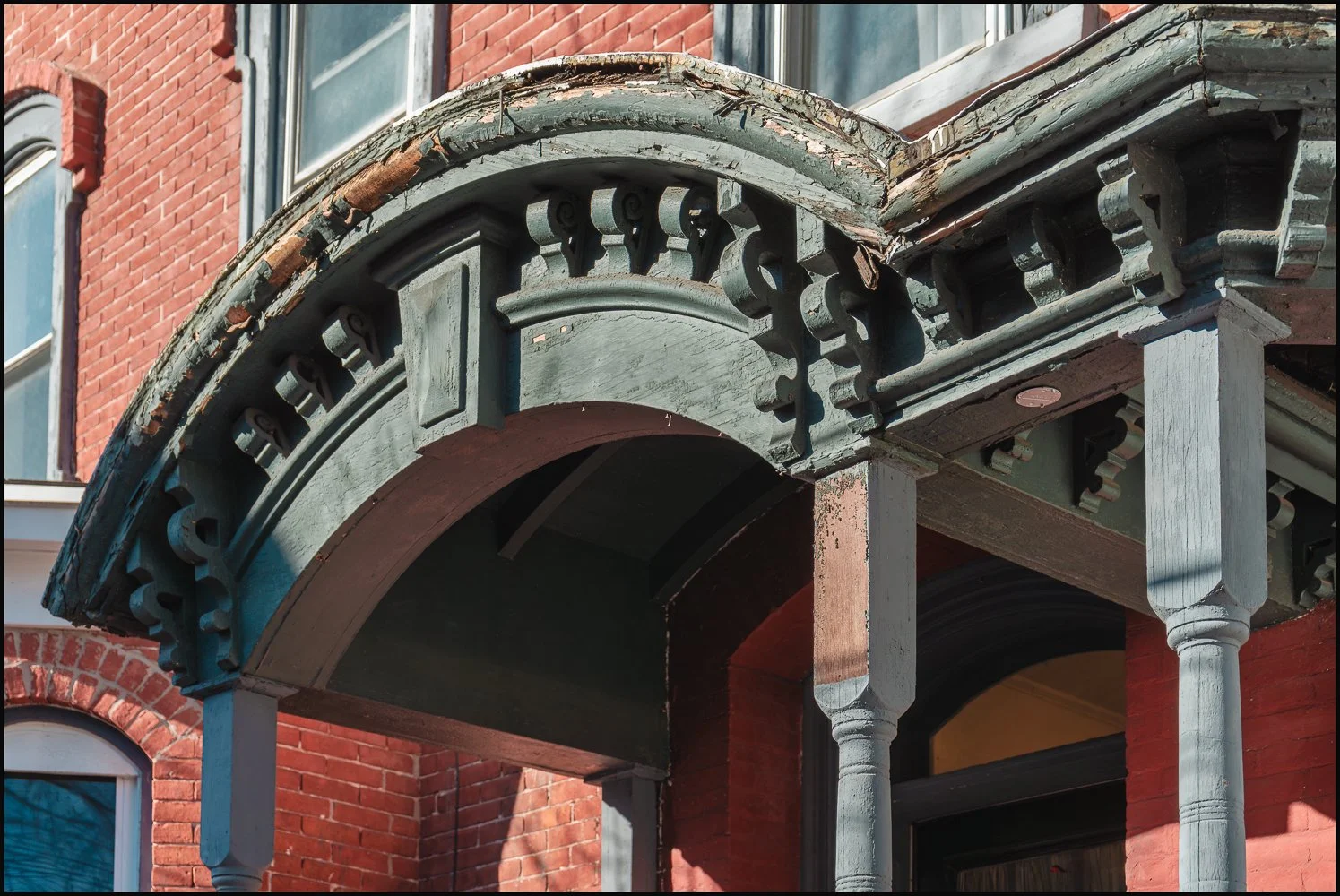
I don’t know anything about them. I just found them interesting.
Parrots on Davies Place
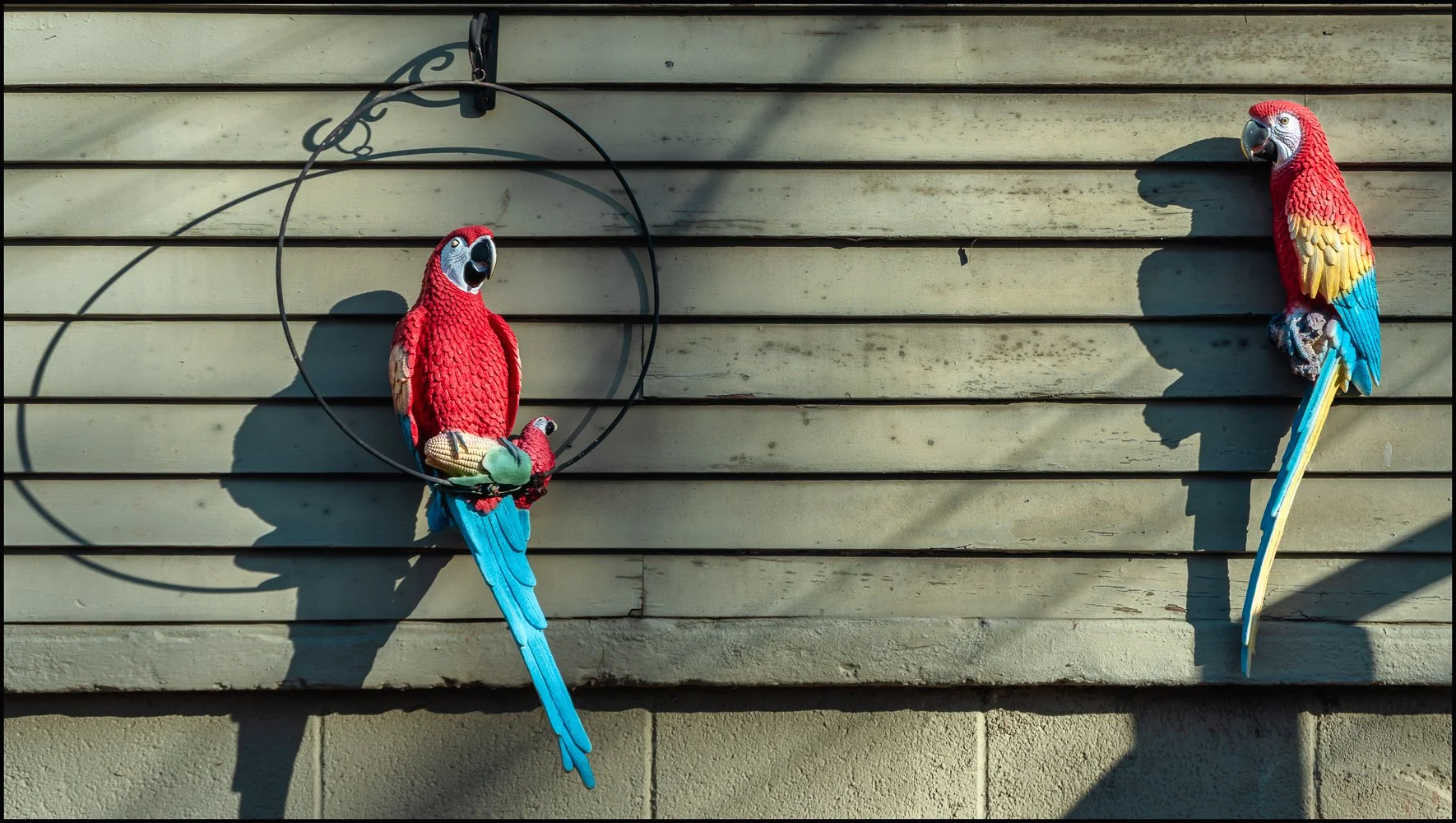
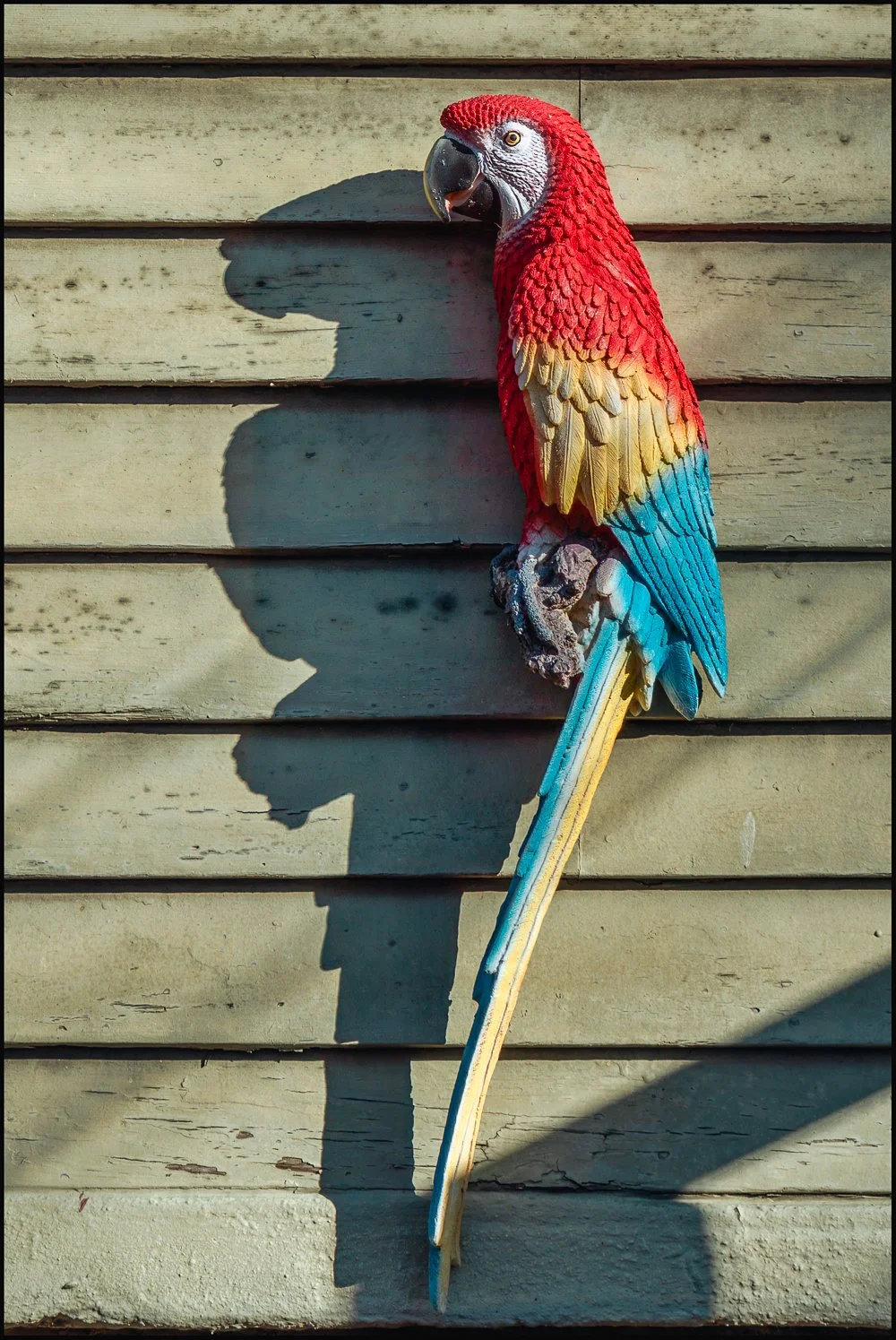
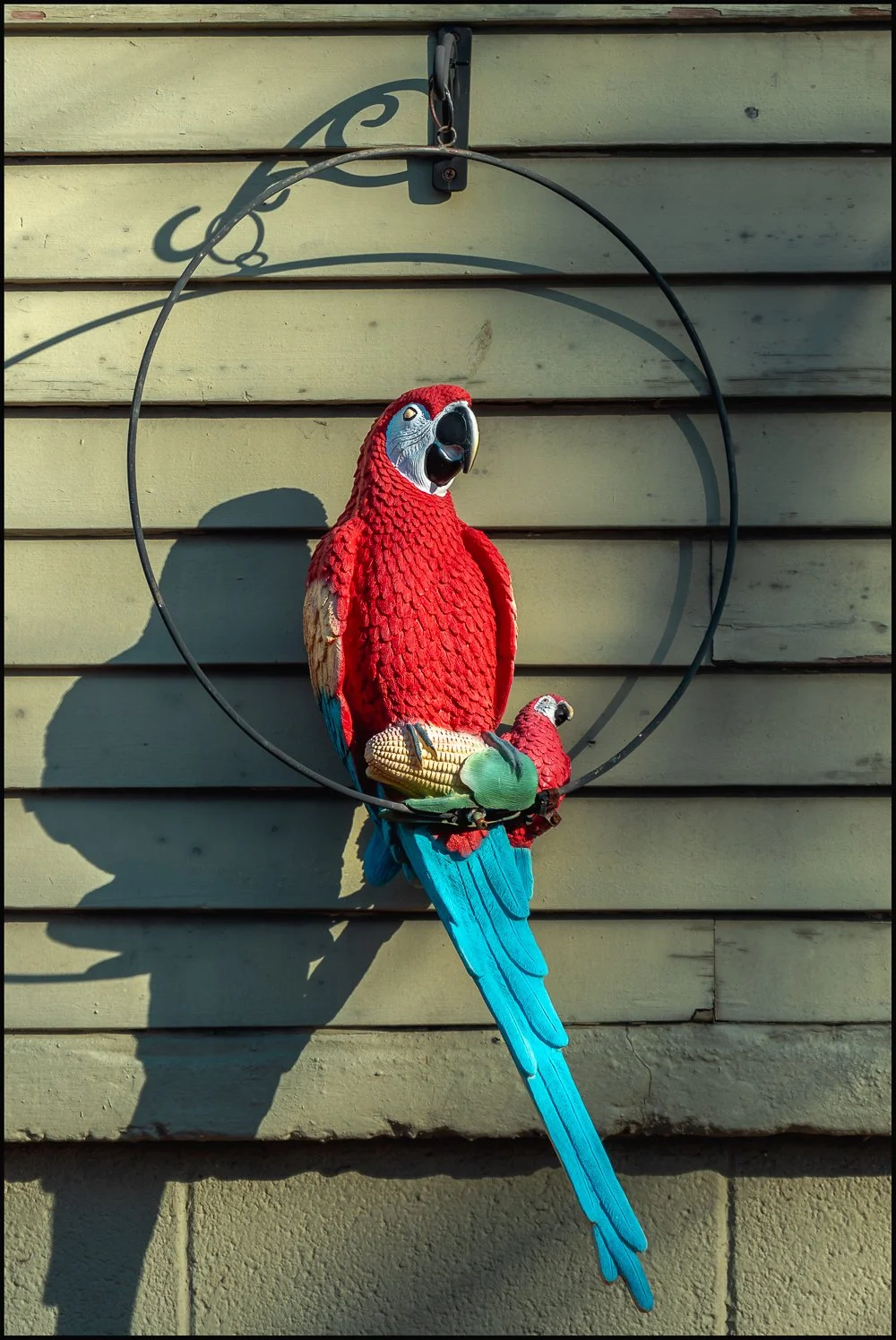
Clearly they’re not real parrots. Rather colorful though. The grass below them was littered with bird effigies of all sizes.
A Spectacular Tree
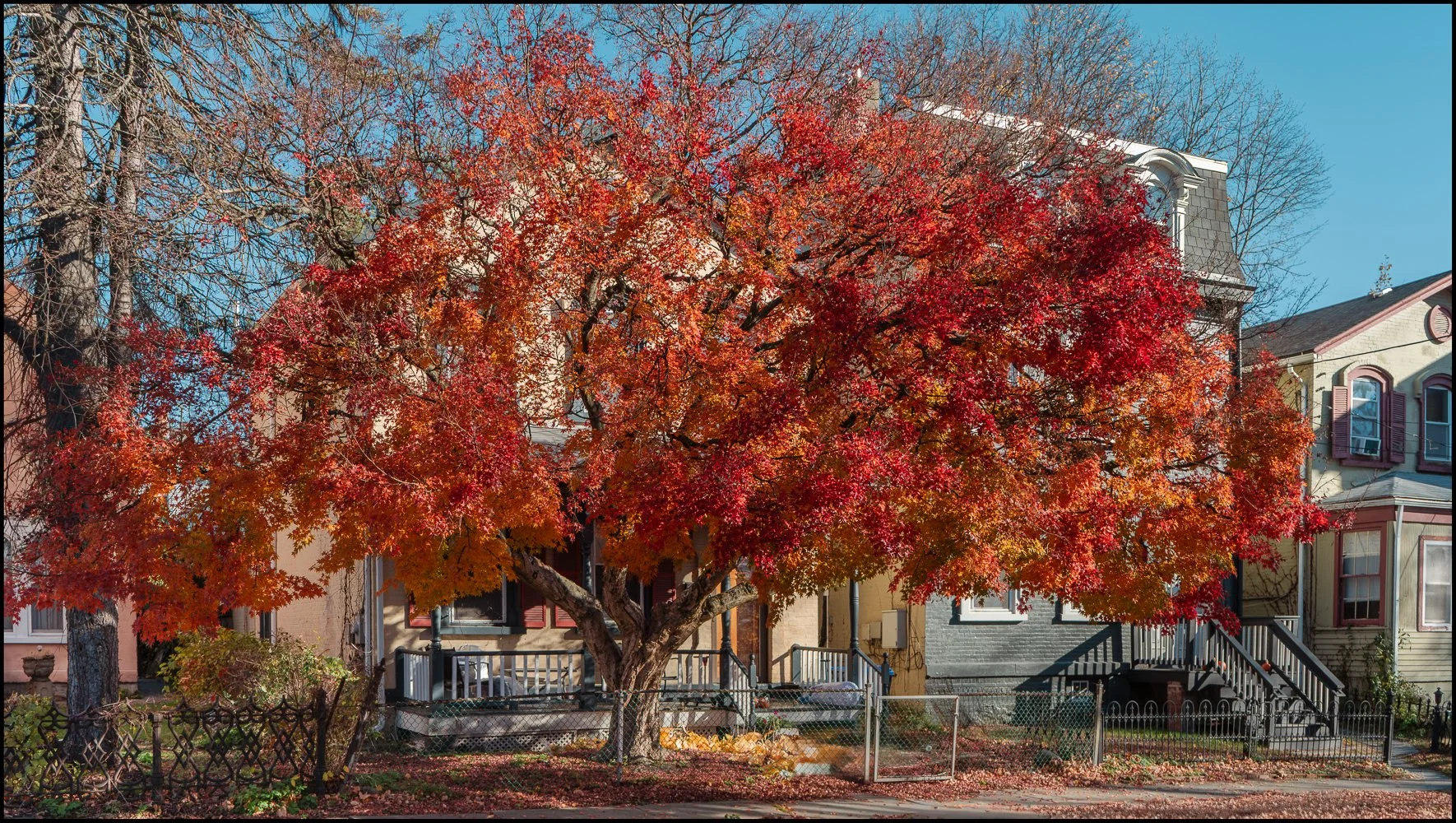
I’ve taken a lot of pictures (maybe too many) of fall colors this year, but I don’t think I’ve come across another tree as spectacular as this one. I have no idea what kind of tree it is!
Tesla Cyber Truck
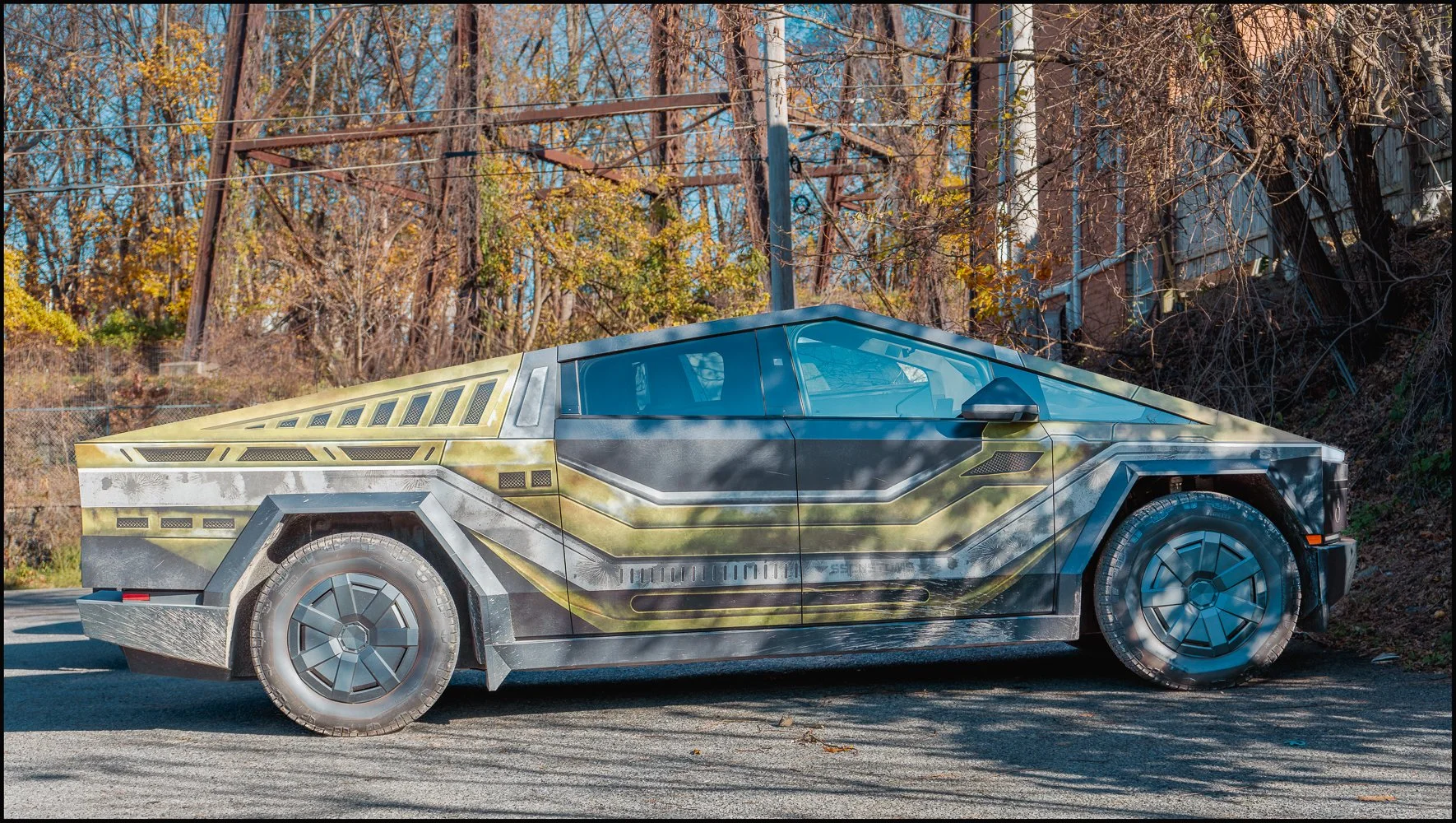
“The Tesla Cybertruck is a battery-electric full-size pickup truck manufactured by Tesla, Inc. since 2023. It was first unveiled as a prototype in November 2019, featuring a distinctive angular design composed of flat, unpainted stainless steel body panels, drawing comparisons to low-polygon computer models.
Originally scheduled for production in late 2021, the vehicle faced multiple delays before entering limited production at Gigafactory Texas in November 2023, with initial customer deliveries occurring later that month. As of 2025, three variants are available: a tri-motor all-wheel drive (AWD) model marketed as the "Cyberbeast", a dual-motor AWD model, and a single-motor rear-wheel drive (RWD) "Long Range" model. EPA range estimates vary by configuration, from 320 to 350 miles (515 to 565 km).”
As of 2025, the Cybertruck is sold in the United States, Mexico, Canada and South Korea. The Cybertruck has been criticized for its production quality and safety concerns while its sales have been described as disappointing.” (Wikipedia)
In my opinion it’s possibly the ugliest vehicle I’ve ever seen, made worse with the bilious color scheme.
An Abandoned Mansion
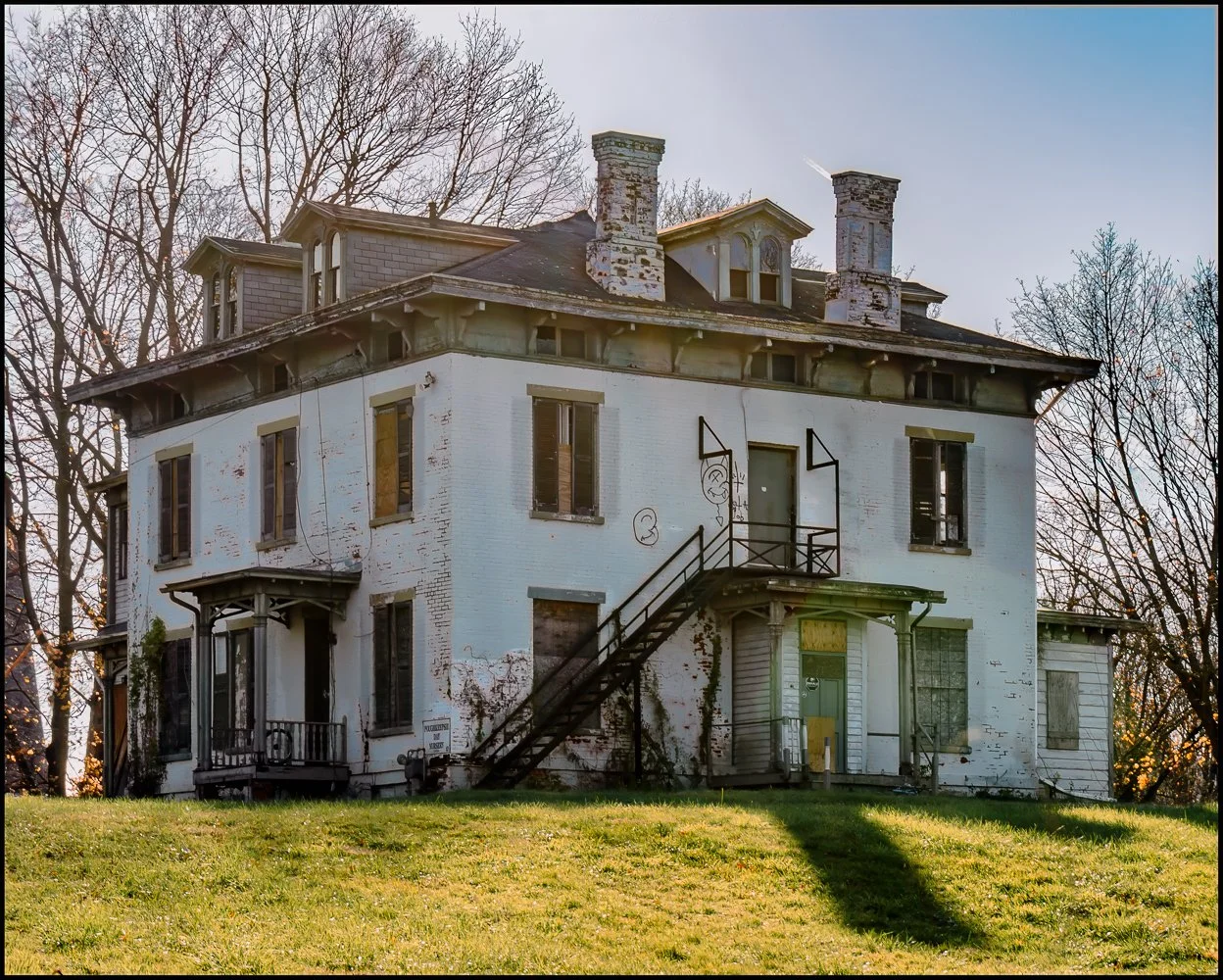
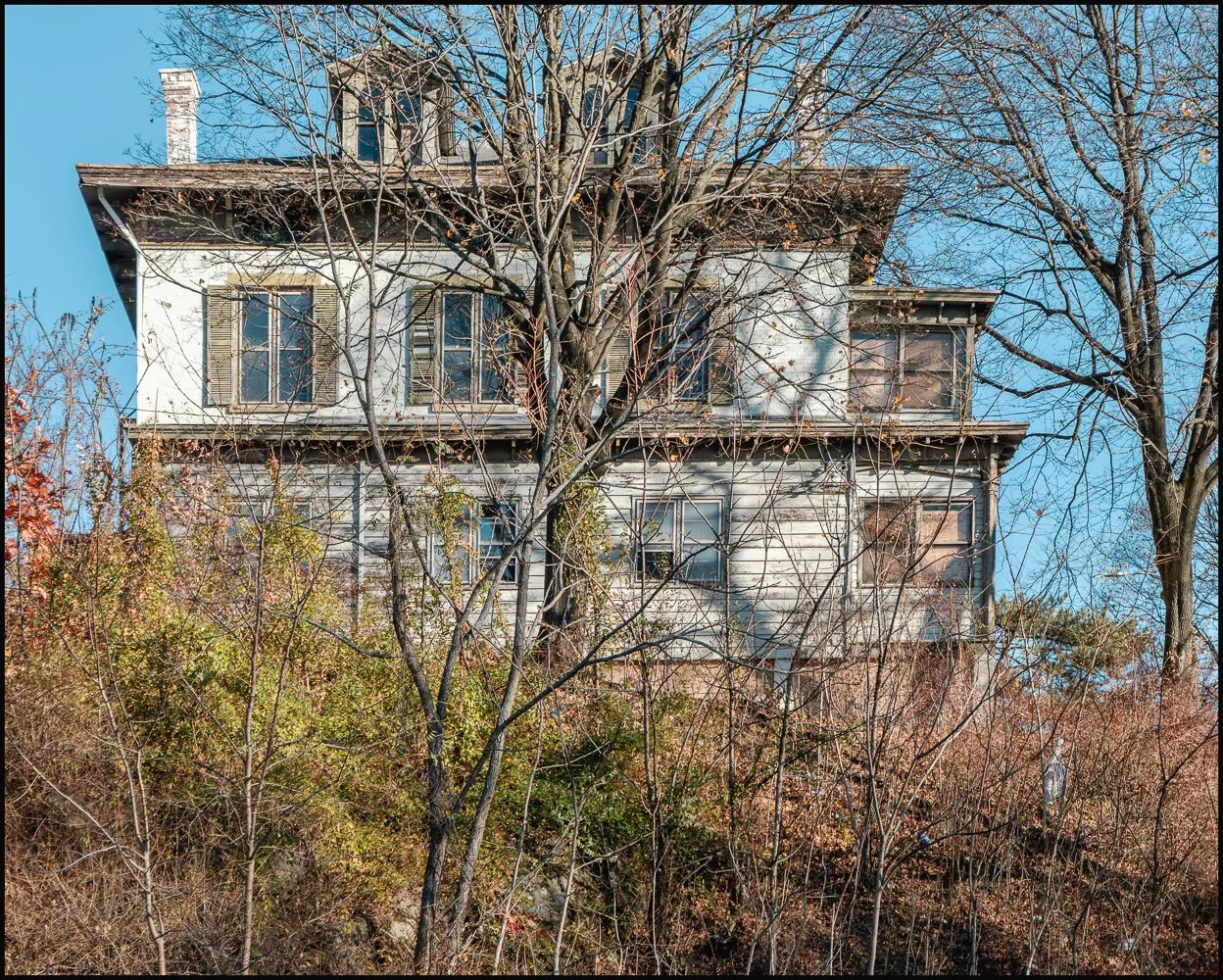
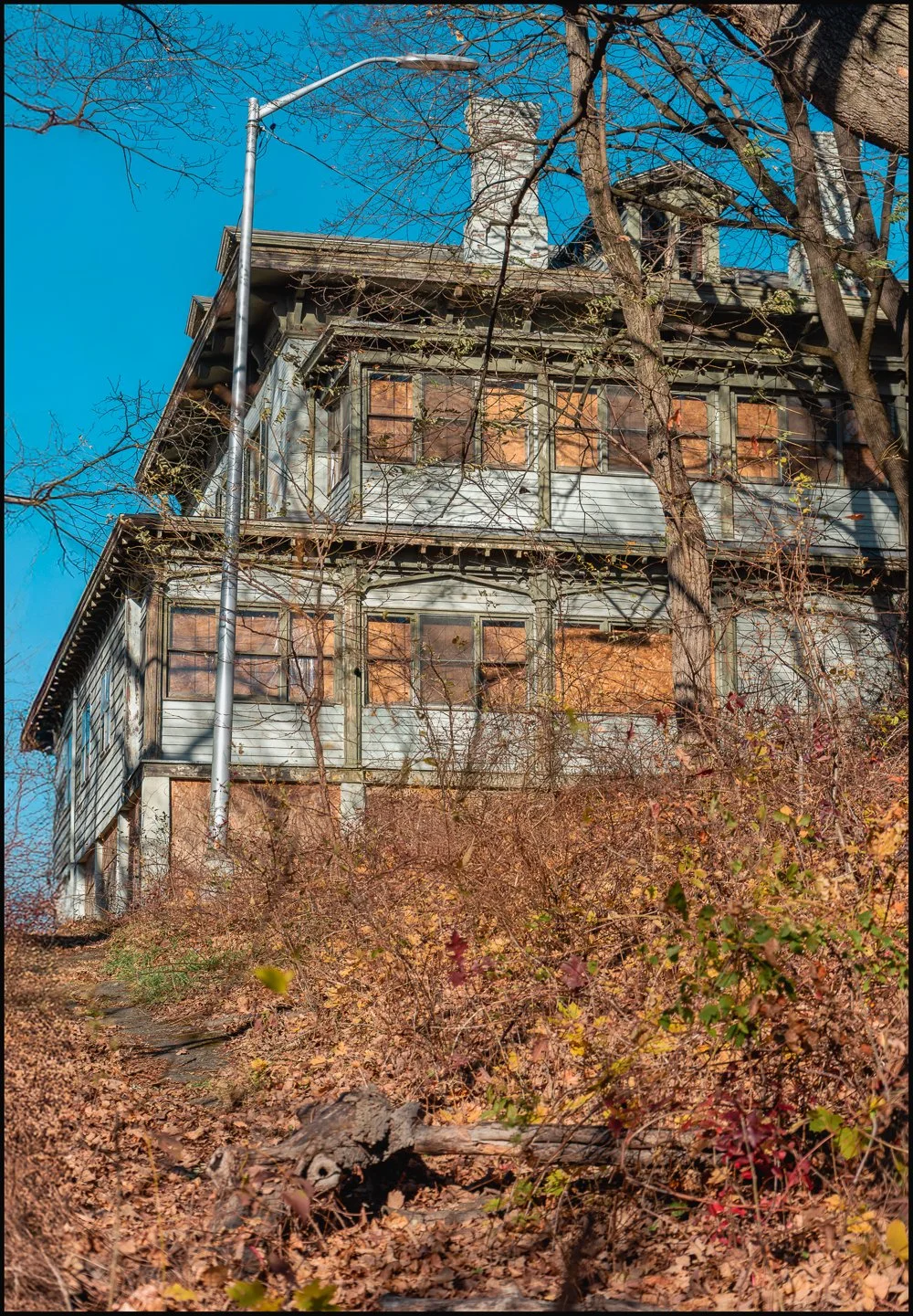
“Once in a while a historic house will suddenly pop up in the news and remind us all of just how much history we have in Dutchess County and right here in Poughkeepsie. There have been recent debates and discussions as to what should be done with the old house and grounds at Wheaton Park. There are plans for building several units for apartments that would have easy access to the train station. Even talk of keeping the old mansion and renovating it to also serve as housing. But what was the original use of this property? And what other purposes did it serve?
What we now know as Wheaton Park today was once the formal grounds and mansion of the Pelton Family. Built around 1860, this home was lived in by brothers Charles and George Pelton. It sits high on a hill just across the Fallkill creek where their factory was located. The brothers operated their factory on Mill street that produced carpets and pins (the factory still stands today!). They did quite well for themselves despite suffering a massive fire in their factory in 1854 (seen in a newspaper article to the right). During the Civil War, they were producing 60,000 yards of carpet a year. Both Pelton brothers had worked their way into the respectable circles of Poughkeepsie society, particularly George, who was a major supporter of the Democratic party in the area and was appointed by President James Buchanan to serve as the Postmaster in Poughkeepsie in 1856. The house was lived in by Charles and his wife Parthenia, and George (who never married) until 1895 when George (who was 16 years younger than his brother Charles) passed away.
The house was then used for a few years as a temporary home for the deaf. The Rev. Thomas Gallaudet was in the process of moving his operations from New York City to Dutchess County. As an Episcopal priest whose mother was deaf, Gallaudet’s mission was to create a home that focused on the needs of deaf mutes. While he was waiting for the construction of his new facility in Wappingers, Gallaudet used the old Pelton house until 1903. Surprisingly, the land that had once been the Pelton’s formal grounds had remained intact even as Poughkeepsie grew up around it, and this is what attracted the attention of local residents who wanted more park space for the city’s children at the start of the 20th century.
Caroline Wheaton, a wealthy philanthropist from right here in Poughkeepsie, decided to leave the city $4,000 at her death in 1908. Her son Isaac was the one who suggested it be used to create a park which is exactly what Mayor John Sague did in 1910. Not only were the grounds preserved and turned into Wheaton Park, but the house soon became a nursery and by 1916, the house was fully operational as a day nursery while the park grounds continued to be enjoyed (as seen in this old postcard to the right). The Poughkeepsie Day Nursery served the city and thousands of children within it for a century, closing up in 2014. The house is listed on the National and State register of Historic Places. What does the future hold for this house and park? Time will tell.” (Hidden Mansions: Pelton/Hill House) by Shannon Butler”.
Fall Kill Vortex
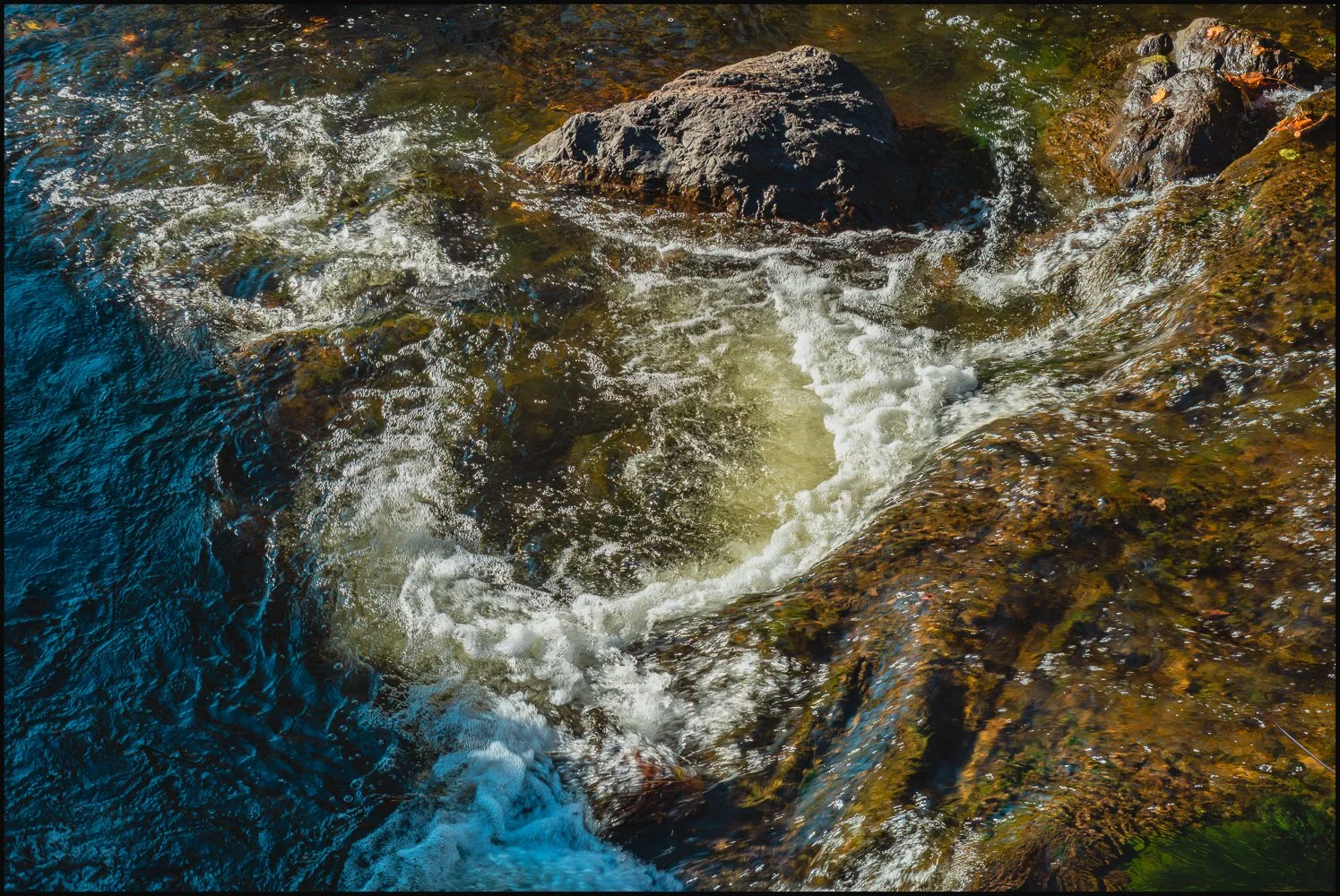
The Fall Kill is a creek in Dutchess County, New York, United States. The stream is approximately 38 miles (61 km) long, and joins the Hudson River in the city of Poughkeepsie.
The creek begins in the towns of Hyde Park and Clinton, flows southward through the town and city of Poughkeepsie, and drains into the Hudson River. The creek's drainage basin accounts for approximately 12,476 acres (19.5 sq mi; 50.5 km2) of the larger Hudson Direct Watershed. As of the 2000 Census, about 28,500 people resided in this area.
Although the northern section of the creek is characterized by marshes and wetlands harboring several threatened or endangered species, the southern end of the creek is surrounded by heavy urbanization. In the city of Poughkeepsie, 2.5 miles (4.0 km) of the Fall Kill were channelized by stone walls during the Great Depression.
The Innis Dye Works building, dating to the 1830s, abuts the creek several hundred feet from its confluence with the Hudson River. The creek was an important source of industrial water power in the early 19th century, such as grinding materials to make dyes.[4]
The New York State Department of Environmental Conservation designates the creek as a "Class C" stream, meaning it is suitable for fishing. The Fall Kill is also a third order stream by the time it reaches the Hudson River.
Statue in Dongan Square Park
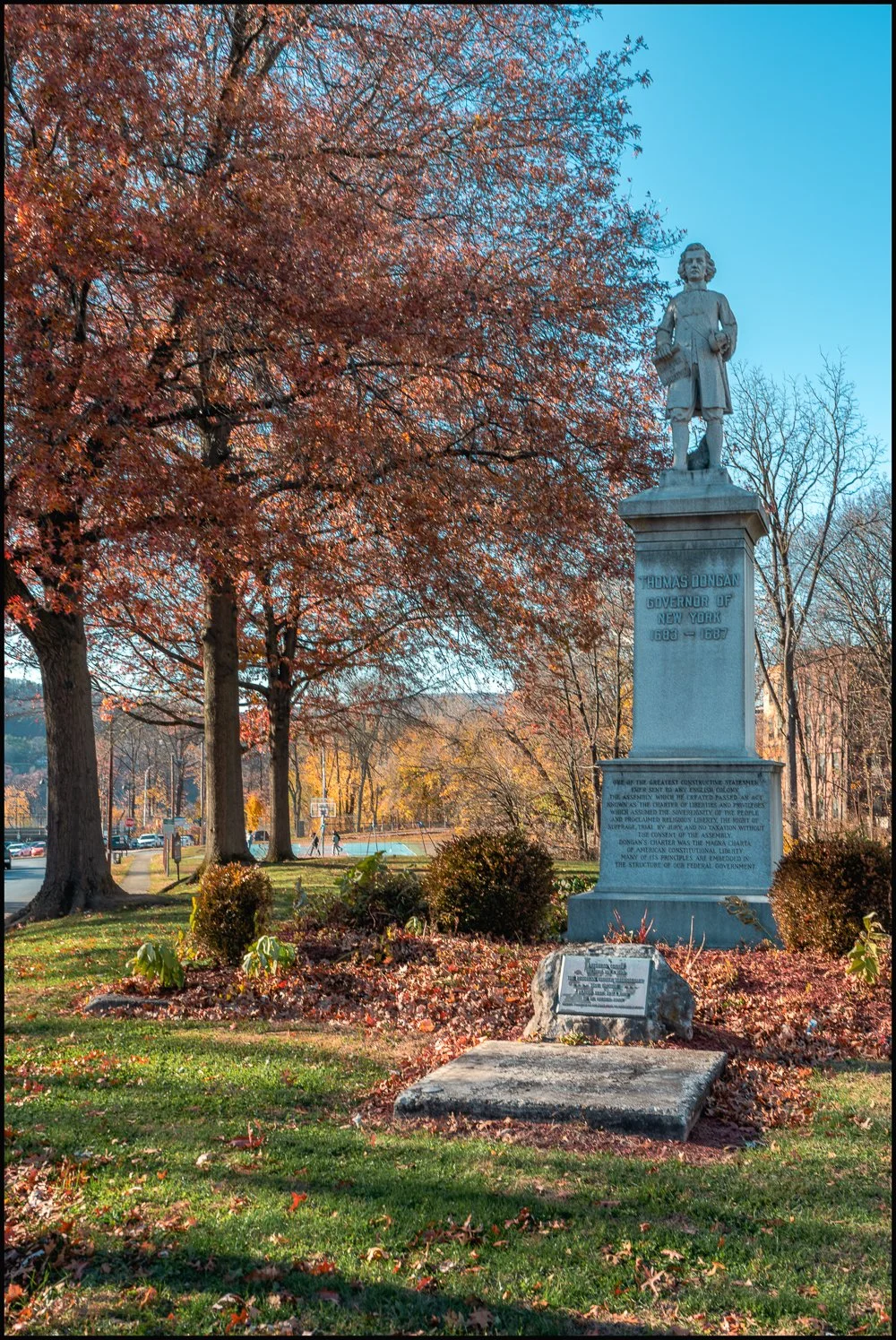
Thomas Dongan (1634 – 1715), Second Earl of Limerick, was Royal Governor of the Province of New York 1683 - 1687. His significance to the province and to the structure of the United States is described in the inscription in the base:
One of the greatest constructive statesmen ever sent to any English colony. The assembly which he created passed an act known as "The Charter of Liberties and Privileges" which assumed the sovereignty of the people and proclaimed religious liberty, the right of suffrage, trial by jury and no taxation without the consent of the assembly. Dongan's charter was the Magna Charta of American constitutional liberty. Many of its principles are embedded in the structure of our federal government.
TITLE: Dongan Statue
ARTIST(S): Unknown
DATE: 1930
MEDIUM: Granite
CONTROL NUMBER: IAS NY001734
PHYSICAL LOCATION: Dongan Park, Dongan Place at Mill Street, City of Poughkeepsie
Direct Link to the Individual Listing in the Smithsonian Art Inventory: [Web Link]
Source: Waymarking.com
Odds and Ends
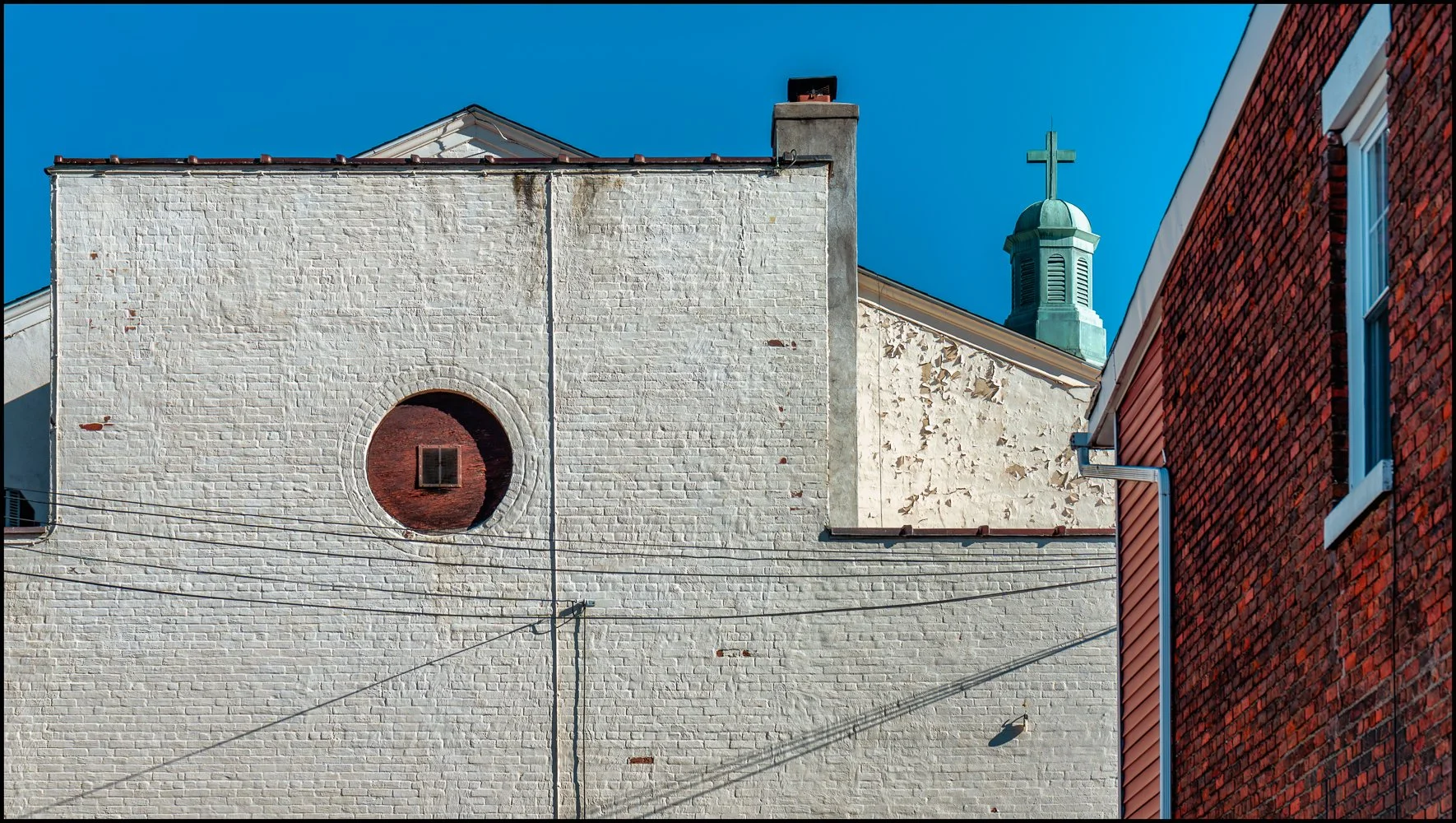
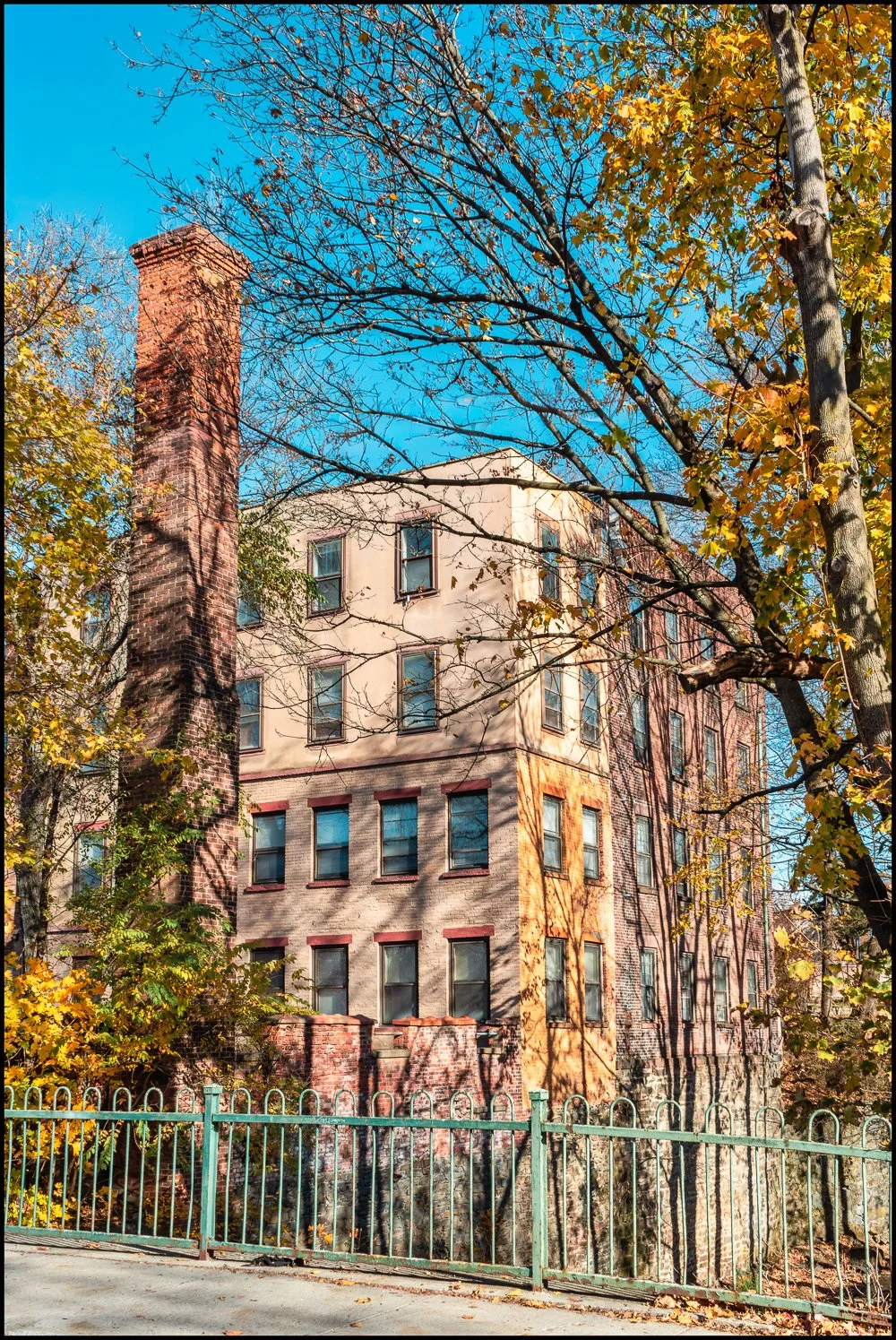
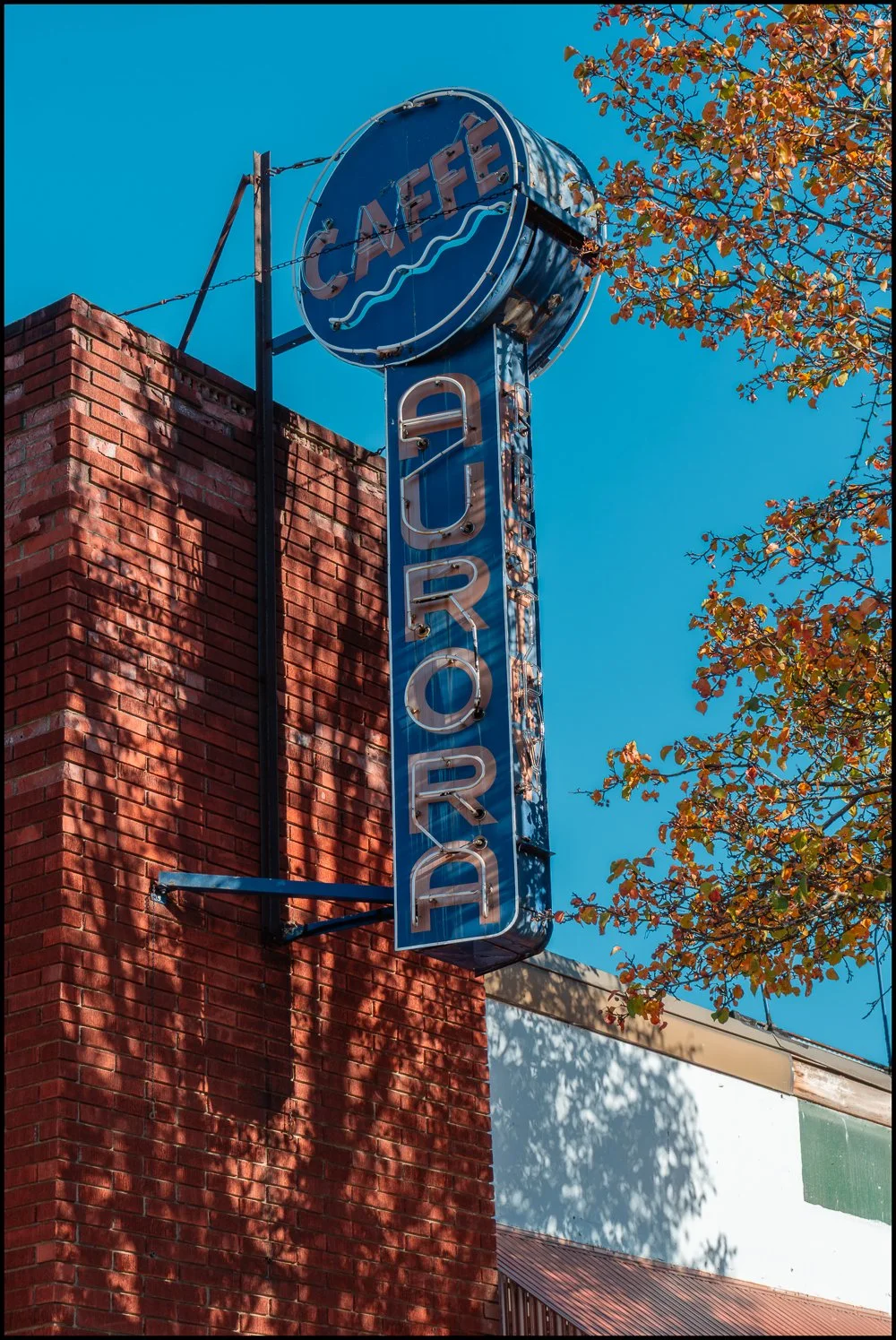

Things I found interesting, but about which I could not find any additional information and/or didn’t have anything to say.
Mahoney’s
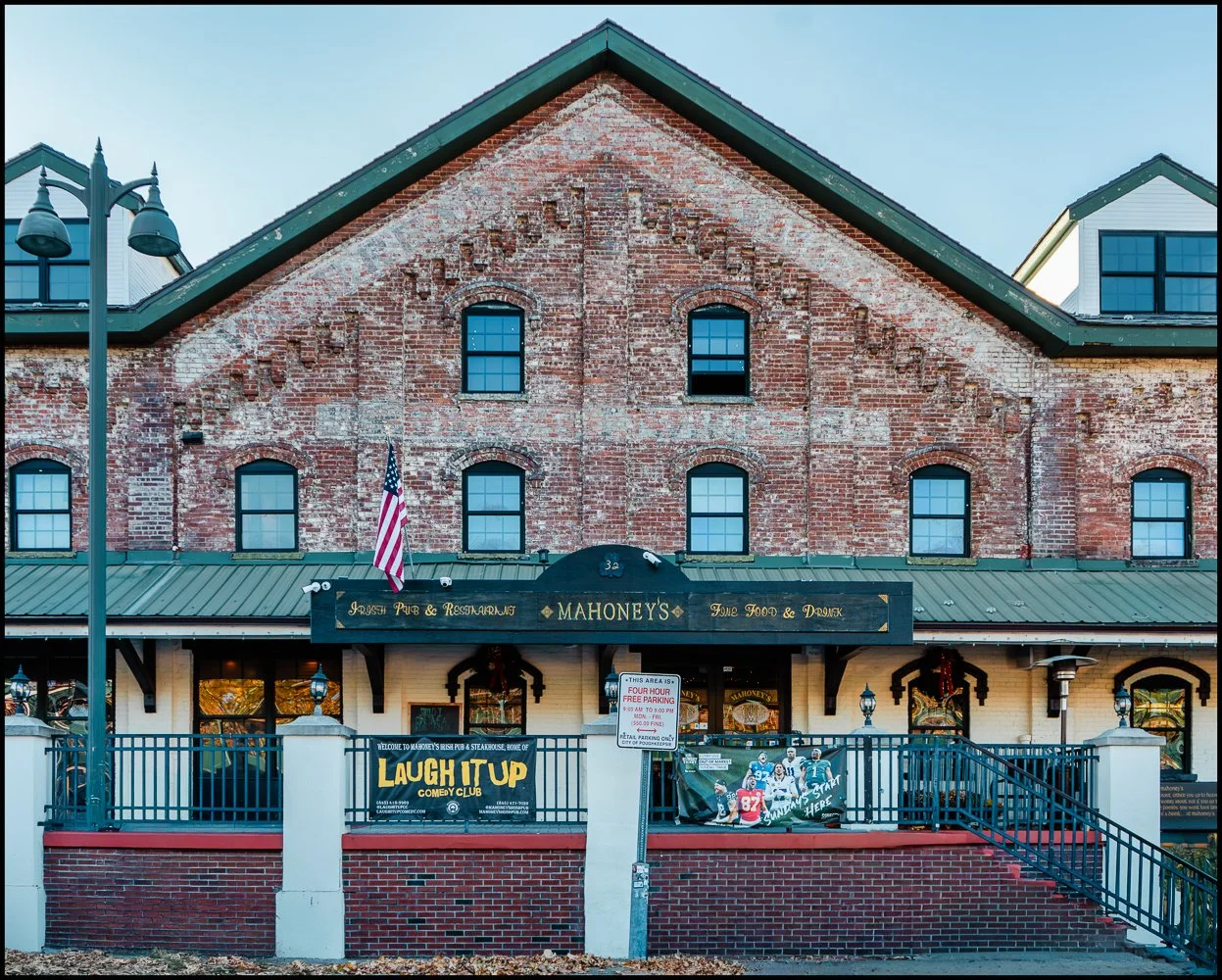
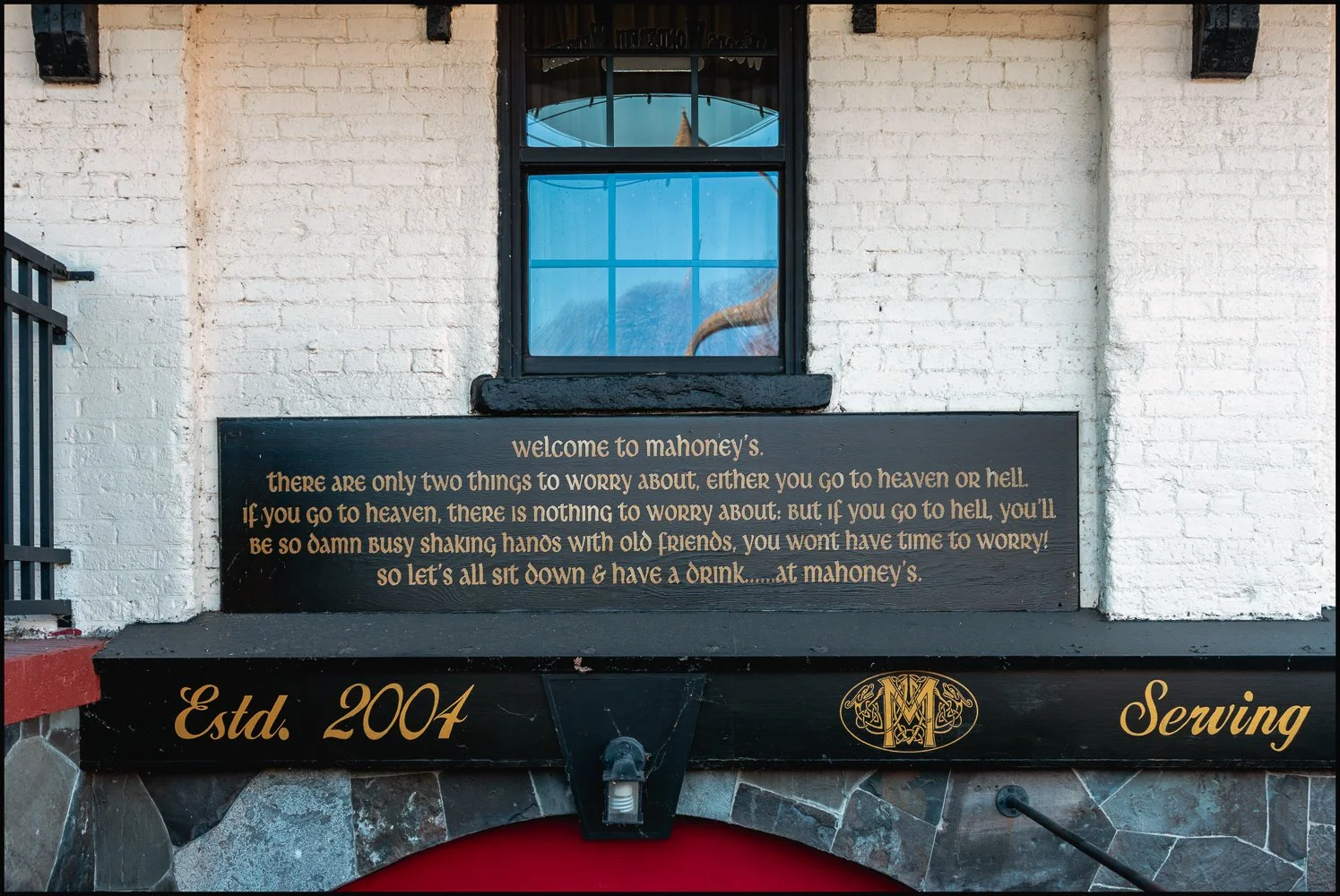
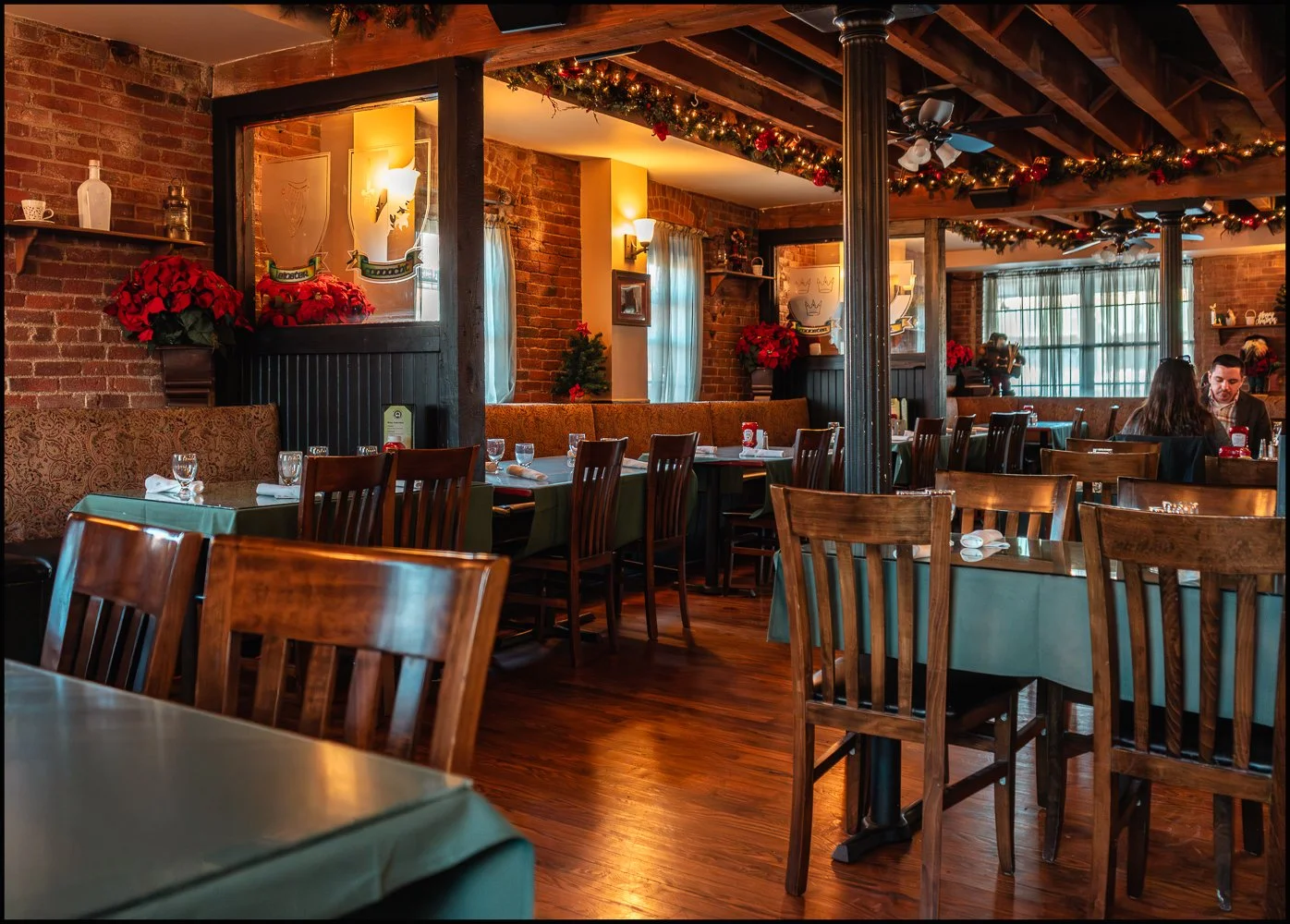
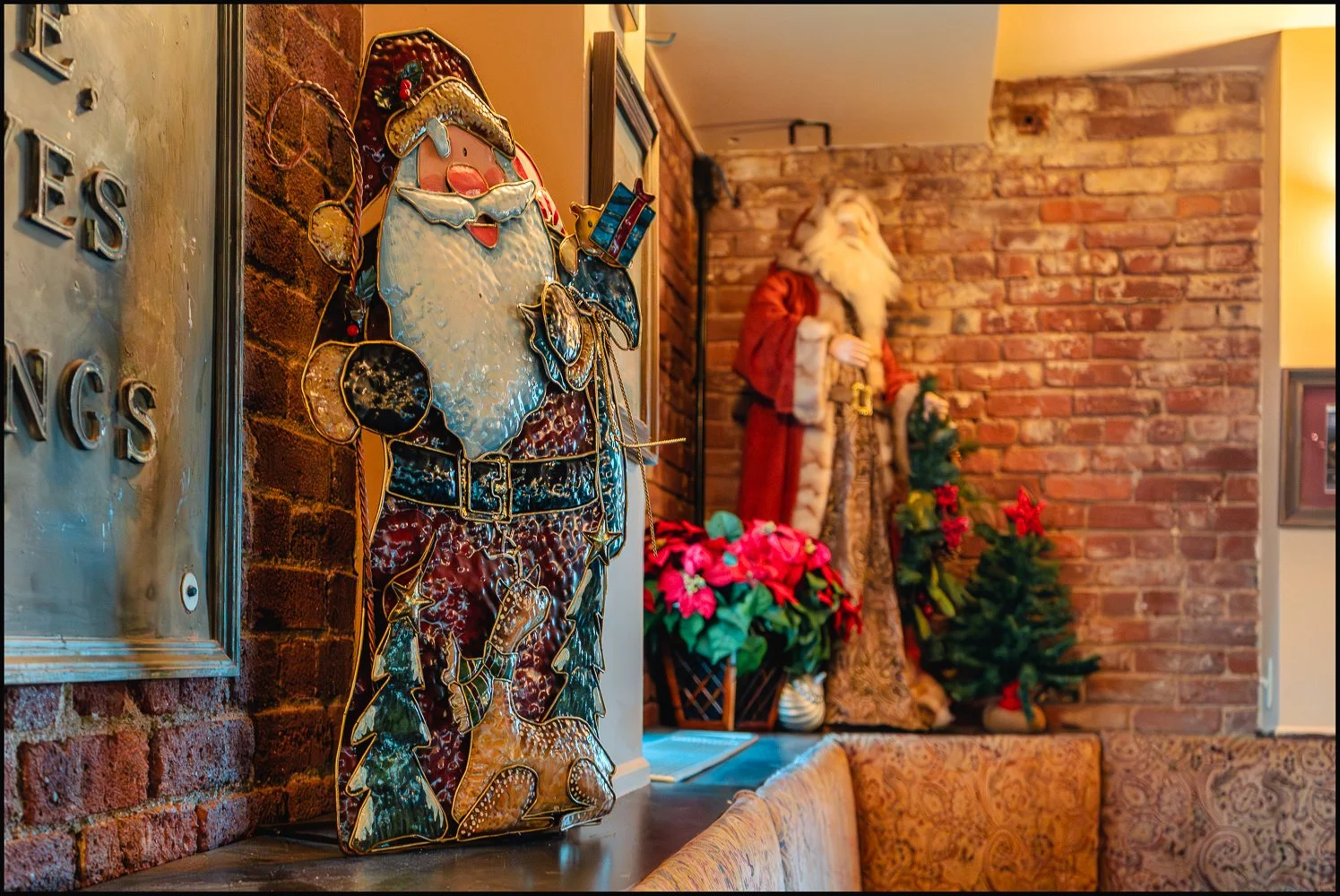
I was now feeling hungry and thirsty, so I went to Mahoney’s, which is right next to the Poughkeepsie Metro North Station. I figured I could have my meal there and rest comfortably until it was time to get my train.
Opening its doors in 2004, Emmett Mahoney’s is a traditional Irish pub with good food and authentic Irish hospitality. We offer two levels of dining and full-service bars in this historic building, which was once the original Vassar Brewery. A section of the brewery’s grain auger can be seen as a decoration outside the back doors on the lower level. We also have 23 new flat-screen TVs for your enjoyment and free WI-FI.
In 2013, Mahoney’s opened the Vassar Room; in 2019, we opened the Claddagh Room for all social events. We host live bands, DJS, and various events regularly. We have an interactive murder mystery dinner theatre from the Acme Mystery Theater throughout the year. Did you know we have Acoustic Open Mic every Monday, The Poughkeepsie Jazz Project on Tuesdays, Wednesdays is a night of fun with Karaoke, test your knowledge with Trivia on Thursdays, and Laugh it up comedy club on most Friday and Saturday nights? Check our website for all the information.
Fridays and Saturdays are lively evening hours. Of course, our favorite celebration is St. Patrick’s Day. It’s a day to remember with traditional Irish music, bagpipers, Irish Step Dancers, and delicious food and drinks.
On the River Hudson
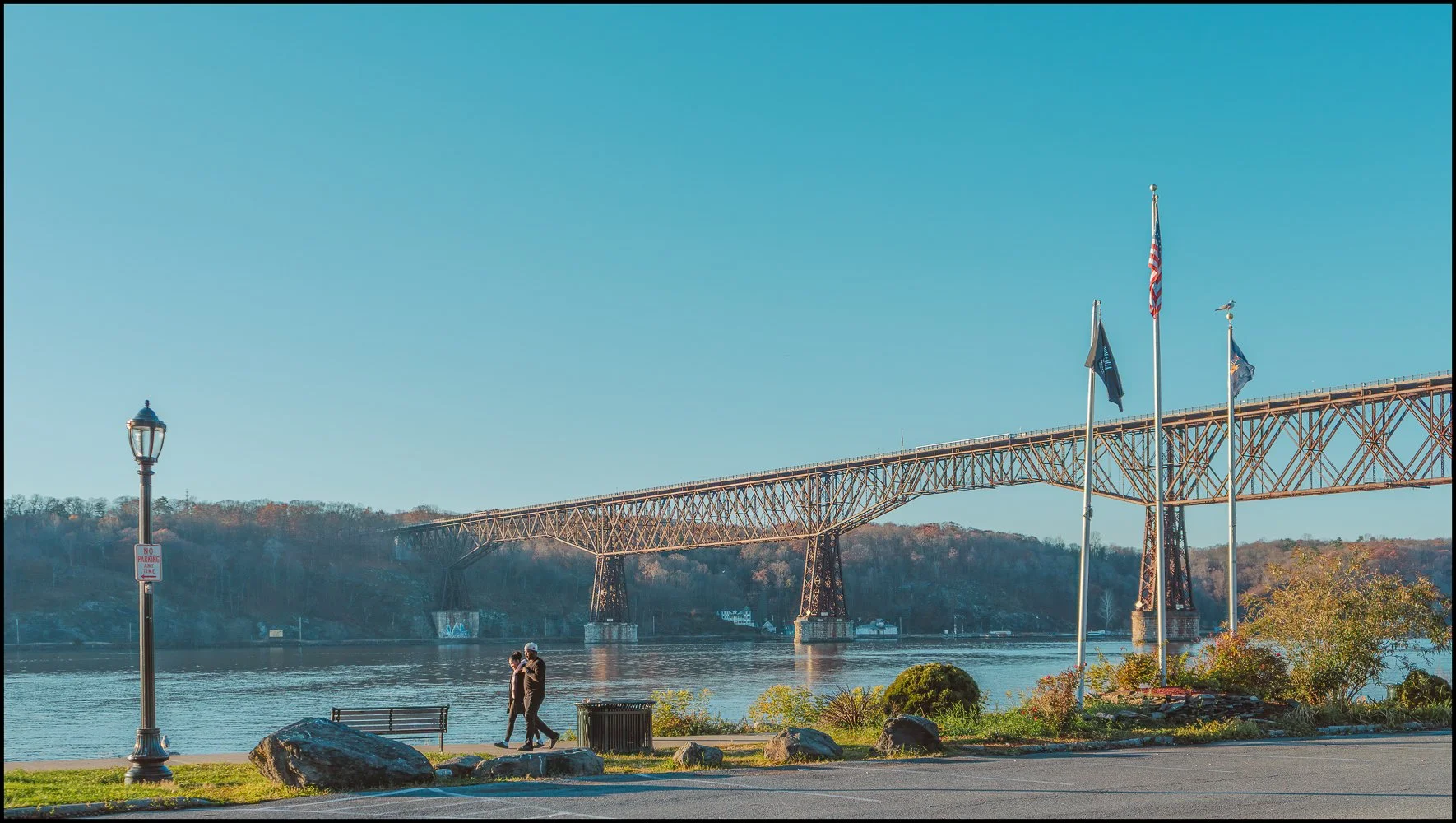
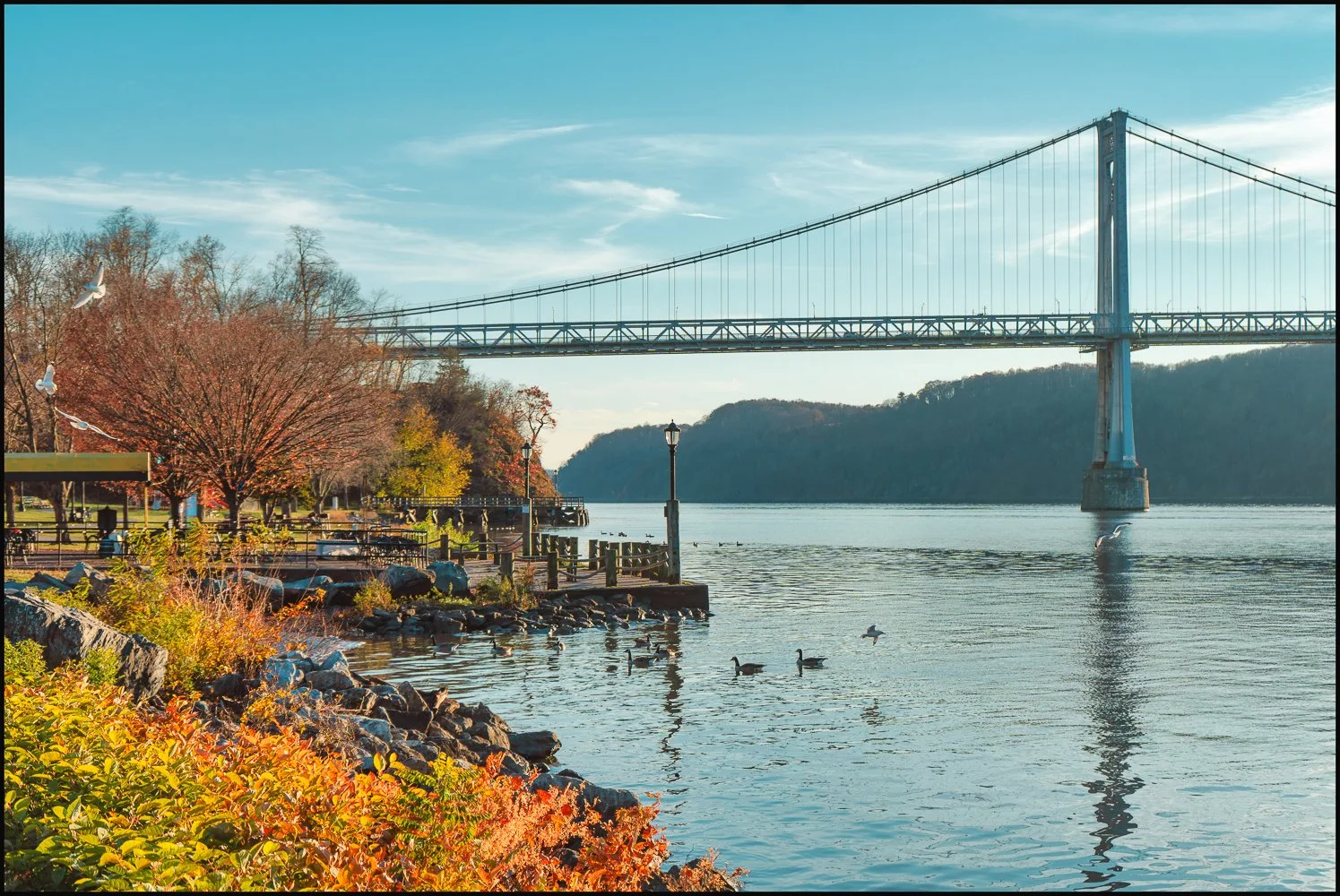
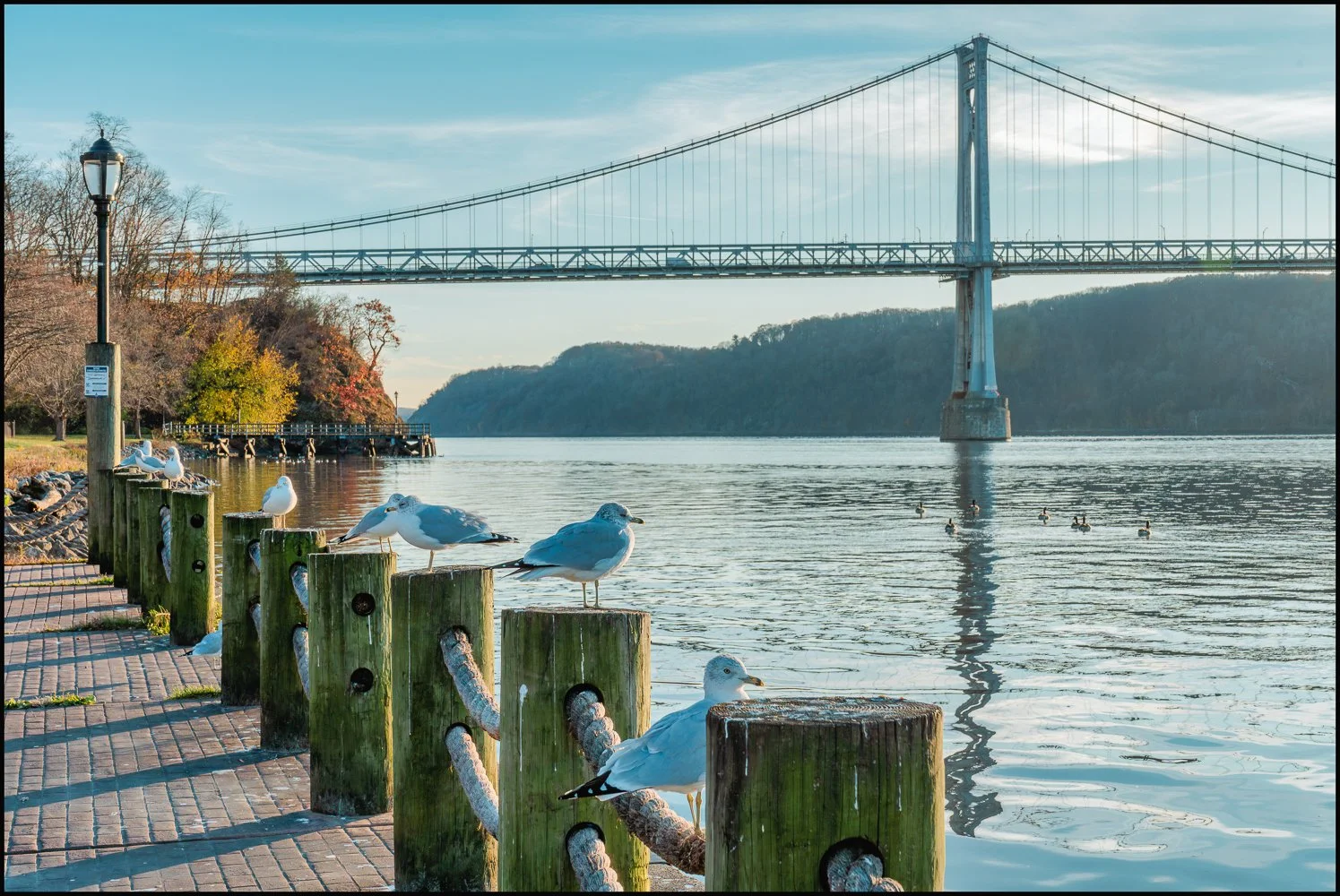
“After I’d finished my meal, I still had some time before my train would arrive. I also realized that I hadn’t been down to the River. Since Mahoney’s (and the Train Station) was only a short walk to the river, off I went.
The first picture above provides another view of the Walkway over the Hudson. The other two provide similar (but not identical views of the Mid-Hudson Bridge.
The Franklin Delano Roosevelt Mid-Hudson Bridge is a toll suspension bridge which carries US 44 and NY 55 across the Hudson River between Poughkeepsie and Highland in the state of New York.
Proposals for the Mid-Hudson span were made by state legislature in 1923. Although the Bear Mountain Bridge in Orange County, New York and the Holland Tunnel in Manhattan were under construction, there were then no fixed highway crossings south of Albany. Then-Governor of New York Alfred E. Smith signed the bill in June 1923. Construction would be undertaken by the New York State Department of Public Works (now the New York State Department of Transportation).
Construction began in 1925. Caissons weighing 66,000 tons were sunk into the riverbed; dirt was removed by crews working in a pressurized environment. The 315-foot-tall (96 m) Gothic steel towers were constructed in April 1929. Three years after opening, ownership was transferred to the New York State Bridge Authority in 1933, shortly after the Authority was created.
Then-Governor Franklin D. Roosevelt and his wife Eleanor attended the opening ceremony on August 25, 1930.
The toll plaza was originally located on the eastern side of the bridge, but was moved to the western side in Ulster County when a new highway approach was opened on December 20, 1967. Originally, tolls were collected in both directions. In August 1970, the toll was abolished for westbound drivers, and at the same time, eastbound drivers saw their tolls doubled. The tolls of eleven other New York–New Jersey and Hudson River crossings along a 130-mile (210 km) stretch, from the Outerbridge Crossing in the south to the Rip Van Winkle Bridge in the north, were also changed to eastbound-only at that time.
The Mid-Hudson Bridge was designated as a New York State Historic Civil Engineering Landmark by the American Society of Civil Engineers in 1983. The bridge was renamed the "Franklin Delano Roosevelt Mid-Hudson Bridge" in 1994.” Adapted from Wikipedia. The Full Article contains much more information and can be found here